Met Office: Climate change made UK’s wet winter in 2013/4 seven times more likely
The winter of 2013/4 saw a succession of storms batter the UK, leading to heavy rain and severe flooding across large parts of the country.The odds of those storms bringing such extreme wet weather were seven times higher than on a planet that wasn’t warming, according to a new analysis by Met Office scientists.Today’s study is part of a special issue published in the Bulletin of the American Meteorological Society that looks in depth at extreme weather events across the world in 2014.Unusual streakThe winter of 2013/14 was one of the most exceptional periods of rainfall in England and Wales in at least 248 years. It marked the wettest December and January in the UK as a whole since 1910.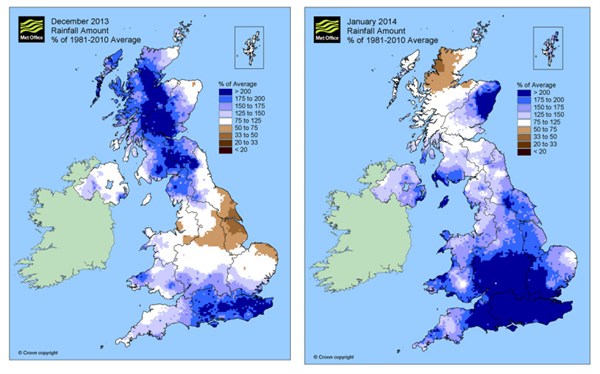
[The circulation] translates into more rainfall over the UK. South westerly winds drive moisture from warmer parts of the Atlantic over the UK, hence, we tend to get more rain.
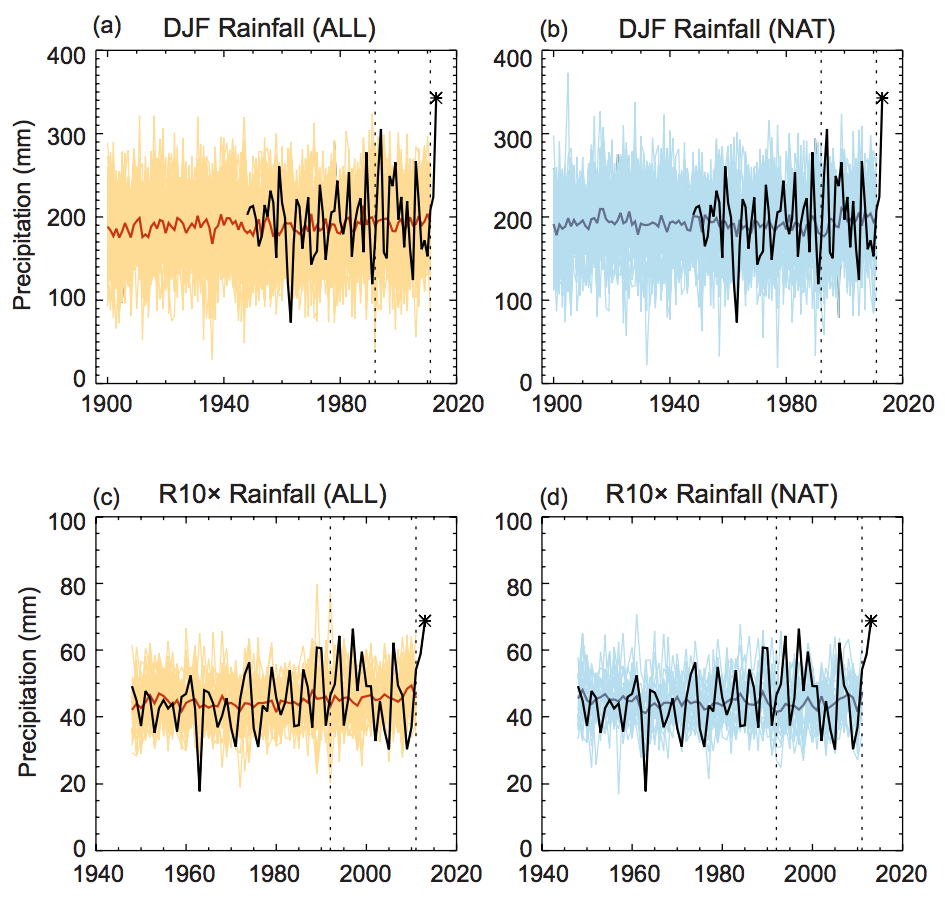
You may have favourable conditions for extremes, but this doesn’t necessarily mean extremes will actually occur.So far, the results are enough to tell us what kind of conditions are likely to bring heavy rain to the UK. But they don’t tell us whether such events are different today compared to pre-industrial times. To work out the role of climate change, the scientists had a different test.Seven times more likelyTaking only winters with similarly stormy conditions to 2013/4, the scientists ran 76 simulations using seven different climate models to examine what happened once they removed human influences, leaving just those from natural climate cycles. This is known as an attribution study.The researchers found that in “the real world” where greenhouse gases warm the planet, extreme heavy rain over 10 consecutive days – like we saw in 2013/4 – is seven times more likely than on a planet without human influence.Put another way, if the same sequence of storms that we saw in 2013/4 happened on a planet that wasn’t warming, the chance of seeing rain as heavy as we did would be a lot lower.Of course, that assumes all other things are equal, such as the height of coastal defences, the amount of paved ground, the extent of building on floodplains, soil saturation, and so on.You can see the results from the study in the graphs below. Taking the most recent 20 years of model data (between the dashed lines), comparing the red line in the bottom left panel with the blue line in the bottom right panel shows a higher modelled average rainfall for events lasting 10 days when human activity is included (left), compared to only natural factors (right).It’s worth noting that the increase in average rainfall holds for events of 10-days duration (bottom panels), but not for the winter season as a whole (top panels).
We do expect to see a move towards more warm wet winters in the UK under the effect of climate change. Julia’s assessment of the available observational evidence is consistent with this expectation. Our work provides additional evidence based on a new evidence from state of the art climate models.Evidence is stacking up that climate change played a role in bringing more rain than we would have seen otherwise in the winter of 2013/4. This, in turn, contributed to the flooding we saw, but was by no means the only factor. What scientists aren’t doing is linking the existence of the storms themselves to climate change. While this might all seem like a frustratingly nuanced conclusion, the distinction between what drives heavy rainfall, storminess and flooding is important when it comes to understanding climate change. They are linked, but not the same.
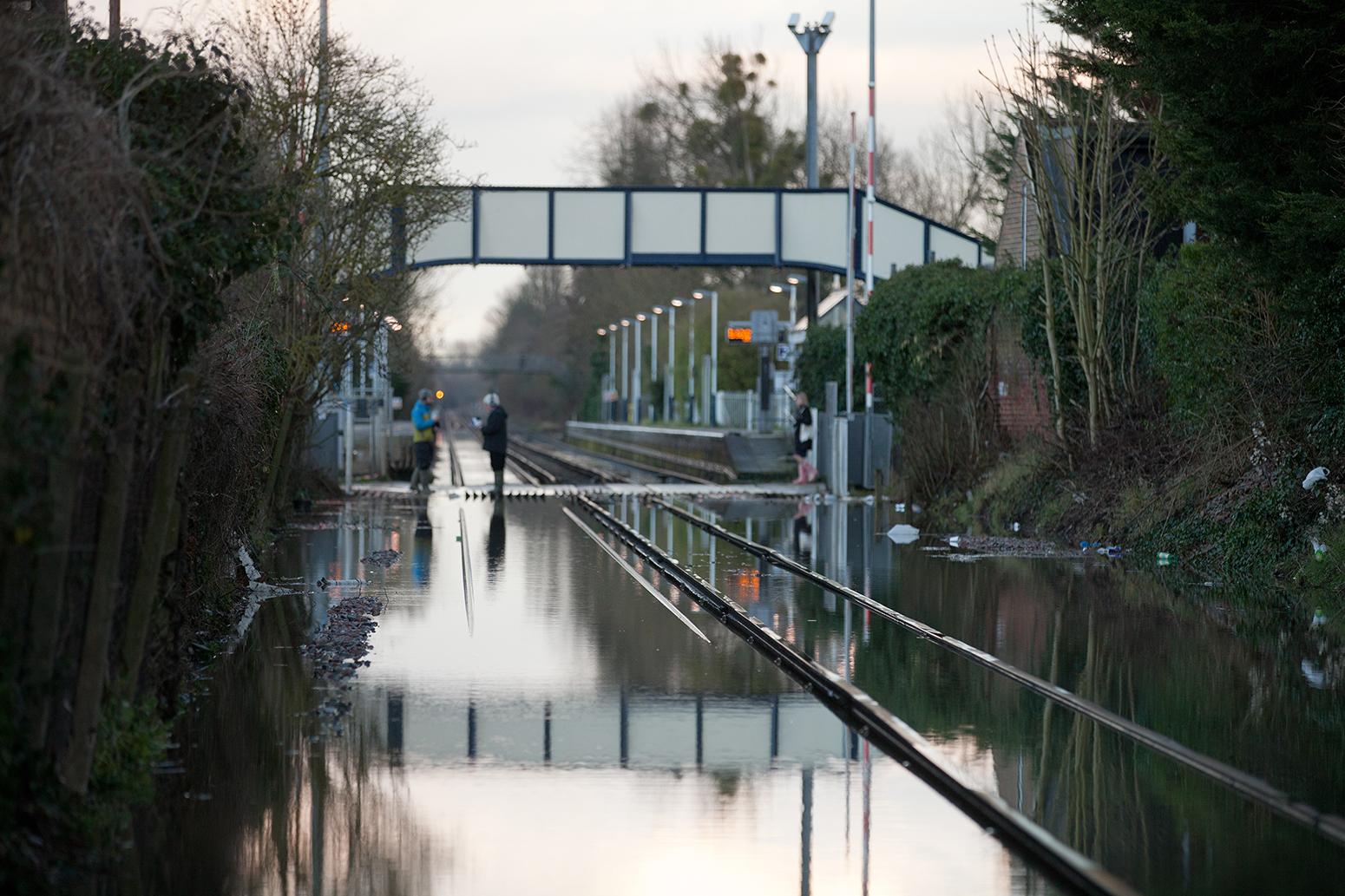
Main image: Flooding in the centre of the village of Datchet in Berkshire became more and more extensive today as the level of the River Thames continued to rise. © Mark Kerrison/Demotix/Corbis
Article information
Christidis, N. & Stott, P. (2015) Extreme Rainfall in the United Kingdom during winter 2013/2014: The role of atmospheric circulation and climate change. Bulletin of the American Meteorological Society. DOI: 10.1175/BAMS-D-15-00094.I