Declining snowpack could threaten 1.9bn people with water shortages
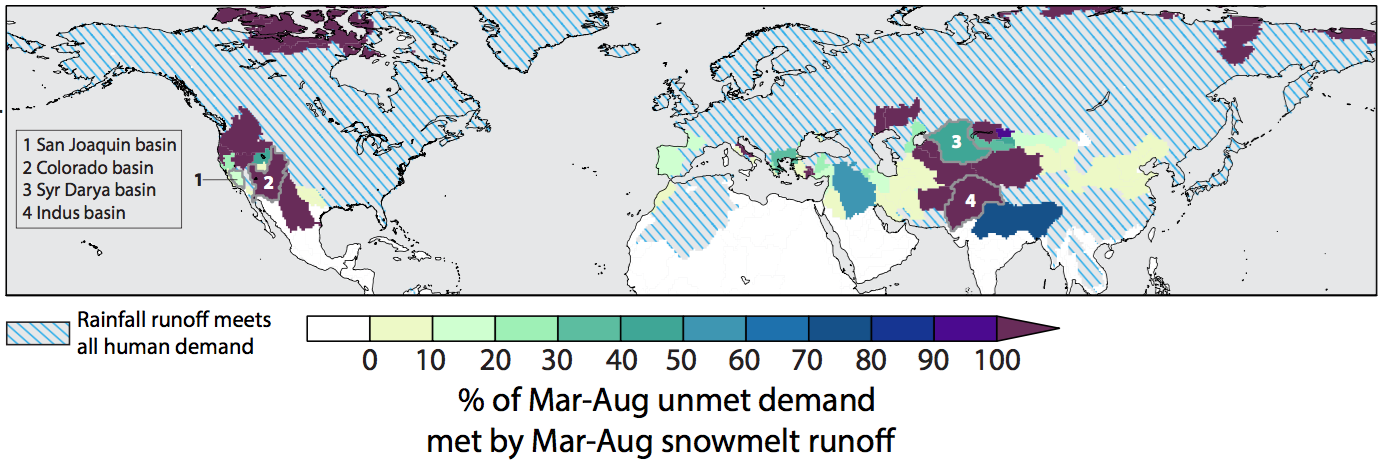
Almost 2bn people live in areas of the northern hemisphere that rely on melting snow as a crucial source of water. But a new study warns that this supply could be under threat from rising global temperatures.Water demandFor many people living in the foothills of mountain ranges, the snowpack is a critical source of water. Snow accumulates on highland peaks during winter. As temperatures rise in spring and summer, the snow melts and the water then winds its way down to the lowlands, where it supplies people, crops and ecosystems.The new study, published in Environmental Research Letters, says that less snowfall and earlier melting could threaten the quantity and timing of this water resource.The study assessed 421 basins across the northern hemisphere. A basin is an area within which all rain that falls will end up draining into a particular river. Of the 421 basins, 97 currently rely on snowmelt to meet their water needs. These areas are home to around 1.9bn people.As many as 68 of the basins could see snowmelt diminish until it no longer meets water supply needs by 2060, the paper says – even if demand doesn’t go up.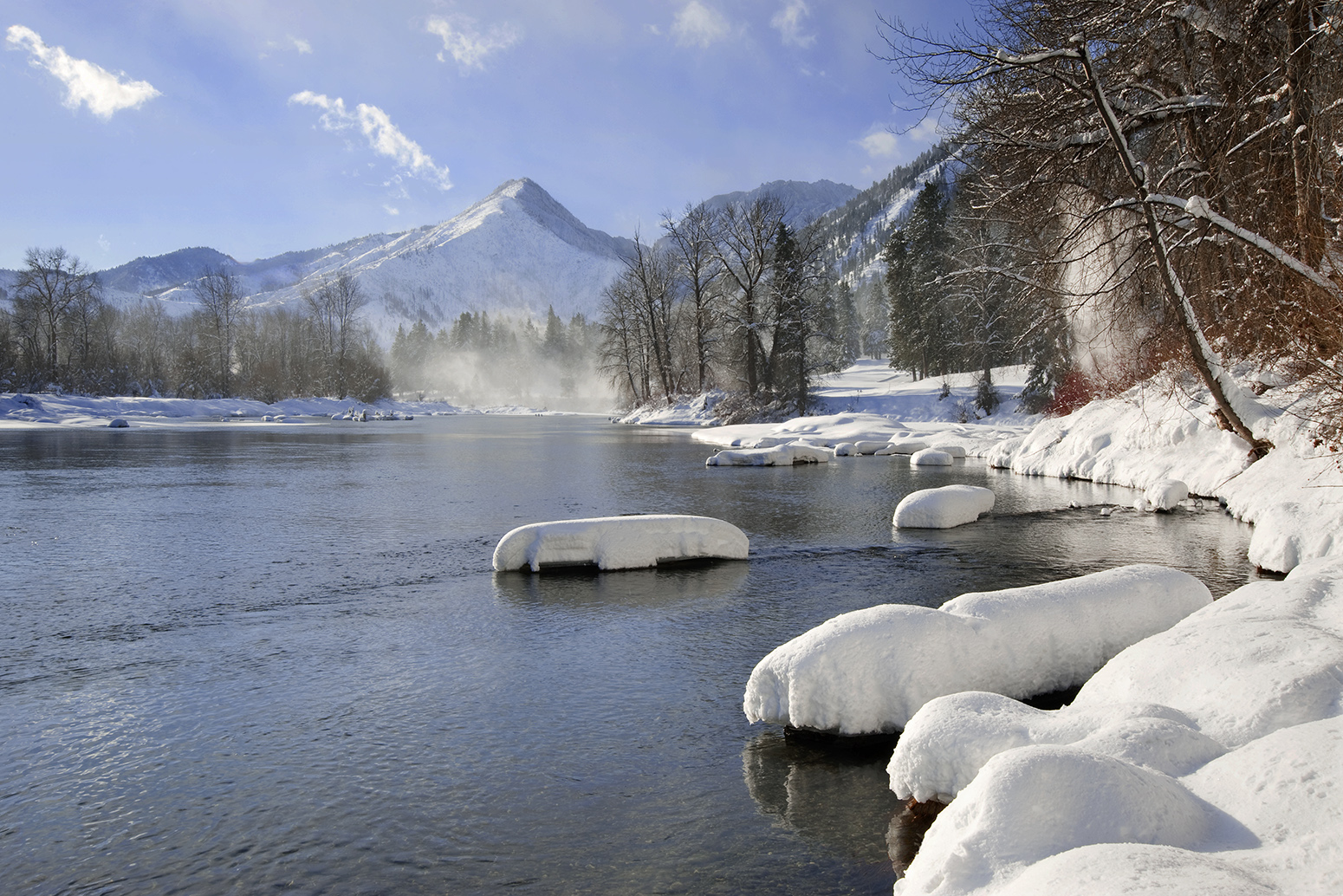
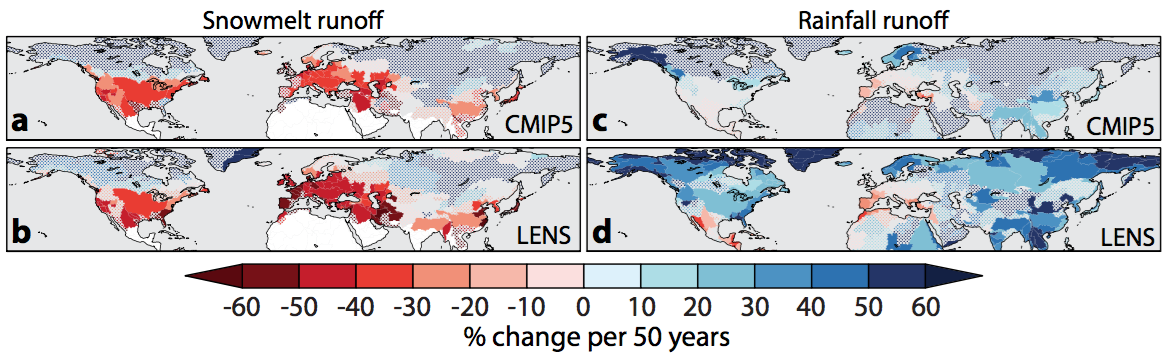

[A]n even larger source of uncertainty is people and how their consumptive patterns will change in the future – we know populations will increase and that demand will as well.While technological advances and improvements to water management could offset some of the risk of water shortages, Mankin says, they will have to compete with the combined effect of increasing demand and decreasing supply.
Main image: Himalaya Mountains, Asia. © 68/Steve Allen/Ocean/Corbis.
Article information
Mankin, J.S. et al. (2015) The potential for snow to supply human water demand in the present and future, Environmental Research Letters, doi:10.1088/1748-9326/10/11/114016