Coral reef survival hinges on ‘urgent and rapid’ emissions cuts
The future of the Great Barrier Reef – and other reefs around the world – will ultimately depend on how successfully we can limit ocean warming.This is the blunt conclusion of a new study, just published in Nature, which examines the impacts of recent coral bleaching events on Australia’s Great Barrier Reef. The event in 2016, for example, left just 9% of surveyed reefs untouched.The study finds that sea surface temperature is the biggest driver of bleaching, while local efforts to improve water quality or restrict fishing have little impact on limiting its severity.This means that “immediate action to curb future warming” is essential if coral reefs are to survive, the authors warn.§ Mass coral bleaching
Early reportszooxanthellaestark white skeletonstarve§ ‘Extensive and severe’
boost to SSTsstrong El Niño event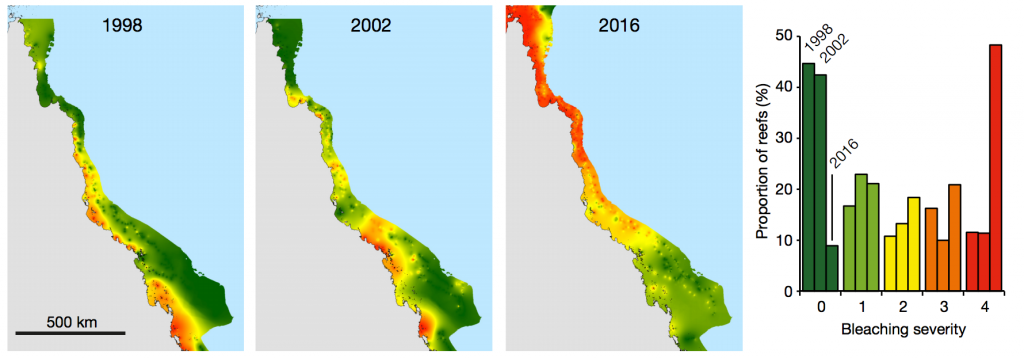
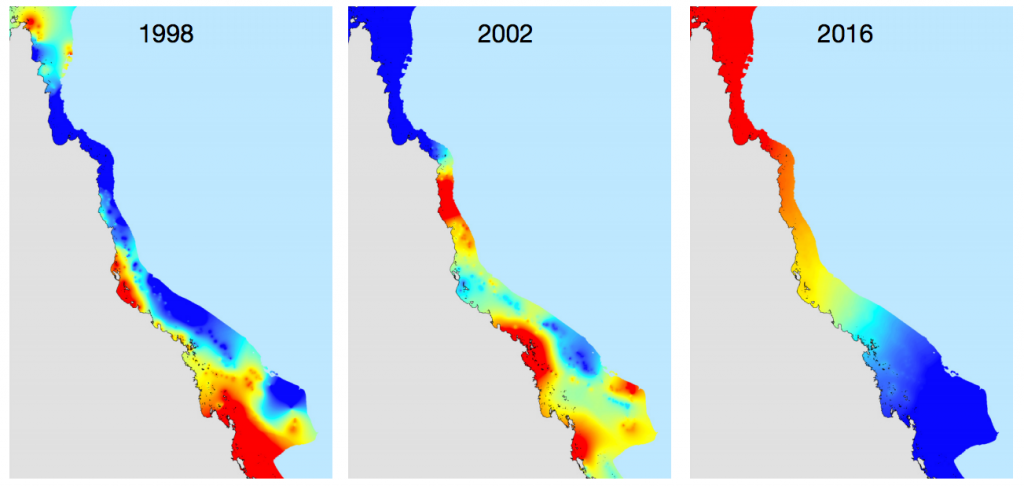
§ ‘Last chance to see’
“Even the most highly protected reefs and near-pristine areas are highly susceptible to severe heat stress.”
Dr David KlineScripps Institution of Oceanography“The 2016 mass bleaching event was so severe that the protection status, water quality, and even previous bleaching events did not prevent corals from bleaching.”

“Marine reserves are likely critical to increasing the recovery potential of bleached reefs but are not sufficient alone to prevent reefs from bleaching in a high CO2 world, only reducing global CO2 emissions will give us a chance of having healthy reefs in the future.”
Prof Ove Hoegh-GuldbergUniversity of Queensland“Coral reefs are so exquisitely beautiful yet fragile in a changing climate that I often feel like telling people to come and see reefs like the Great Barrier Reef while they can. This is, unfortunately, one of the most prominent examples of ‘last chance to see’.”
Article information
Hughes, T. P. et al. (2017) Global warming and recurrent mass bleaching of corals, Nature,doi:10.1038/nature21707