Guest post: Half a degree could make a world of difference
Dr Carl-Friedrich Schleussner is head of climate science and impacts, and a scientific advisor to Climate Analytics.Observational records show us that half a degree of warming in the recent past has brought significant increases in extreme weather events, which provides another line of evidence for what an additional 0.5C of warming could entail.Differentiating climate impacts between 1.5C and 2C warming above pre-industrial levels has been a hot topic in climate science since the adoption of the 1.5C long-term temperature limit in the Paris Agreement and much research is underway for inclusion in the IPCC special report on impacts at 1.5C warming.We rely on climate model projections to discuss potential differences in future warming levels. Studies of the projected differences between 1.5C and 2C – using a set of climate models – have identified impact and region-specific “hotspots” of change with substantial differences, particularly for the occurrence of temperature extremes.The world has already experienced approximately 1C of warming since the mid-19th century, which means we have an actual record of warming to study. Analysing past differences may be helpful in assessing what difference half a degree of future warming could bring.Most of our observational records provide comprehensive coverage from the second half of the 20th century, which, at best, amounts to only little more than 0.5C warming. If we assess changes in the climate system or impacts and their linkages to anthropogenic climate change, we may often be able to attribute these changes to 0.5C of warming, or even less.In a new study, my co-authors Peter Pfleiderer, Dr Erich M Fischer, and I have looked into extreme weather indicators from two datasets. We have assessed a 0.5C warming difference in the observational record between two periods: 1960–1979 and 1991–2010, following the Nasa GISTEMP record. The results are in the figure below.We found robust differences for all of the indicators we looked at: hot and cold extremes, warm spells and heavy rainfall. For a quarter of global land areas, we found the intensity of hot extremes increased by 1C, while the intensity of cold extremes decreased by 2.5C, and that extreme rainfall intensity increased by 9%. The duration of warm spells increased by about a week in half of land areas – substantially outside of the range of natural variability.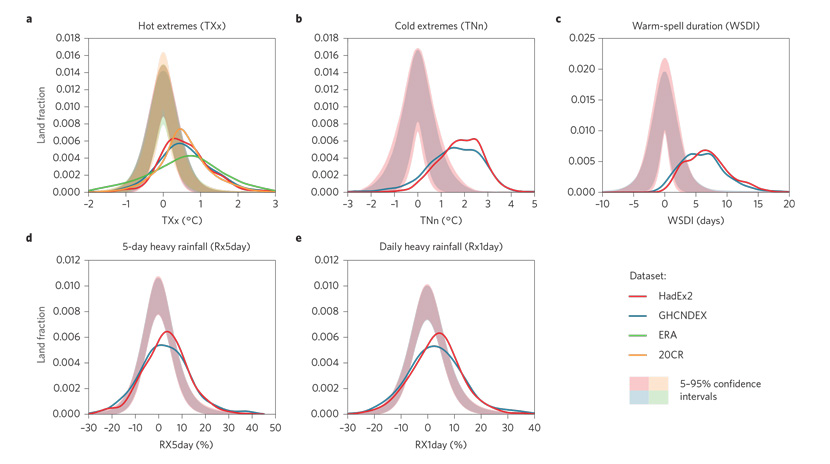
Article information
Schleussner, C. et al. (2017) In the observational record half a degree matters, Nature Climate Change doi: 10.1038/nclimate3320