Warm spells in Arctic stunt crop yields across US, study suggests
Unusually warm periods in the Arctic stunt vegetation growth and crop yields across North America, a new study suggests.The study is a new angle on the relatively recent area of research connecting rapid warming in the Arctic with the weather of mid-latitude regions.Reduced plant and crop growth is down to two factors, the researchers say: severe cold in northern North America and dry conditions in south-central US. These are both linked to very warm spring temperatures in the Arctic, the study says.But while the study adds to the weight of evidence that there is a connection between a warm Arctic and mid-latitude weather, it doesn’t tackle the “critical question” of whether one causes the other, another scientist tells Carbon Brief.§ Arctic amplification
three times as fastArctic amplification.the loss of sea icesometimes controversialUKNorth AmericaCentral Asialonger-lasting summer heatwaves in RussiaNature Geoscience§ Cold and dry conditions
published in 2015This time, the researchers focus on spring, rather than winter. Analysing surface temperature data for 1979-2015, they link a warm Arctic during March to colder-than-average temperatures over northern regions of North America and dry conditions in central southern areas between March and May.You can see this in the maps below, which show the average response of spring temperatures (left) and rainfall (right) in North America following the warmest 16% of March Arctic temperatures. The blue shading indicates cold conditions, and the brown shading shows the dry areas.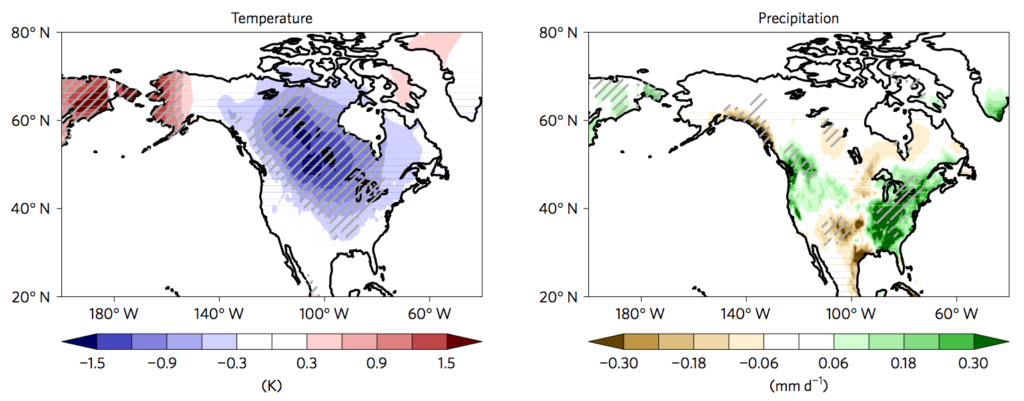
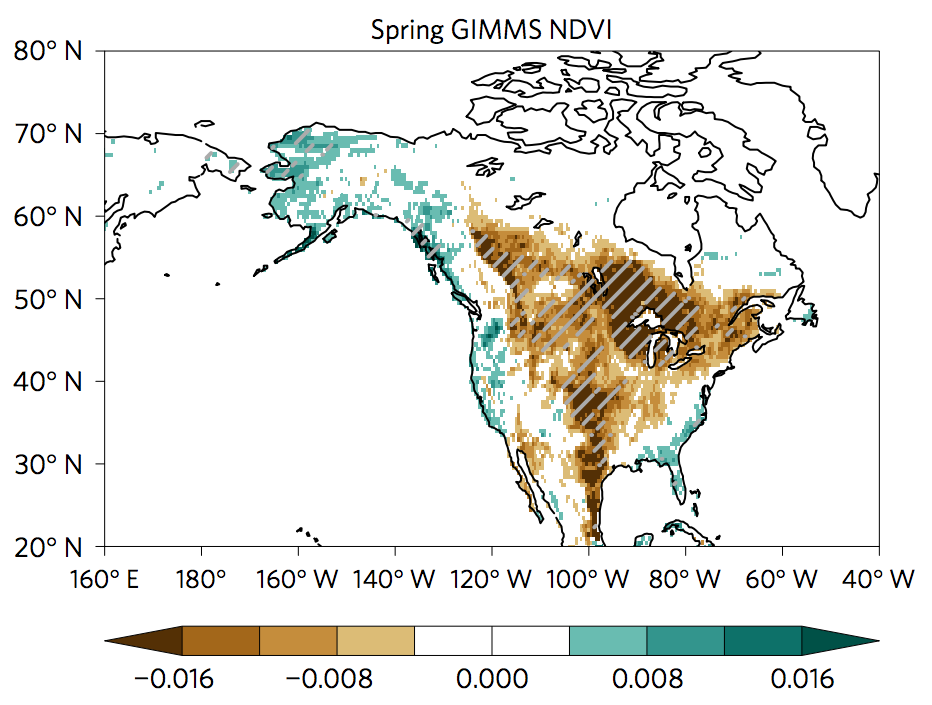
§ Crop yields
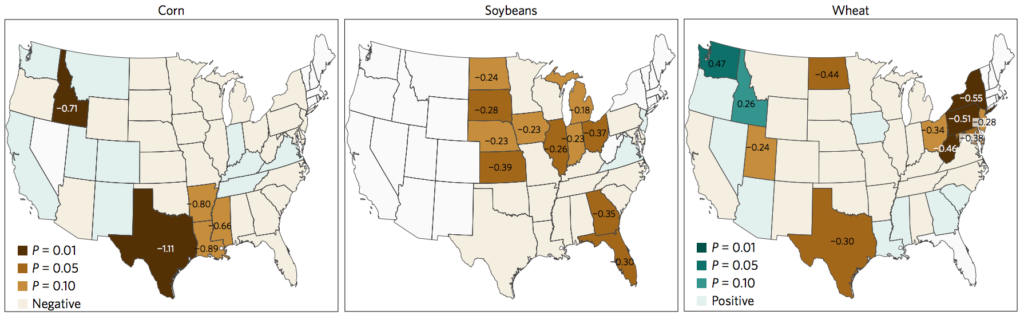
§ ‘A deeper look’
Dr James ScreenUniversity of Exeter“It is still far from clear whether cold anomalies [in the mid-latitudes] are caused by Arctic warming (or sea ice loss) rather than being simply correlated with Arctic warming, but driven by something else. This paper fails to make any headway on that critical question.”
Prof Jennifer FrancisRutgers Universitypaper from last week“The specific roles of rapid Arctic warming and sea ice loss in this story are a topic of intense research and controversy. Instead of converging on answers, however, the science seems as unsettled as ever.”
“It is likely to vary between seasons, regions and the warming versus cooling states, and nonlinear effects or additional factors must be taken into account.”
“A deeper look at the differences between the different land surface and Earth system models may help better constrain the response of mid-latitude ecosystems to climate variability.”
Article information
Kim, J-S et al. (2017) Reduced North American terrestrial primary productivity linked to anomalous Arctic warming, Nature Geoscience: doi:10.1038/ngeo2986
Bastos, A. (2017) Warmer Arctic weaken vegetation, Nature Geoscience, doi:10.1038/ngeo2989