Mapped: Where multilateral climate funds spend their money
In 2009, countries meeting in Copenhagen for the 15th UN climate conference set a new monetary goal.They agreed that, by 2020, developed countries should be jointly “mobilising” $100bn a year to help developing countries tackle climate change.Multilateral climate funds, such as the Green Climate Fund (GCF), are one of several ways this finance is distributed. They distribute public money as both loans and grants, thus are often viewed as particularly important institutions for the $100bn goal.Here, for the first time, Carbon Brief has mapped more than 1,000 projects being funded by the four main multilateral climate funds. (See below for details on what is and is not included.)The interactive map, above, illustrates where around the world these funds are supporting climate projects. Analysis of the data shows:- In 2016, multilateral climate funds approved $2.78bn of project support.
- Since beginning to approve projects in 2015, the GCF has rapidly become the largest source of grants and funds, overtaking the Climate Investment Funds (CIF) in 2016.
- Over the period 2013-2016, India received the highest level of single-country funding ($725m) approved by multilateral climate funds in absolute terms. This was followed by Ukraine ($278m) and Chile ($262m). However, viewed on a per capita basis, Tuvalu received the most funding per person ($3,947), followed by Samoa ($477) and Dominica ($313).
- The largest number of projects funded so far are in Mexico (25), followed by India and Cambodia (22 each) and South Africa (21). In total, the map contains 1,020 projects.
- The largest amount of funding for any project was $378m from the GCF for a private sector sustainable energy financing programme across 10 Asian and African countries.
- The US is currently the largest donor across the four funds, followed by, respectively, the UK, Japan, Germany and France. When viewed as per-capita funding, Norway comes top. However, Donald Trump has pledged to cease US funding of at least two of the funds from 2018.
§ The map
Green Climate FundAdaptation FundClimate Investment FundsGlobal Environment FacilityImage (note)

Related content
UK climate finance: Carbon Brief recently published details of where the UK government has committed “climate-specific” aid. The data, obtained using freedom-of-information (FOI) requests, showed funding rose year-on-year in the run-up to the Paris Agreement in 2015, but has slightly fallen since.
§ Country funding
§ International climate finance: the basics
United Nations Framework Convention on Climate Change (UNFCCC)
§ What are multilateral climate funds for?
bilateralWorld Bank§ Who funds the funds?
Capacity Building Initiative for TransparencyLeast Developed Countries FundSpecial Climate Change Fund§ GEF
Global Environment Facilitynumberenhanced transparency§ Adaptation Fund
Adaptation FundKyoto Protocolmost recentlynew strategyso farongoing debate§ CIF
§ GCF
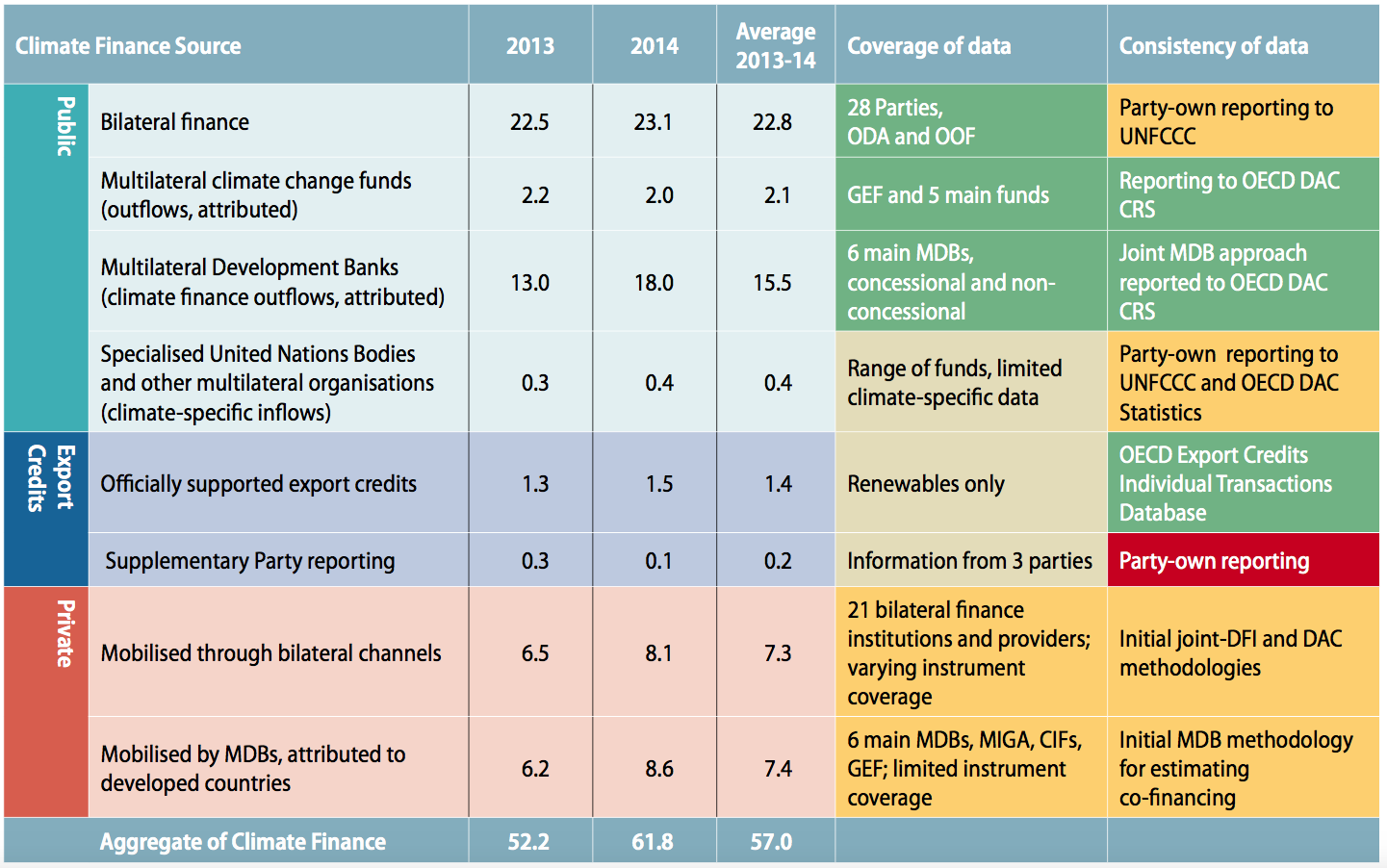
pledged$2.65bnDonald Trump has said£60mmap§ Multilateral funds and the $100bn goal
§ The importance of multilateral funds
thought
§ Implementing the projects
accredited” implementingwater conservation projectEuropean Bank for Reconstruction and Development
§ Co-financing
aim tomobilisedreport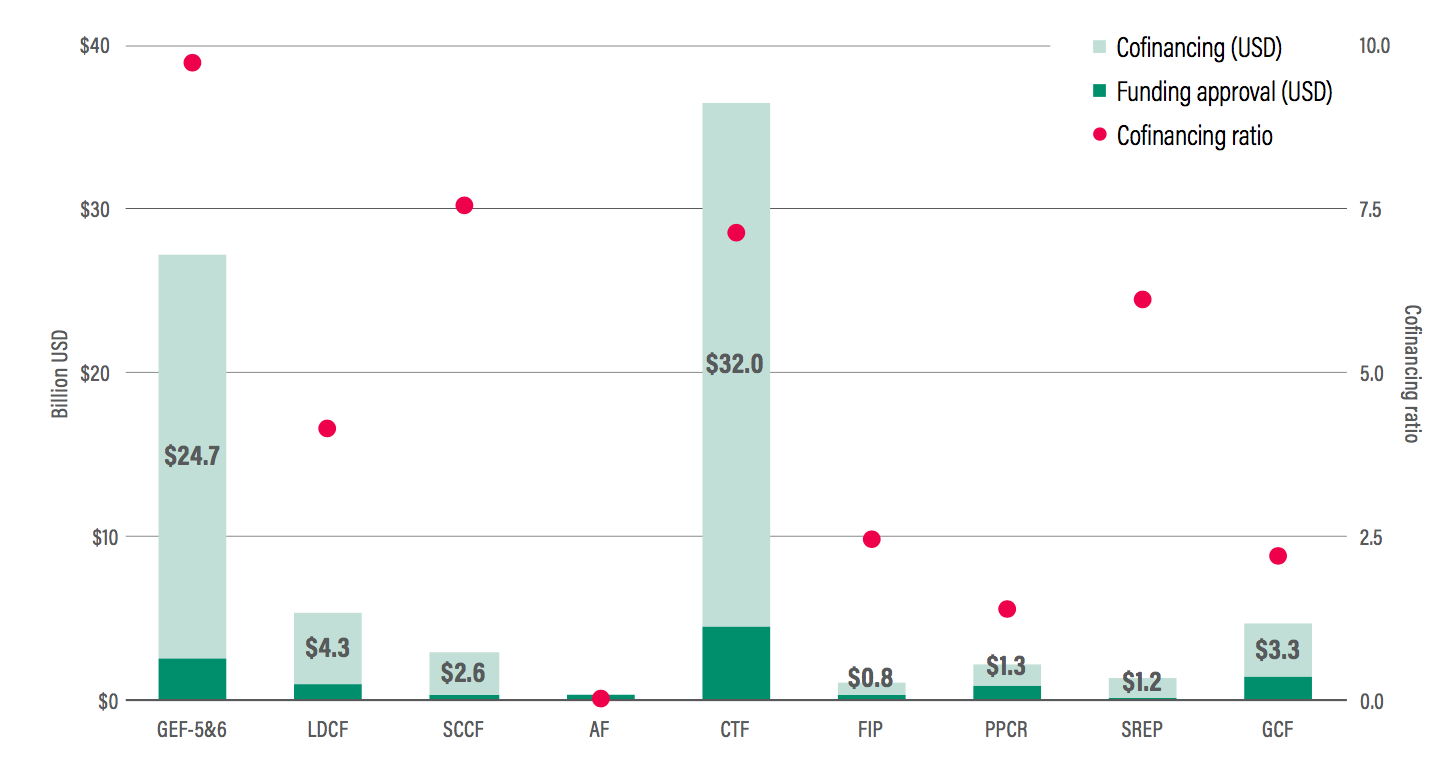
§ Adaptation gulf
Paris Agreemenhuge imbalanceonly givescurrentNGOsby the EUloss and damage§ Future of multilateral climate funds
reportletterarguepostponedmore than $10bnpledgedindicatedalso could keepreportedstandscriticisedmeetingnowfraught topicsuggestedclimate summit§ Notes
OECD Rio MarkersArticle information
Update 8/11/2017. The article was corrected to show the Adaptation Fund has so far approved €462m for all projects. It previously incorrectly said €503m.