Climate change is already shifting the timing of European floods, study says
Climate change is shifting the timing of river flooding across Europe, with parts of the continent experiencing flooding several weeks earlier or later than they did 50 years ago.That is the conclusion of a new study, which uses data from more than 4,000 observational stations in 38 countries. The findings suggest that warming is driving earlier flooding in snowy parts of northeastern Europe and later floods in the west, including in southern England and Portugal.The changes in flood timing pose risks for people and property, the researchers say, as well as animals that rely on floodplains for breeding.However, there are some important caveats to the study, other scientists tell Carbon Brief, as natural climate variability also plays a “massive role” in the timing of European floods.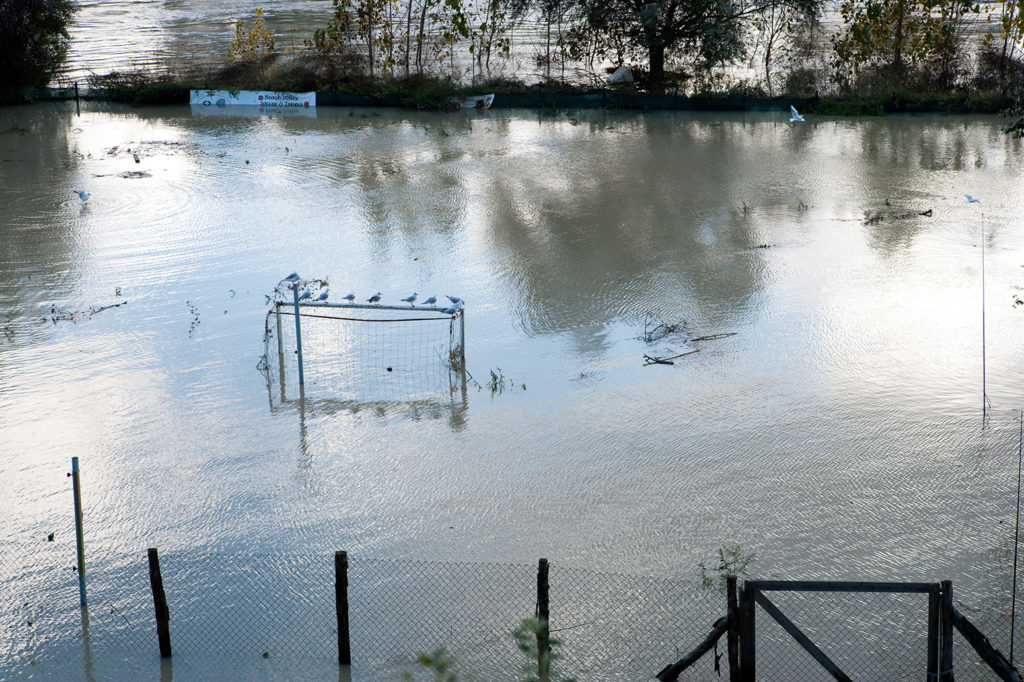
§ Europe’s changing landscape
$104bn (pdf)are expected to riseScience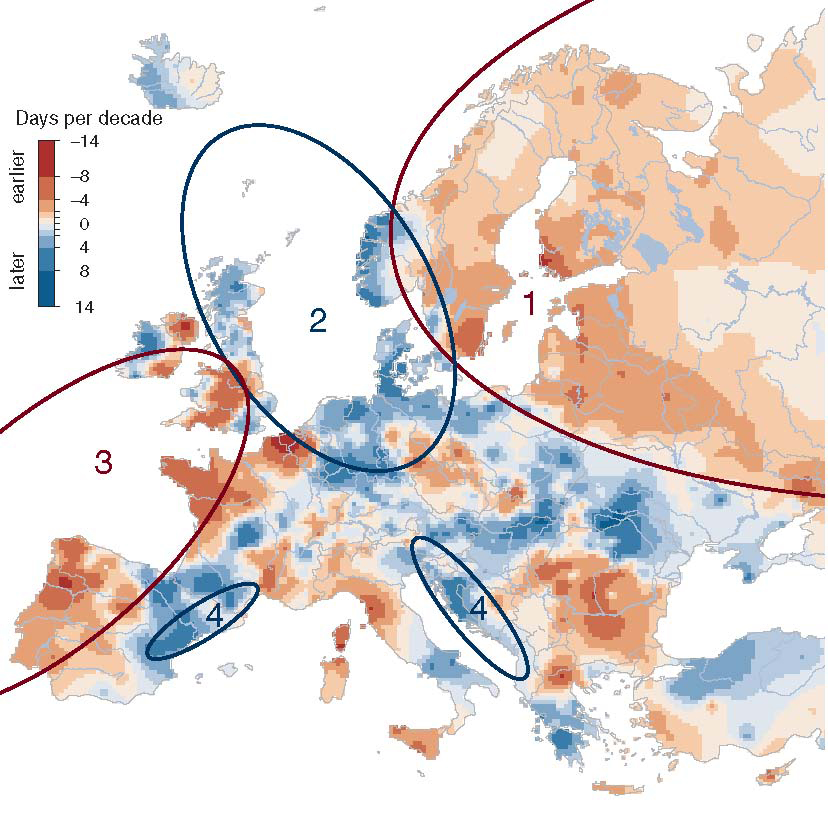
§ Consequences
Dr Louise SlaterLoughborough UniversityNews & Views“Sectors such as hydropower production, infrastructure operation, or water management [reservoirs] will be directly affected. There could also be indirect consequences for other sectors that are affected by changes in seasonality, such as agriculture.”
breeding behaviour of fishProf Günter BlöschlVienna University of Technology“These are animals that have spent hundreds, if not thousands of years, evolving to line up their spawning [egg-laying] behaviour with the times that floodplains fill with water.”
§ Finding a climate signal
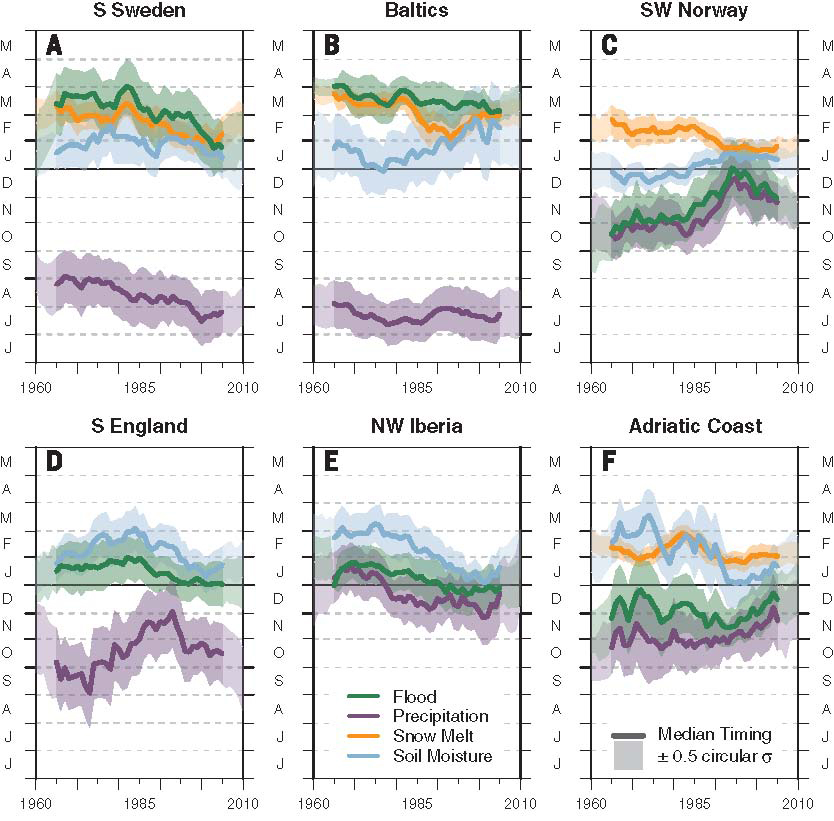
“Our analysis is comprehensive enough to allow us to say: ‘Yes, the impacts of climate change on flooding are real and they are happening now.’ But climate change has affected the seasonality [timing] of flooding in different ways depending on where you look in Europe.”
“There are many different factors that affect flood magnitude and frequency at the same time: atmospheric changes (such as precipitation and temperature) and land cover (such as urbanisation and agriculture). Therefore, when we detect a change, we cannot really say whether the change is related to climate. By measuring the seasonal timing of floods, it is much more likely that any detected changes are due to climate.”
Prof Peter Stott“The massive role of climate variability is heavily glossed over. They don’t, as far as I can see, evaluate how these signals compare with possible natural variations so I don’t see this as convincing evidence of a clear climate signal.”
“I suspect, though, by averaging up large amounts of data in this way, they are seeing some hints of the expected climate signal.”
Dr Lorenzo AlfieriJoint Research Centreearlier study“Although the term ‘floods’ is used consistently throughout the text, this is in reality the series of annual discharge peaks, hence the vast majority of events do not correspond to a flood in that they probably didn’t exceed the local flood protection level.”
Article information
Blöschl, G. et al. (2017) Changing climate shifts timing of European floods, Science, doi/10.1126/science.aan2506
Slater, L. J. and Wilby, R. L. (2017) Measuring the changing pulse of rivers, Science, doi:10.1126/science.aao2441