Guest post: Interpreting the Paris Agreement’s 1.5C temperature limit
Dr Joeri Rogelj is a research scholar at the International Institute for Applied Systems Analysis (IIASA) in Austria, and a coordinating lead author of the IPCC’s Special Report on 1.5C. Dr Carl-Friedrich Schleussner is head of climate science and impacts at Climate Analytics, and is on the steering committee of the initiative Half a degree Additional warming, Prognosis and Projected Impacts (HAPPI).Long-term temperature limits like 2C or 1.5C above pre-industrial levels have long been used as goalposts for climate change mitigation.Recently, these limits have received renewed attention in the scientific community, media and general public because of their inclusion in the Paris Agreement and the decision of the Intergovernmental Panel on Climate Change (IPCC) to prepare a Special Report on 1.5C.However, the Paris Agreement itself does not spell out explicitly how such temperature limits should be used in climate policy and practice. These limits are therefore subject to interpretation, leading to confusion when trying to communicate how achievable the 1.5C limit is and the mitigation effort required.In a commentary paper for the journal Geophysical Research Letters, we show that the temperature limits in the Paris Agreement should be understood as changes in long-term global averages attributed to human activity, which exclude natural variability.This means 1.5C might be breached in individual years well before the global long-term 1.5C temperature limit has definitively been crossed.§ Long-term goal
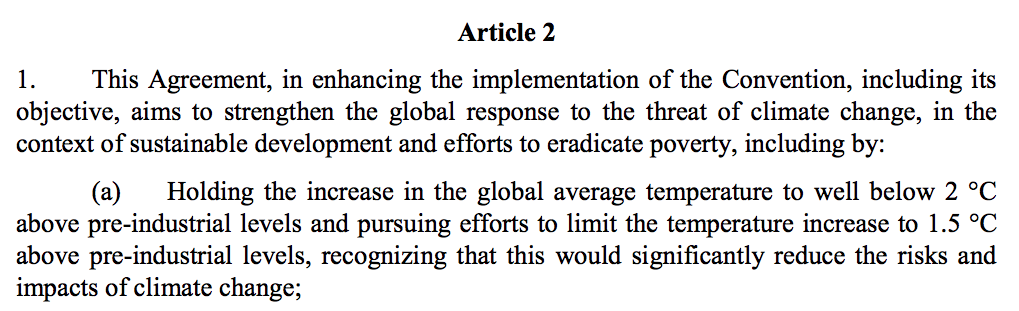
§ Thought experiment
El Niño-Southern Oscillation volcanic eruptions solar activityvirtuallyneveraveragenever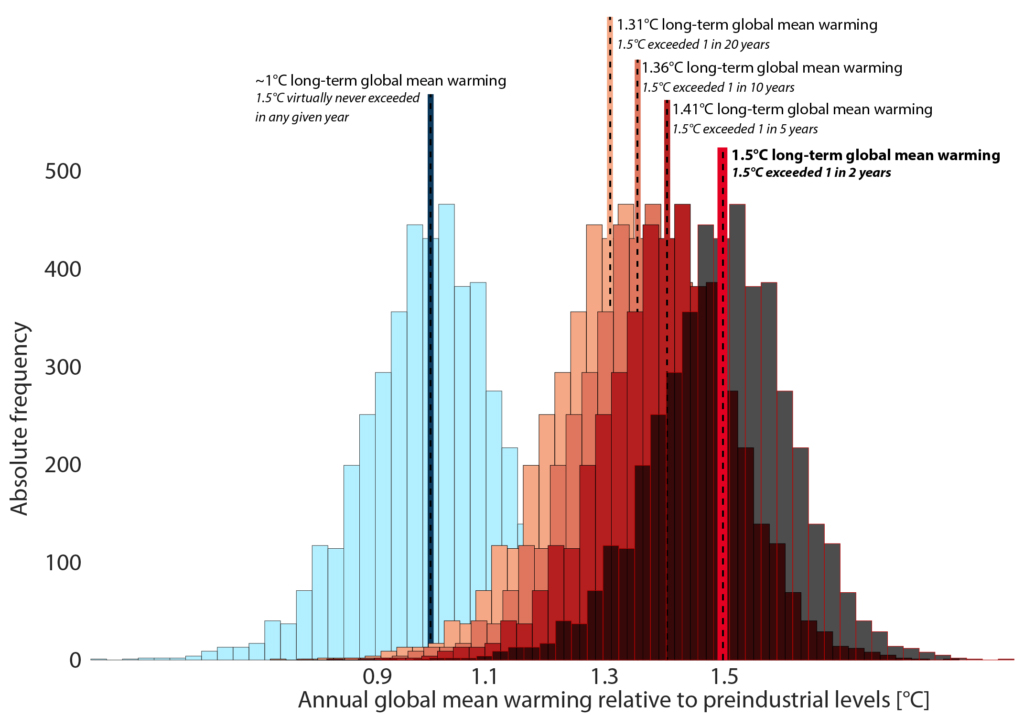
§ Carbon budgets
carbon budgets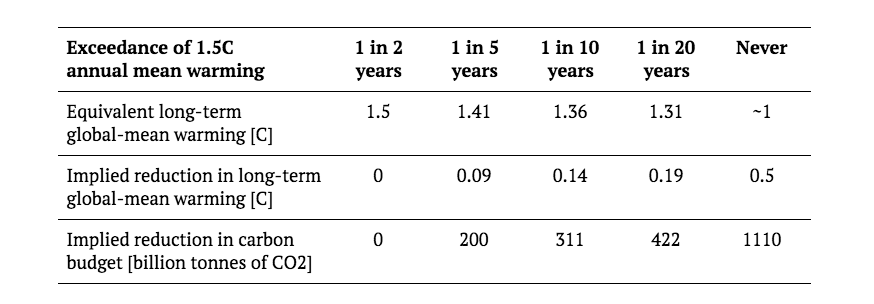
§ Legal and policy context
United Nations Framework Convention on Climate Change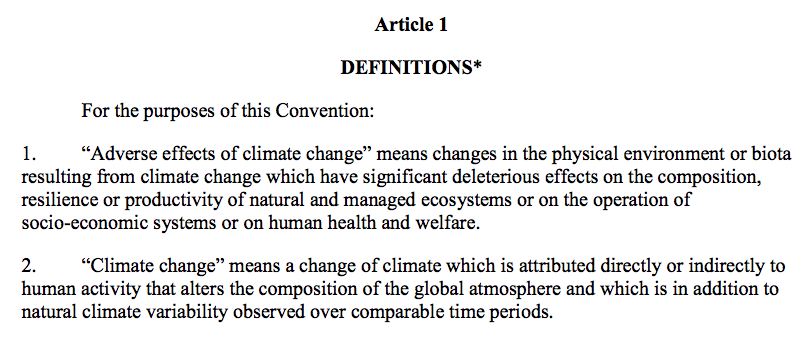
§ Communicating 1.5C – the challenges ahead
human-causedArticle information
Rogelj, J. et al. (2017) Getting it right matters – temperature goal interpretations in geoscience research, Geophysical Research Letters, doi:10.1002/2017GL075612