Guest post: Who will deliver the negative emissions needed to avoid 2C warming?
Dr Glen Peters is a senior researcher at the CICERO Center for International Climate Research in Norway, and Dr Oliver Geden is head of the EU/Europe Research Division at the German Institute for International and Security Affairs in Berlin, and research associate at the Institute for Science, Innovation and Society at the University of Oxford.With every year that global carbon emissions don’t fall, it becomes more likely that human society will need to turn to more unconventional options to slow the accumulation of CO2 in the atmosphere.“Negative emissions”, also known as “carbon dioxide removal” (CDR), refers to a group of approaches and technologies that take CO2 from the atmosphere and store it on land, underground or in the oceans.They first came under intense scrutiny following the publication of the Intergovernmental Panel on Climate Change’s (IPCC) fifth assessment report in 2013. The criticism mainly focused on the conceptual use of untested methods of CDR to keep global warming below 2C above pre-industrial levels in model simulations, the potential risks of deploying CDR technologies at scale, and the role of science in climate policy negotiations.The political implications of large-scale CDR have remained largely out of the debate. At COP21 in Paris in December 2015, governments not only agreed on limiting temperature increase to “well below 2C”, they also set a target of reaching a balance between emission sources and sinks in the second half of the century. A “net-zero” target may have political advantages, but it also necessitates CDR.Despite all the bluster in the scientific community on CDR, there has been no debate on the one issue that usually dominates UN climate negotiations – differentiation. This is the level of responsibility that rich and poor nations will take on in the global fight against climate change.But the big questions still remain: which countries are going to start CDR first? And, which countries will deliver the bulk of the CDR?§ Entering negative territory
100% renewable scenariosbroad mix of technologiesdeeper mitigation nowCDR is simply unavoidablereal debate becomes at what scaleAMPERE projectBioenergy with Carbon Capture and StorageAMPERE databaseremaining carbon budget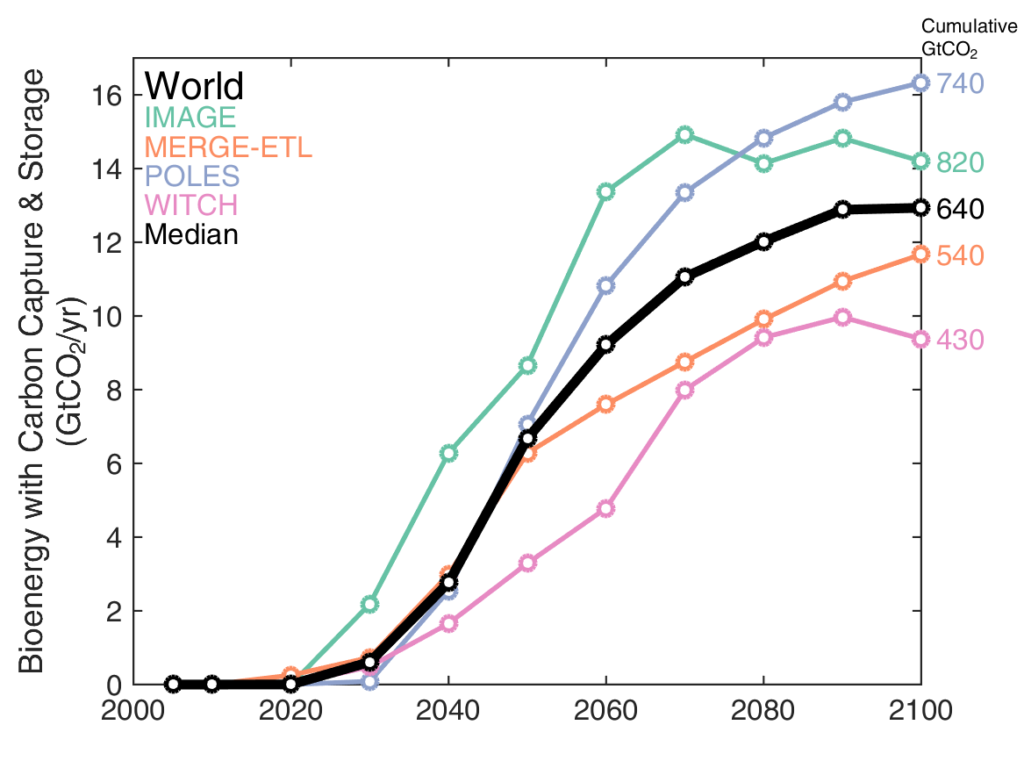
§ Distribution among countries and sectors
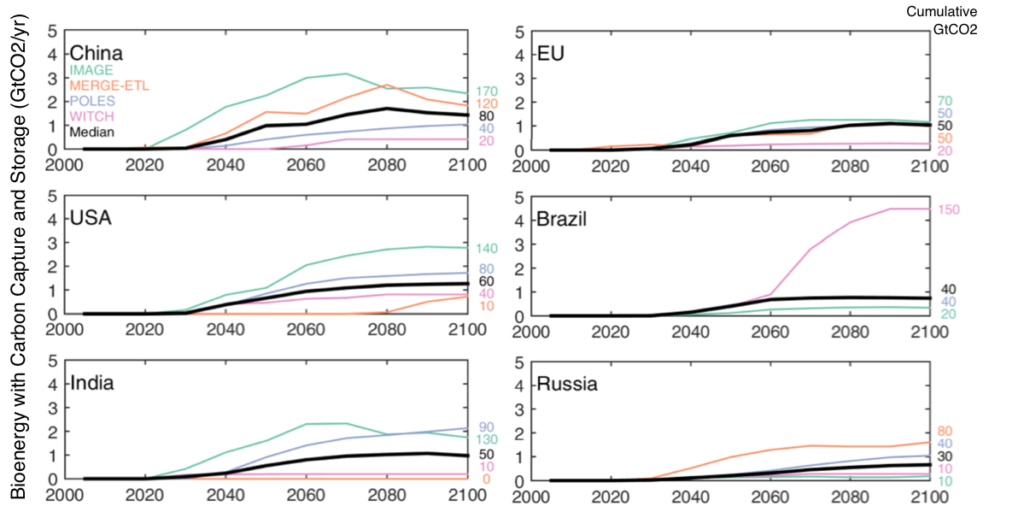
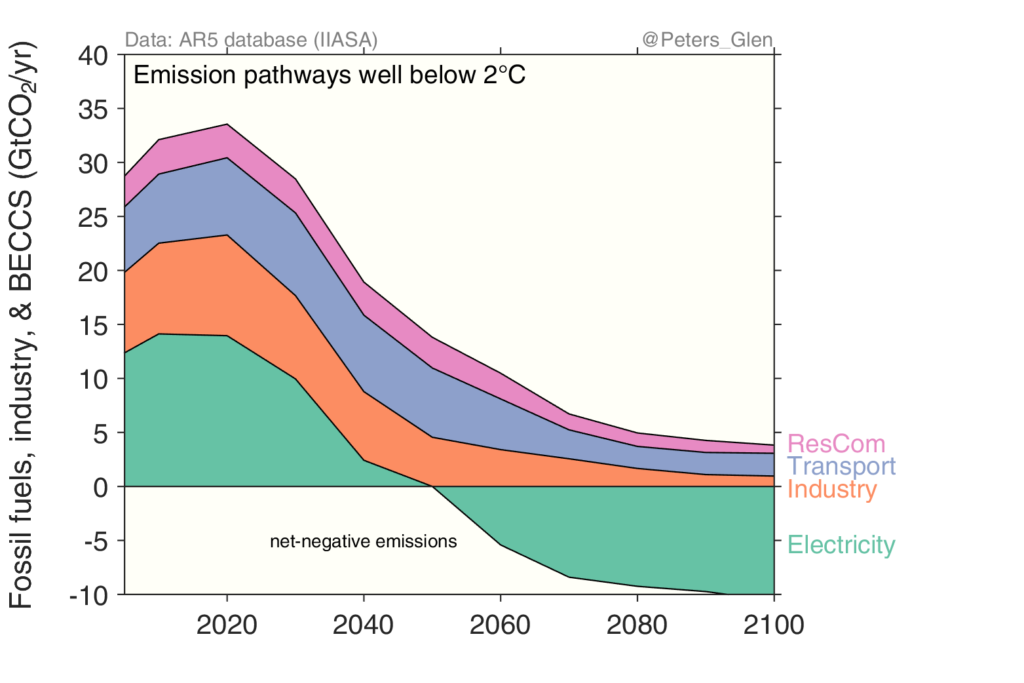
§ Incentive and accounting problems.
was not sufficientcarbon neutrality and climate benefitsalways been a challengewhen including carbon capture and storageassess carbon neutrality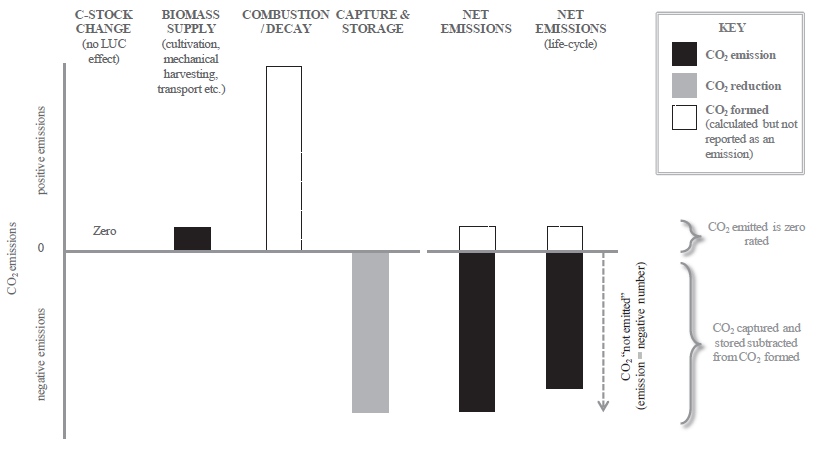
§ Political conversation about CDR
- Countries should begin negotiating differentiated CDR responsibilities, perhaps initiated by the “Facilitative Dialogue” in 2018, to indicate potential pathways to net-zero emissions and volumes of CDR that may be achieved
- Develop a detailed and functional system of accounting, supported by measurement, reporting, and verification, to track carbon and financial flows along the international CDR value chain
- Develop policy portfolios capable of incentivising business to research, develop and deploy the necessary technologies.
Article information
Peters, G.P. and Geden, O. (2017) Catalysing a political shift from low to negative carbon, Nature Climate Change, doi:10.1038/nclimate3369