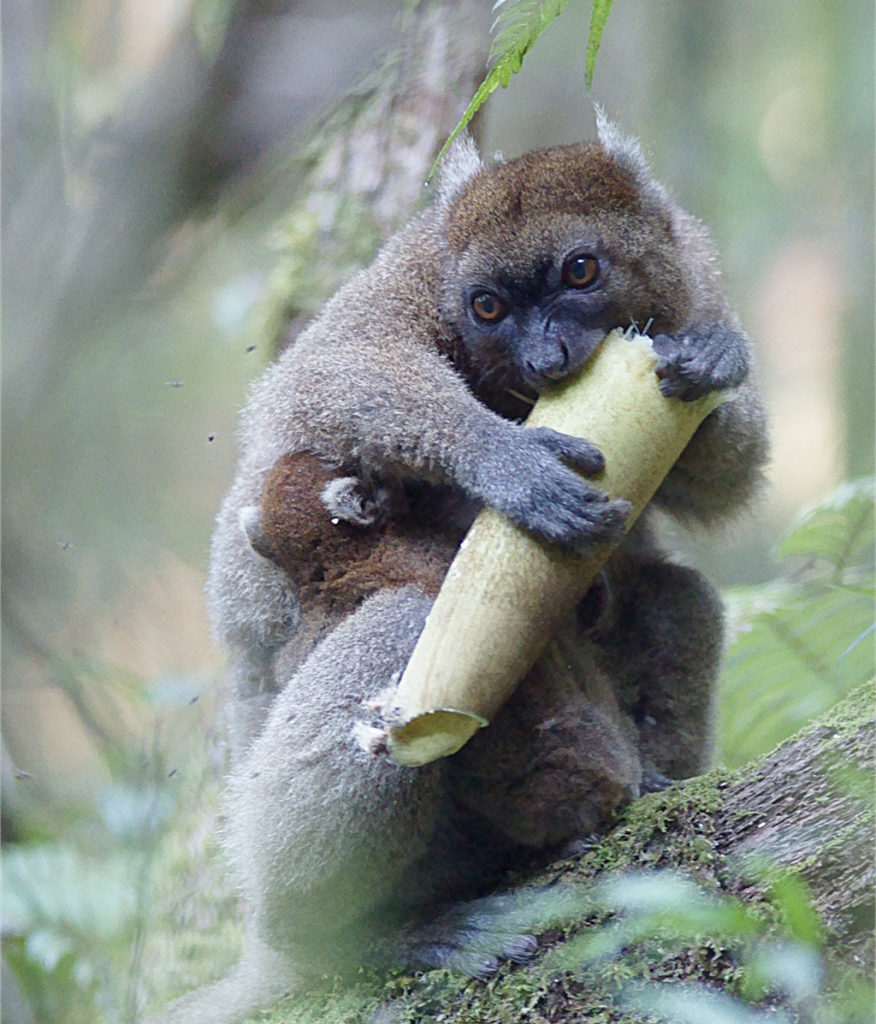
Climate change could threaten the food supply of bamboo lemurs, new research finds, leaving the animals vulnerable to starvation.The greater bamboo lemur is a critically endangered primate that lives deep in the forests of Madagascar. There are only around 500 greater bamboo lemurs left in the wild. Much like giant pandas, the animals survive on a diet consisting solely of bamboo.However, climate change could threaten the feeding habits of these unique animals, the study author tells Carbon Brief.Rising temperatures could lead to a prolonged and more intense dry season on the island, the research finds, which could alter the availability of fresh bamboo shoots, leaving only tougher, less nutritious options that wear down the lemurs’ teeth.Image - Greater bamboo lemur eats the tough culm (trunk) of bamboo. Credit: Jukka Jernvall. - Greater bamboo lemur eats the tough culm (trunk) of bamboo (note)
“Bamboo is a very special kind of diet; hard to chew, difficult to digest, toxic, but there is plenty of it where it grows. Few species have evolved to survive on bamboo, but those that have, have very little competition.”
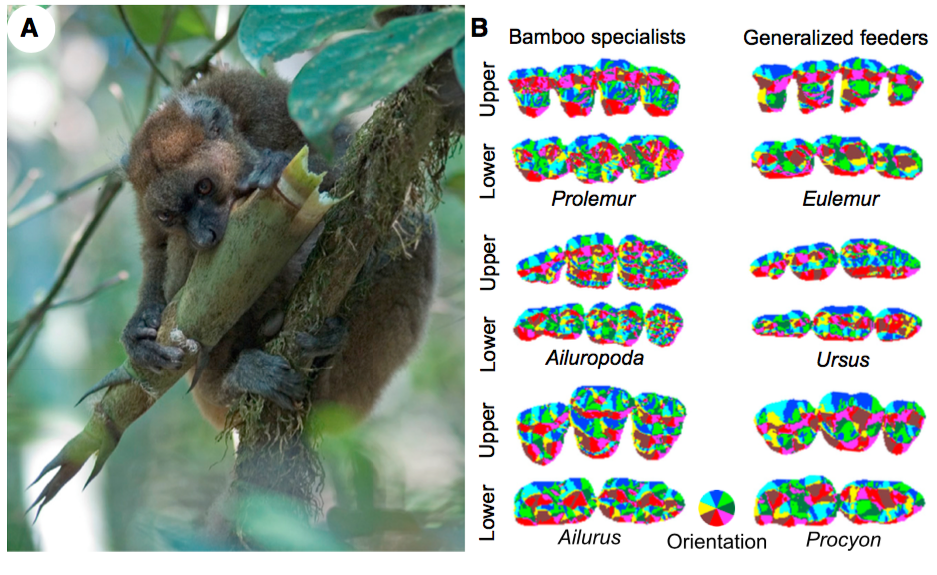
“In GIS analysis, the tooth shapes analysed are basically like miniature mountains. Greater bamboo lemur teeth are complex, and the ‘landscape’ looks therefore like rough badlands. These rough surface features are needed to grind the fibrous bamboo.”
RCP2.6: The RCPs (Representative Concentration Pathways) are scenarios of future concentrations of greenhouse gases and other forcings. RCP2.6 (also sometimes referred to as “RCP3-PD”) is a “peak and decline” scenario where stringent mitigation and carbon dioxide removal technologies mean atmospheric CO2 concentration peaks and then falls during this century. By 2100, CO2 levels increase to around 420ppm – around 20ppm above current levels – equivalent to 475ppm once other forcings are included (in CO2e). By 2100, global temperatures are likely to rise by 1.3-1.9C above pre-industrial levels.
RCP2.6: The RCPs (Representative Concentration Pathways) are scenarios of future concentrations of greenhouse gases and other forcings. RCP2.6 (also sometimes referred to as “RCP3-PD”) is a “peak and decline” scenario where stringent mitigation… Read More
“The new threat identified in our study is that even if it might look like nothing changes, bamboo lemurs may be in trouble. If the dry season gets just a bit longer or dryer, bamboo lemurs have to survive on bamboo culm a bit longer. This could mean poorer health and faster wear of teeth. Together with overall habitat destruction, and even hunting, the lemurs will have harder time to find suitable places to live.”
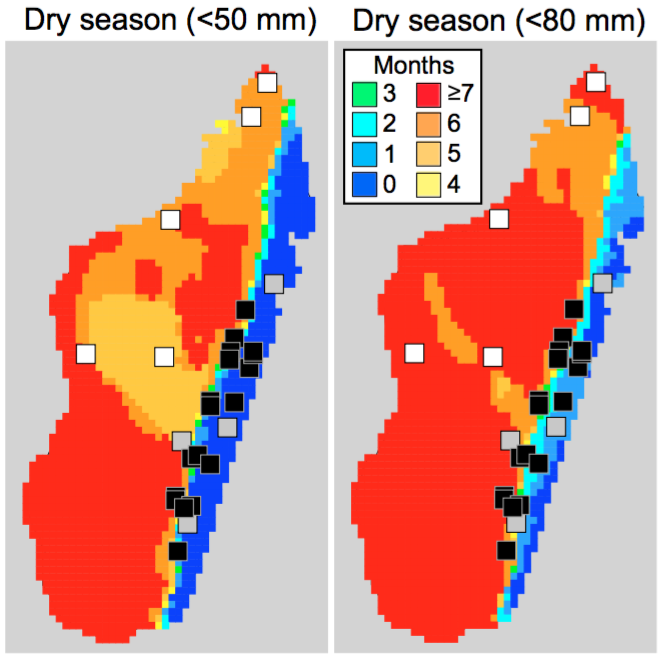
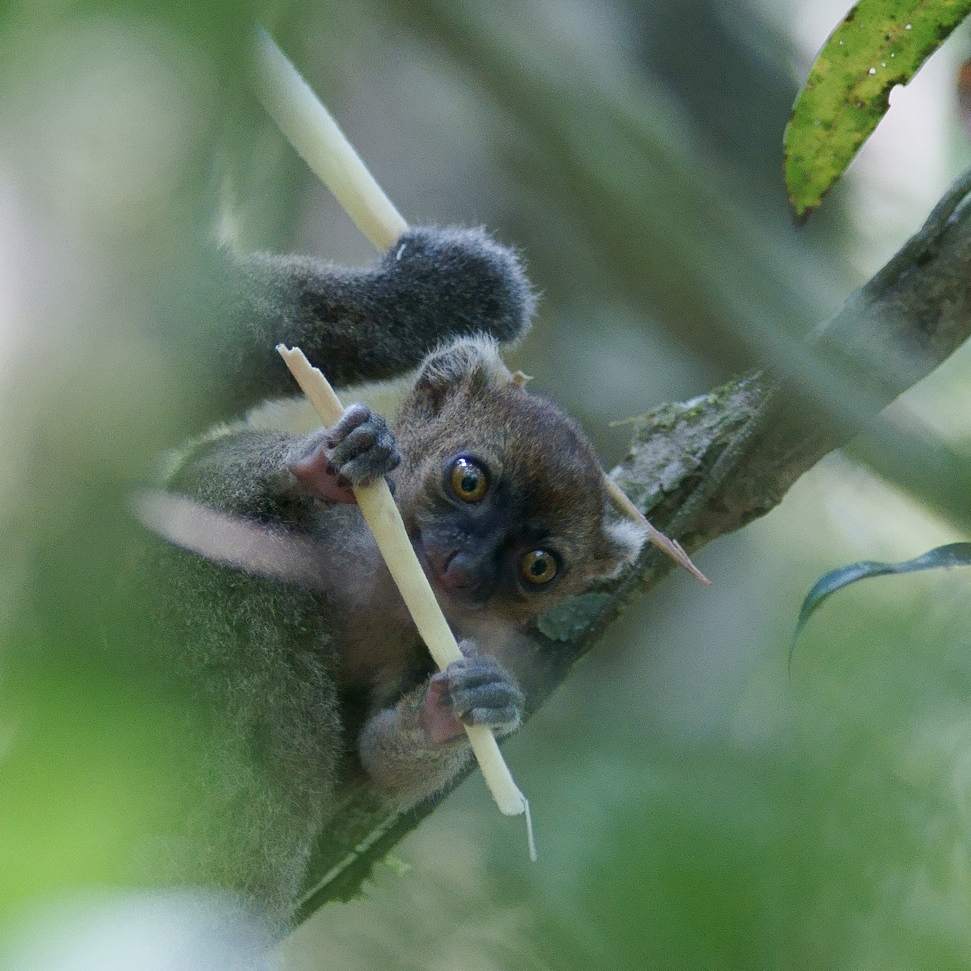
golden bamboo lemurImage - Greater bamboo lemur infant eating bamboo. Credit: Jukka Jernvall. - Greater bamboo lemur infant (note)For the final part of the study, the researchers modelled how global warming could affect the climate of Madagascar.They find that, even if greenhouse gas emissions peak in 2020 (a scenario known as ), climate change could have a profound impact on the island’s conditions.Namely, climate change is likely to cause the dry season to become longer and more intense across all parts of the island. “These analyses indicate that regions in which P. simus [greater bamboo lemur] are currently found are projected to experience precipitation patterns more comparable to those in the regions in which P. simus has gone extinct,” the paper notes.This could force bamboo lemurs to spend more time eating culm, which could ultimately cause the animals to starve, Jernvall says:These threats may also affect other bamboo lemur species, he adds, including a species known as the . As of 2014, there were five species and three subspecies of bamboo lemurs recognised. However, despite their shared namesake, not all of these species rely on a diet made up exclusively of bamboo.
“[The research] implies that high quality resources are only seasonally available and the lemurs have to synchronise their reproductive cycle to make sure that offspring weaning occurs when there is enough high quality food in the forest. It comes without saying that even slight changes in the duration of the seasons may have an effect on the tree phenologies and ultimately on lemurs’ survival.”
“Although they are known to be less specialised than greater bamboo lemurs, other bamboo lemur species have been considered specialists for a long time but now they have been seen to thrive in areas where there is no bamboo. In the south of Madagascar, our team has worked on southern bamboo lemurs and found that they spend most of their feeding time grazing grass. So there is a need to understand the full behavioural and ecological flexibility of the lemurs before reaching firm conclusions about their ability to survive climate change.”
“Climate predictions help to identify the best regions to build bamboo corridors to connect the isolated [lemur] populations left, and expand their habitats to regions where the conditions are not changing so fast. This could be done also outside the protected areas.
“Ultimately, of course, we have to mitigate the climate change and minimize the land use changes or there is nowhere to go in the end. Madagascar, and the world, would be a less diverse place if specialists such as bamboo lemurs would disappear.”
The seasonal changes associated with climate change could also affect the lemurs’ ability to reproduce, says , a primatologist from , who was not involved in the study. He tells Carbon Brief:However, his previous research suggests that greater bamboo lemurs may be able to adapt to the challenges associated with climate change by switching to other sources of food.Tackling climate change on a global scale would be the best way to ensure the long-term survival of the remaining bamboo lemurs in Madagascar, adds Jernvall.