UK could cut food emissions by 17% by sticking to a healthy diet
The UK could shed close to a fifth of its greenhouse gas emissions from food production if every Briton stuck to a healthy diet based on government guidelines, a new study concludes.The authors find that, in the UK, a switch from the “average diet”, which is rich in meat and dairy, to a nationally recommended diet, which includes more fruit, vegetables and nuts, could cause food-related emissions to fall by up to 17%.And if other wealthy countries, including the US, Canada and Australia, swapped their current eating habits for a state-endorsed diet, their emissions could decline by between 13 and 25%.The new research “provides a valuable indication that we and the planet could be healthier together,” a scientist tells Carbon Brief.§ UK’s growing appetite
nitrous oxidemethanedeforestationaccording to a 2014 study30%eating less meat and dairycow fodderreducing food wasteProceedings of the National Academy of SciencesEatwell GuideProfessor Paul BehrensLeiden University“Although dietary choices drive both health and environmental outcomes, these diets make almost no reference to environmental impacts. We find that following a nationally recommended diet in high-income nations results in a reduction in greenhouse gases.”
§ Stepping onto the scales
FAOEXIOBASE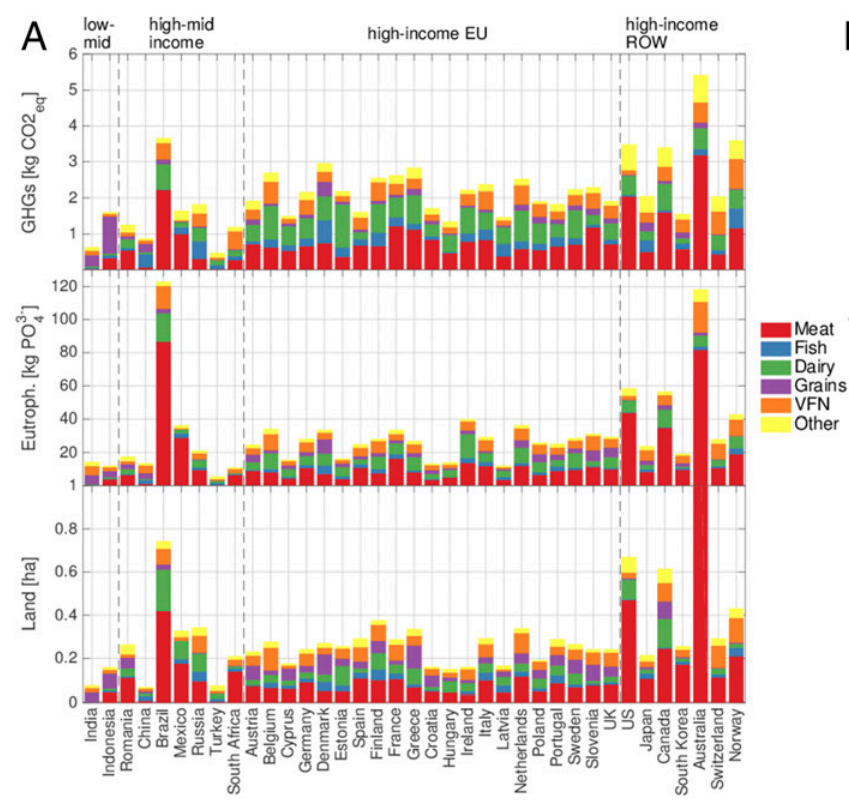
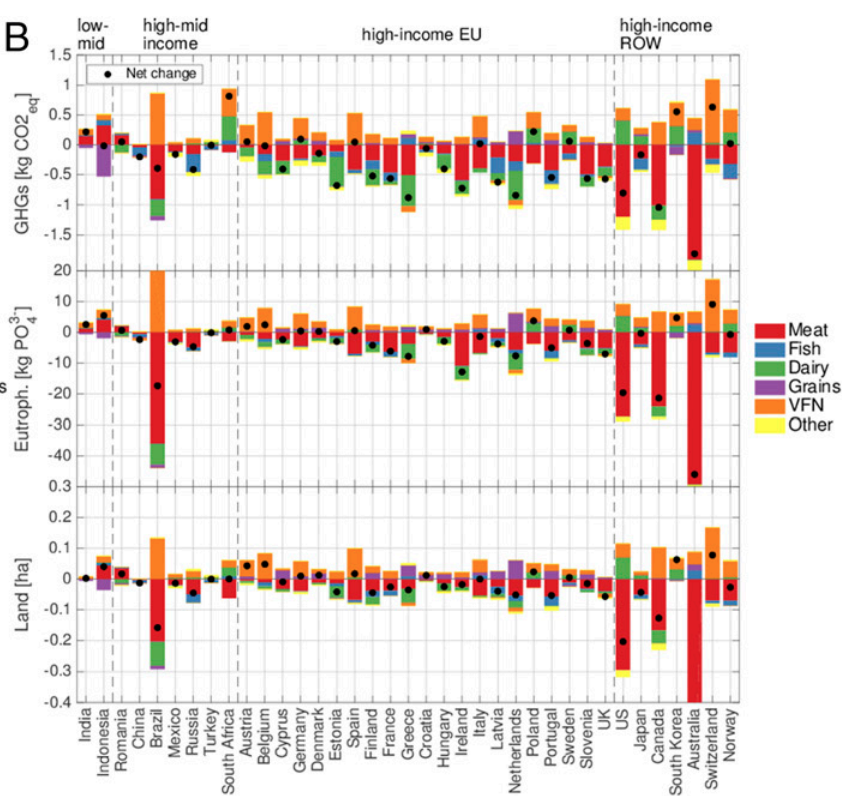
“Food waste is over a third once you take into account production, processing and domestic food wastes. If you include all the emissions from food production, then the difference in the diets becomes smaller because you are still wasting a lot of food.”
§ Getting into shape
government statisticsgovernment survey“Major obstacles will be related to similar issues with any social and cultural change, and that is the inertia of existing habits. Some social issues can change very very quickly once the right conditions are in place. These sorts of diets are increasing steadily in the population, but usually these social changes reach a tipping point, when change happens relatively quickly, for example, the legalisation of gay marriage surprised many with its speed.”
Tim BentonUniversity of Leeds“Of course, much about the food system would have to change were the world to adopt sustainable, healthy, eating patterns: the crops grown, the way they are grown, and the subsidies and economics, as well as the retail environment. Nonetheless, this paper provides a valuable indication that we, and the planet, could be healthier together.”
Article information
Behrens et al. (2017) Evaluating the environmental impacts of dietary recommendations, PNAS, http://www.pnas.org/cgi/doi/10.1073/pnas.1711889114