Analysis: The climate papers most featured in the media in 2017
Every day, dozens of scientific journals publish new climate change research that is shared across the world via the internet.These journal papers make headlines in news articles and on blog pages, they pop up in Twitter timelines and on Facebook. But which ones make the biggest impression? Which have been shared and reported most widely?Carbon Brief has compiled its annual list of the 25 most talked-about climate change-related papers of the previous year. The infographic above shows which ones made it into the Top 10 in 2017.Our analysis is based on the data collected by Altmetric, which tracks and scores journal papers by the number of times they’re mentioned in online news articles and on social media platforms. (You can read more about how the Altmetric scoring system works in an earlier article.)§ First place
The irreversible momentum of clean energyGlobal warming and recurrent mass bleaching of coralsProf Terry HughesARC Centre of Excellence for Coral Reef StudiesCarbon Brief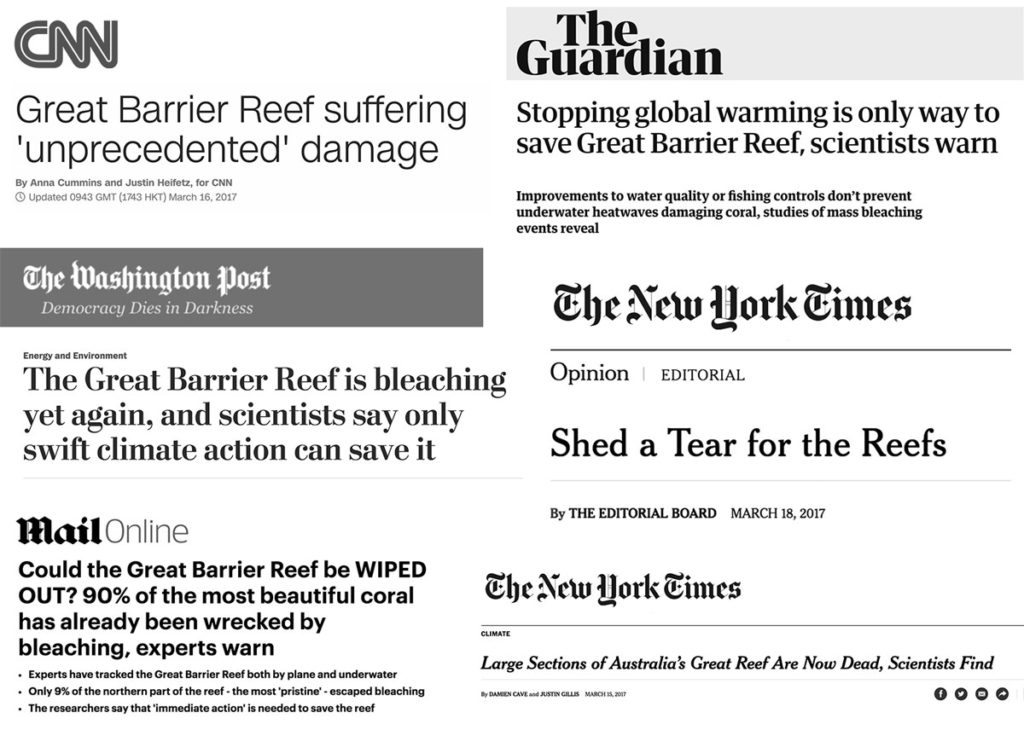
§ The Top 5
Biological annihilation via the ongoing sixth mass extinction signaled by vertebrate population losses and declinesDr Gerardo CeballosNational Autonomous University of MexicoAtlanticSunGuardianUSA TodayCNNWashington PostImage (note)Global risk of deadly heatDr Camilo MoraUniversity of Hawai’iCarbon BriefLe MondeIndependentDer SpiegelHuffington PostNatureMailOnlineBusiness InsiderViceImage - More et al paper: Global risk of deadly heat (note)Estimating economic damage from climate change in the United StatesDr Solomon HsiangUniversity of California at BerkeleyClimate Impact LabWidespread Biological Response to Rapid Warming on the Antarctic PeninsulaDr Matt AmesburyUniversity of Exeter2016 list2015



§ Elsewhere in the Top 10
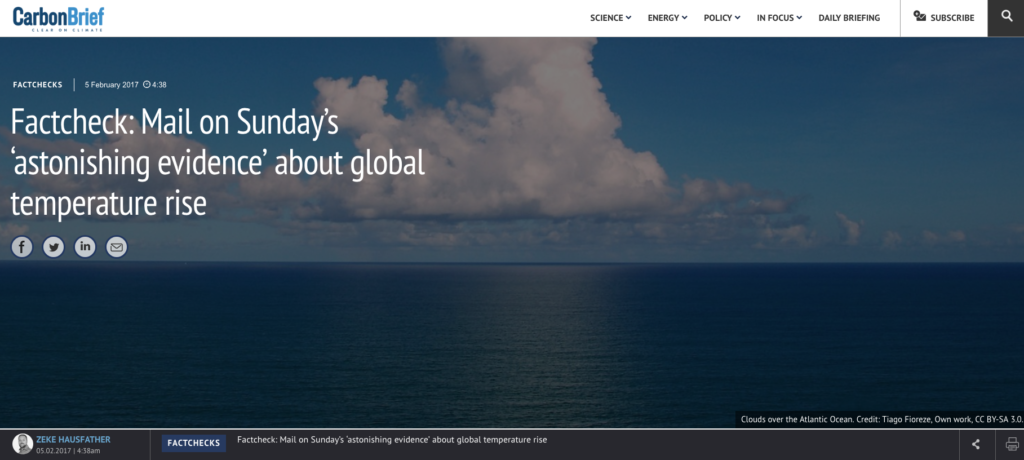
Assessing recent warming using instrumentally homogeneous sea surface temperature recordsZeke HausfatherCarbon BriefNOAAMail on SundayCarbon BriefImage (note)Washington PostNew York TimesMailOnlinesubsequently ruledAssessing ExxonMobil’s climate change communications (1977–2014)Dr Geoffrey SupranProf Naomi OreskesHarvard UniversityLess than 2C warming by 2100 unlikelyProf Adrian E RafteryUniversity of Washington
§ Honourable mentions
The Lancet Countdown on health and climate change: from 25 years of inaction to a global transformation for public healthCarbon BriefIncreased light, moderate, and severe clear-air turbulence in response to climate changeProf Paul WilliamsUniversity of ReadingCarbon BriefImage (note)The impacts of rising temperatures on aircraft takeoff performanceGlobal Response of Clear-Air Turbulence to Climate Change

Image (note)
Emission budgets and pathways consistent with limiting warming to 1.5CCarbon BriefDr Richard MillarUniversity of Oxfordmediafactcheckedguest articleInfluence of high-latitude atmospheric circulation changes on summertime Arctic sea iceCarbon BriefCoupling of pollination services and coffee suitability under climate changeCarbon Briefin this spreadsheet
Glossary
Carbon budget: A carbon budget is the maximum amount of carbon that can be released into the atmosphere while keeping a reasonable chance of staying below a given temperature rise. The Intergovernmental Panel on Climate Change (IPCC) first adopted the concept of carbon budgets in its 2013 report. Budgets are typically expressed in gigatonnes of carbon (GtC) or carbon dioxide (GtCO2). To convert the former to the latter, multiply by 3.67.
Carbon budget: A carbon budget is the maximum amount of carbon that can be released into the atmosphere while keeping a reasonable chance of staying below a given temperature rise. The Intergovernmental Panel on… Read More
§ Journals
Article information
Infographic by Rosamund Pearce for Carbon Brief.