Polar bears could be struggling to catch enough prey, study shows
Polar bears could be failing to hunt enough seals to meet their energy demands, new research suggests.A study tracking the behaviour of nine female bears from 2014 to 2016 over the Beaufort Sea found that some of the animals exerted so much energy during the hunting season that they lost up to 10% of their body mass in an 8-11 day period.The principal prey of Polar bears is the ringed seal, which the bears hunt from the ice surface. However, sea ice cover in the Arctic is in decline – by as much as 14% per decade for September. This may be forcing some polar bears to travel further in order to find their prey, the authors of the new research say.Female bears who lose large amounts of weight during the spring hunting season could find it more difficult to raise their cubs to maturity in the following months, the lead author tells Carbon Brief.However, it is not yet clear how such changes could be affecting the long-term survival of adult polar bears, he adds.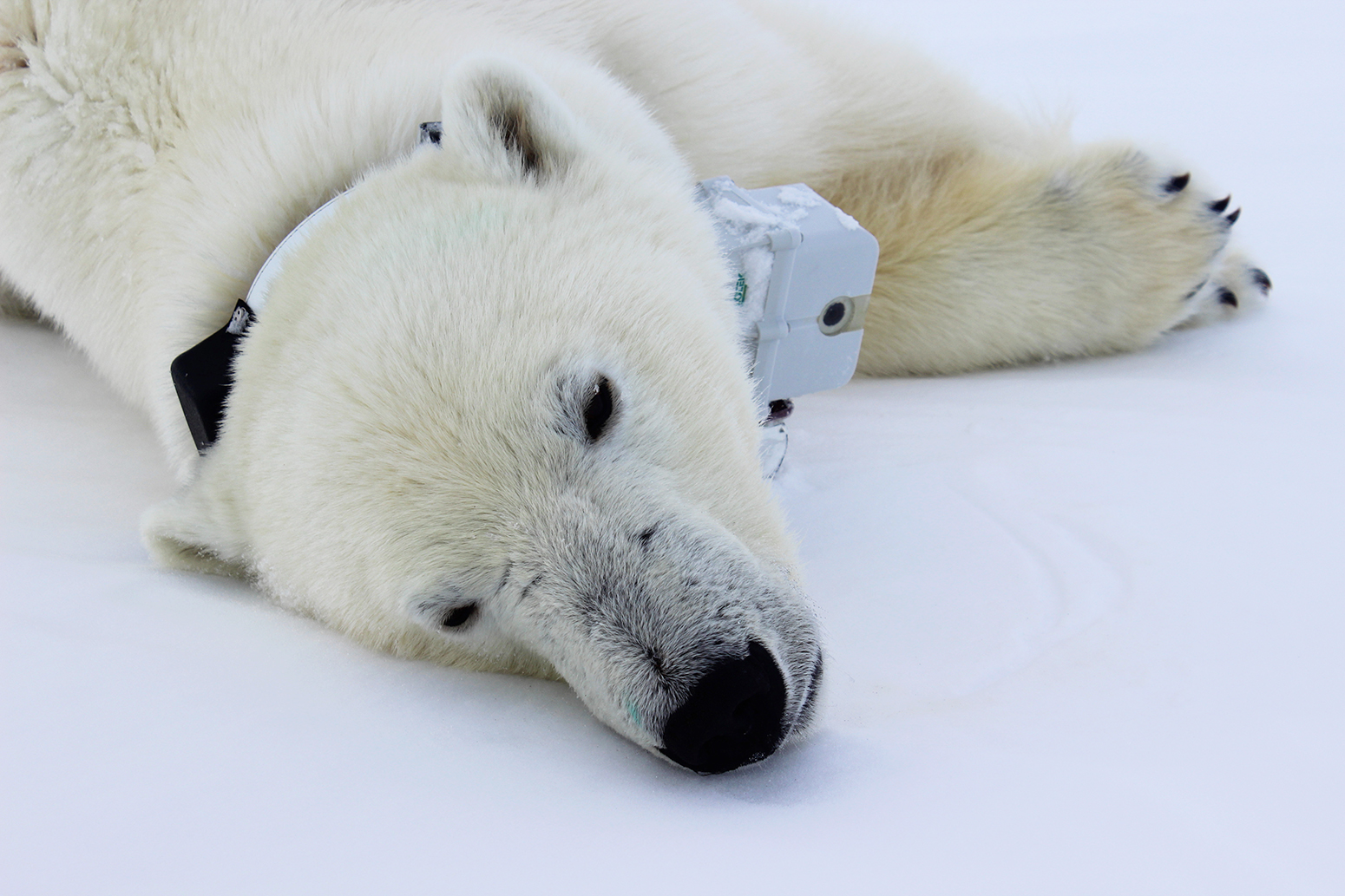
§ Bear’s-eye view
previous studiespublishedAnthony PaganoUSGSUniversity of California, Santa Cruz“Polar bears walk around until they find a breathing hole that a seal is actively using and they’ll typically stay there, they’ll either sit down or lay down or stand, and they’ll wait at that breathing hole. In some cases, they wait for hours.
“If they detect a seal has come out to breathe, they’ll stand up on their hind legs, raise their bodies up into the air and then pounce through the water as a way to try to stun the seal. If they’re successful, they’ll try to grab the seal around the neck with their jaws and pull them out of the water.”
“The easiest way to catch the bears is from a helicopter. It’s the safest method both for the bears and for the biologists. It’s also the best way to try to locate bears as well. Bears occur over a pretty extensive landscape and so locating the bears is a serious challenge.”
§ Bustling bears
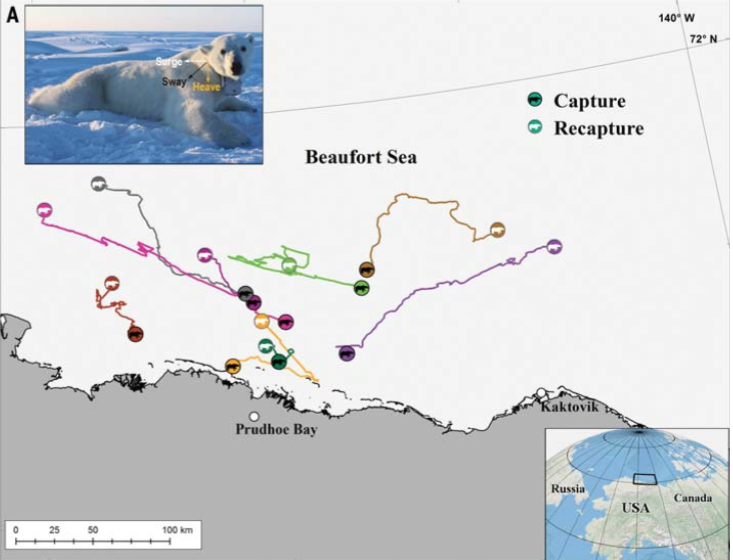
“Previous modelling work has tried to guess what a polar bear’s energy expenditure might be and how many seals they might need to capture. They speculated that, because polar bears use the ‘sit-and-wait’ hunting tactic, they would be able to conserve energy.
“What we found in the study is that the activity rates of these bears are very similar to other terrestrial carnivores, despite this sit-and-wait approach to hunting. They are still quite active and they are still travelling long distances.”
“Admittedly, the activity levels…in the study may be biased low owing to the effects of recovery post-capture. On the basis of movement rate and activity sensor data, recovery post-capture for polar bears may last two to three days.”
§ Melting ice
Previous research“In this area, 80-90% of the population is following the ice as it recedes to the north. They’re moving much greater distances than they had historically to follow the ice as it retreats hundreds of kilometres further to the north than it did historically.
“Once the ice returns in the fall and the winter, they’re following the ice back and making a long distance migration back to areas that are thought to have a higher variability of seals.”
§ Cub survival
“Some work has shown that they are emerging from their dens in lower body condition and they are not able to locate as much food as they have done historically. Basically, they’re not able to provide for their young at an adequate level and that’s driving declines in cub survival.”
“The concern is that as the ice breaks up earlier each year, the bears will be impacted in three ways: they’ll be less successful at catching seals because they’re being displaced from their primary foraging habitat earlier; they’re putting on less weight than they would have done historically; and then they’re also moving greater differences. If that trend continues, we would expect continued declines in reproductive success.”
“From what we’ve seen so far there doesn’t seem to be large decreases in adult survival, it really seems to be a function of females to be able to produce offspring and successfully raise them.”
ResearchIUCNsouthern Beaufort Seaarticle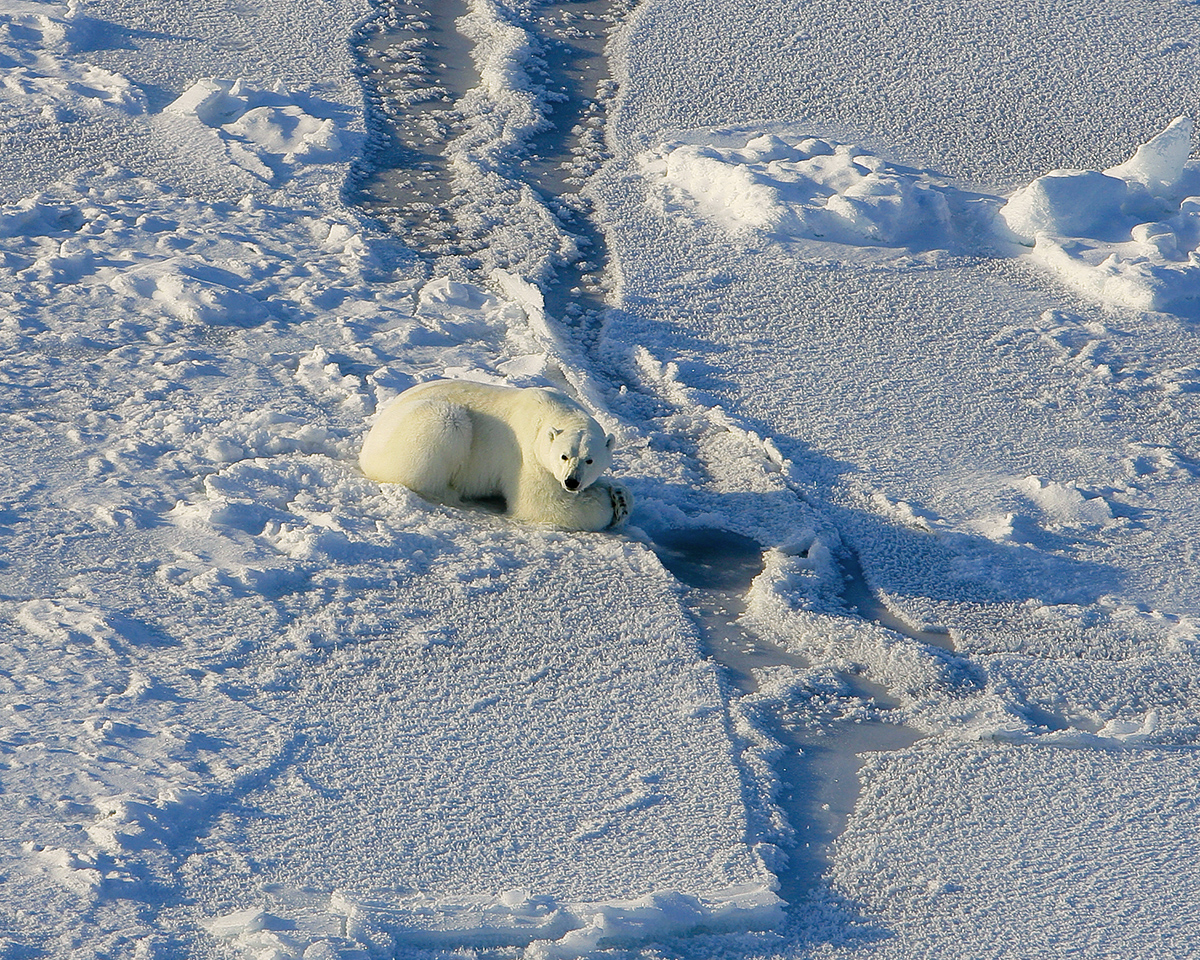
§ ‘Brief’ study
Prof Charlotte LindqvistUniversity at Buffalo“The sample size is small, but what can you do when you sample rare and wild polar bears on the sea ice? If half of the studied bears are already showing signs of energy deficiency on the spring sea ice, we can only imagine a likely gloomy outlook for polar bears as sea ice continues to decline.”
Prof Andrew DerocherUniversity of Alberta“One challenge with the study findings is that we know that feeding varies widely over space and time with polar bears and the study period used was, by necessity, quite brief. Some of the results could be rather different a few weeks or a month later. However, none of this detracts from the study’s findings, but context is useful.”
“Arctic sea-ice loss is a global issue and there is no quick fix: no protected areas, no habitat modification, or other standard conservation approach could significantly alter the threats facing polar bears in a warming climate. Only the reduction of greenhouse gases can slow the rate of loss of polar bear habitat and improve the conservation outlook for the bears.”
Article information
Pagano, A M et al. (2018) High-energy, high-fat lifestyle challenges an Arctic apex predator, the polar bear, Science, http://science.sciencemag.org/cgi/doi/10.1126/science.aan8677