New scenarios show how the world could limit warming to 1.5C in 2100
In the 2015 Paris Agreement on climate change, nearly every country on Earth pledged to keeping global temperatures “well below” 2C above pre-industrial levels and to “pursue efforts to limit the temperature increase even further to 1.5C”.However, at the time, scientists had only modelled energy system and carbon mitigation pathways to achieve the 2C target. Few studies had examined how the world might limit warming to 1.5C.Now a paper in Nature Climate Change presents the results from a new modelling exercise using six different “integrated assessment models” (IAMs) to limit global temperatures in 2100 to below 1.5C.The results suggest that 1.5C is achievable if global emissions peak in the next few years and massive amounts of carbon are sucked out of the atmosphere in the second half of the century through a proposed technology known as bioenergy with carbon capture and storage (BECCS).§ Defining the 1.5C target
not clearly defined in the text of the Paris Agreementhow best to define themwhat dataset to useuncertainties in climate sensitivitycould be interpretedresulting carbon budget§ 1.5C only possible in some future pathways
Shared Socioeconomic Pathways§ Emissions must peak quickly
§ Replacing fossil fuels with renewables
carbon capture and storage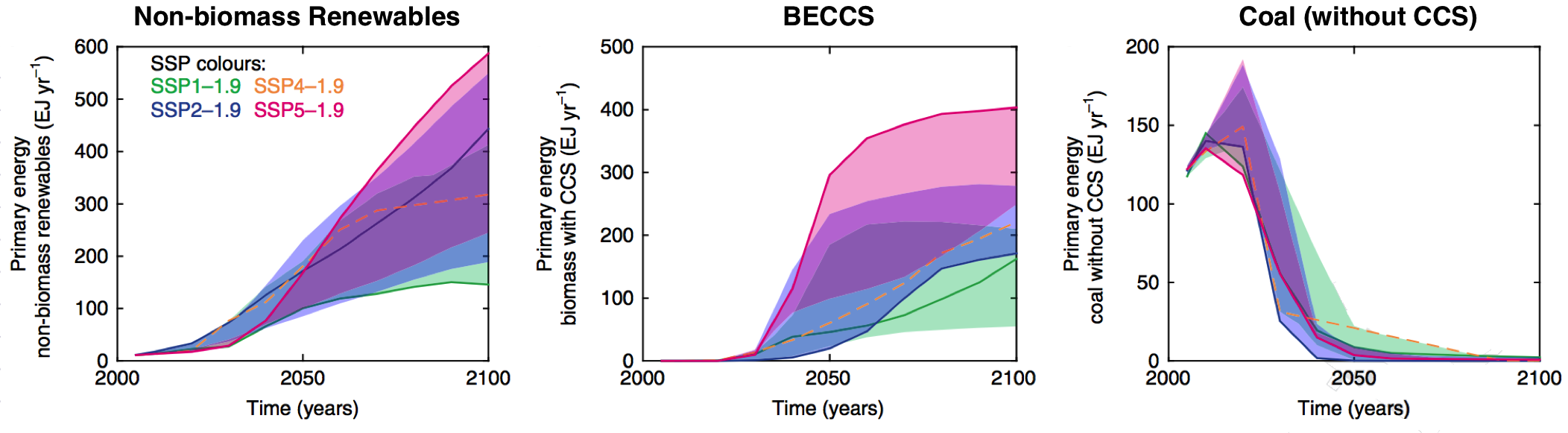
§ Emissions must go negative
Negative emissions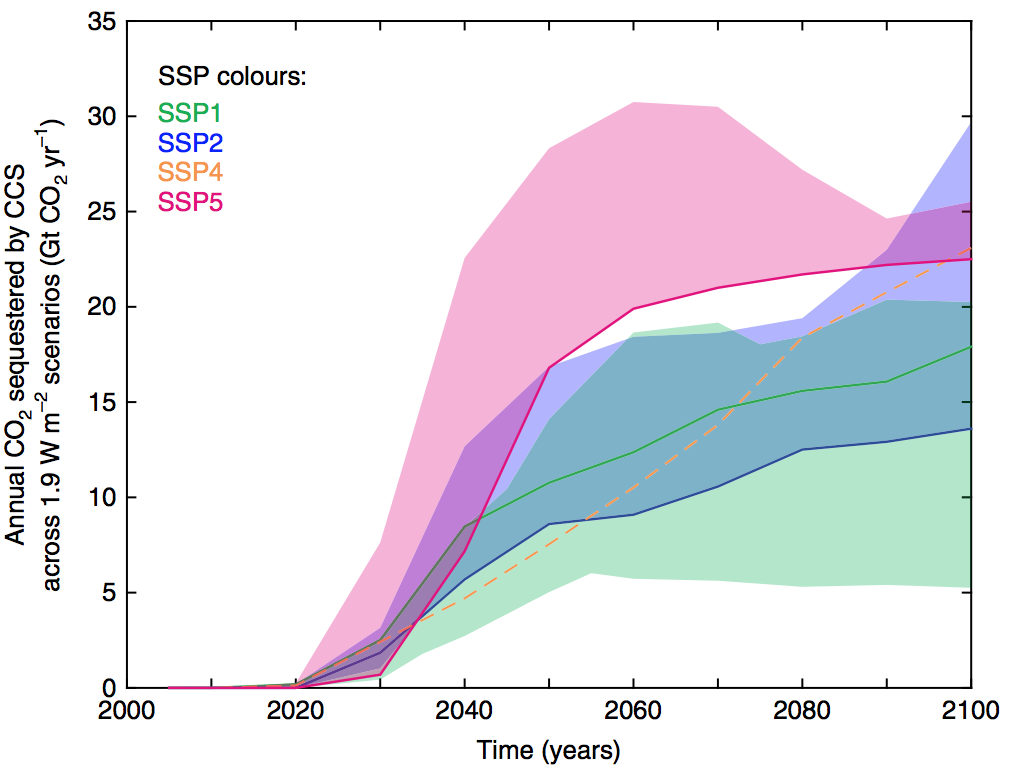
“This indicates that a focus on sustainable lifestyles that limit energy demand can strongly reduce the reliance on BECCS.”
§ Much more difficult to reach 1.5C than 2C
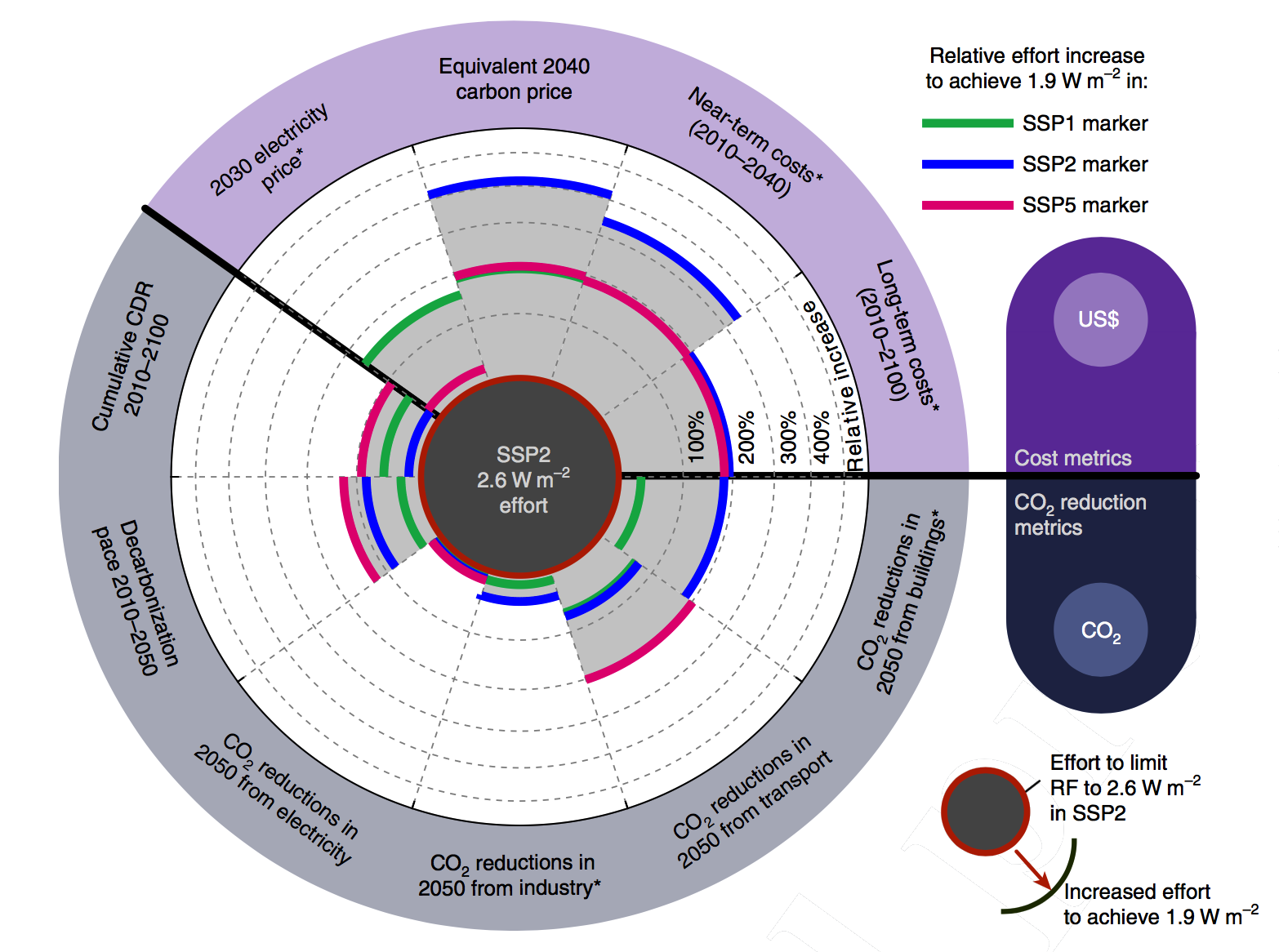
§ Difficult, but possible?
still-unprovenDr Glen PetersCICERO Center for International Climate Research“Limiting temperature to 1.5C is getting close to what models can deliver, with only certain socioeconomic, technological and resource assumptions amenable to 1.5C pathways. How to transform the model results into a viable society transformation remains the elephant in the room. The 1.5C scenarios require radical reductions in unabated fossil fuel use, rapid expansion of non-fossil energy sources and planetary-scale carbon dioxide removal. Failing to meet any of those core building blocks will make 1.5C quickly infeasible.”
Note: SSP emissions and scenario databaseArticle information
Rogelj, J. et al. (2018) Scenarios towards limiting global mean temperature increase below 1.5C, Nature Climate Change, doi:10.1038/s41558-018-0091-3