New maps pinpoint the potential for BECCS across the US
Models developed to explore how the world might limit future warming to the “well below 2C” target of the Paris Agreement on climate change typically employ large amounts of “negative emissions” later in the century.The majority of these “energy system” models employ a technology called bioenergy with carbon capture and storage (BECCS) at a massive scale. BECCS involves growing plants, absorbing CO2 in the process, then converting the resulting biomass into energy. The carbon emissions are captured and buried underground, both removing CO2 the atmosphere and producing energy at the same time.But the areas where large volumes of biomass can be grown and CO2 can be stored do not necessarily overlap. A new study, published in the Proceedings of the National Academy of Sciences (PNAS), examines the areas of the US that might fit both criteria – and whether BECCS can be implemented at the scale assumed in the energy models.The researchers find that there are enough suitable areas of the US to remove around 110m-120m tonnes (Mt) CO2 from the atmosphere by 2020 and 360-630MtCO2 by 2040.This is similar to what energy models assume will be deployed across the US in a world where warming is limited to well below 2C.§ Models rely on BECCS
in less than 10 yearsin less than 20roughly 20,000MtCO2 per yearImage (note)
some of thesethan otherscurrent US CO2 emissions
Glossary
Integrated Assessment Models: IAMs are computer models that analyse a broad range of data – e.g. physical, economic and social – to produce information that can be used to help decision-making. For climate research, specifically, IAMs are typically used to project future greenhouse gas emissions and climate impacts, and the benefits and costs of policy options that could be implemented to tackle them.
Integrated Assessment Models: IAMs are computer models that analyse a broad range of data – e.g. physical, economic and social – to produce information that can be used to help decision-making. For climate research, specifically,… Read More
§ Mapping biomass availability
estimates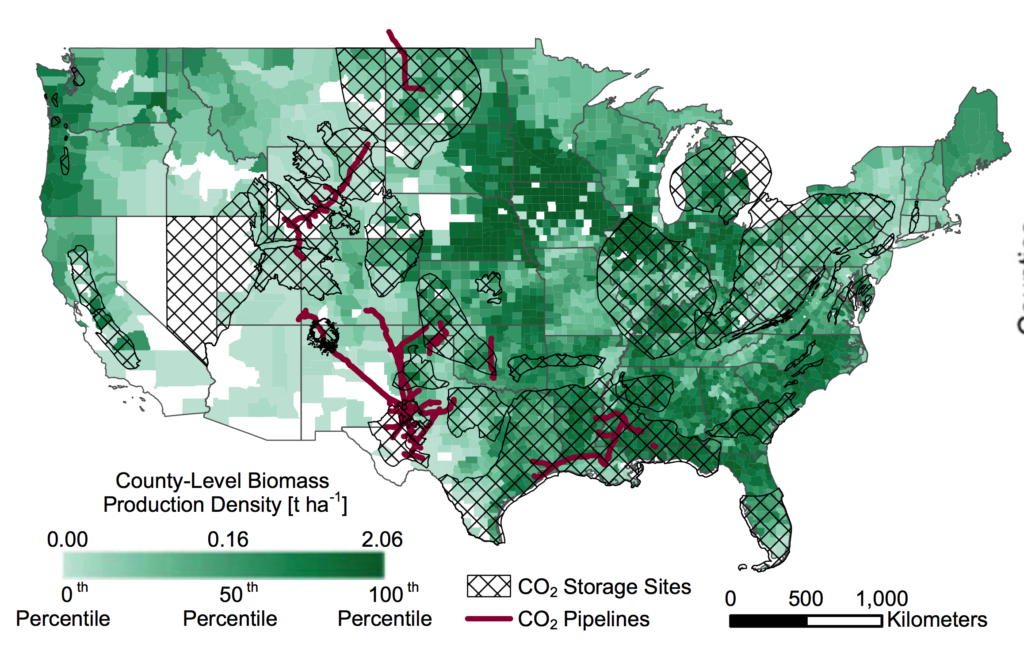
§ Sites close to geologic storage

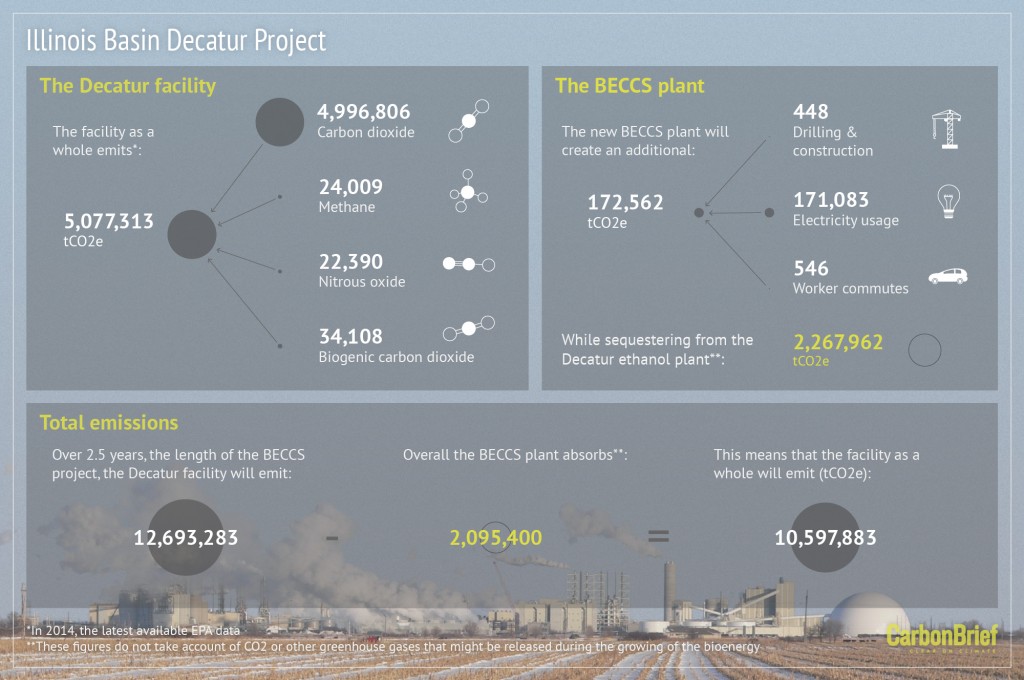
§ Technically feasible
Ejeong Baik“Establishing BECCS projects in areas with co-located biomass and storage sites may not necessarily be the best locations when optimising for largescale BECCS infrastructure that incorporate more biomass and extensive transportation networks. However, developing the low-cost opportunities is a great way to jumpstart deployment and can help bring down costs for future projects. Early development of BECCS can also help establish market structures that will later support large-scale deployment of BECCS.”
the land, water and fertiliserOther negative emissions technologiesUpdated on 13/03/2018:Article information
Baik, E. et al. (2018) Geospatial analysis of near-term potential for carbon-negative bioenergy in the United States, Proceedings of the National Academy of Sciences, doi:10.1073/pnas.1720338115