Great Barrier Reef at ‘unprecedented’ risk of collapse after major bleaching event
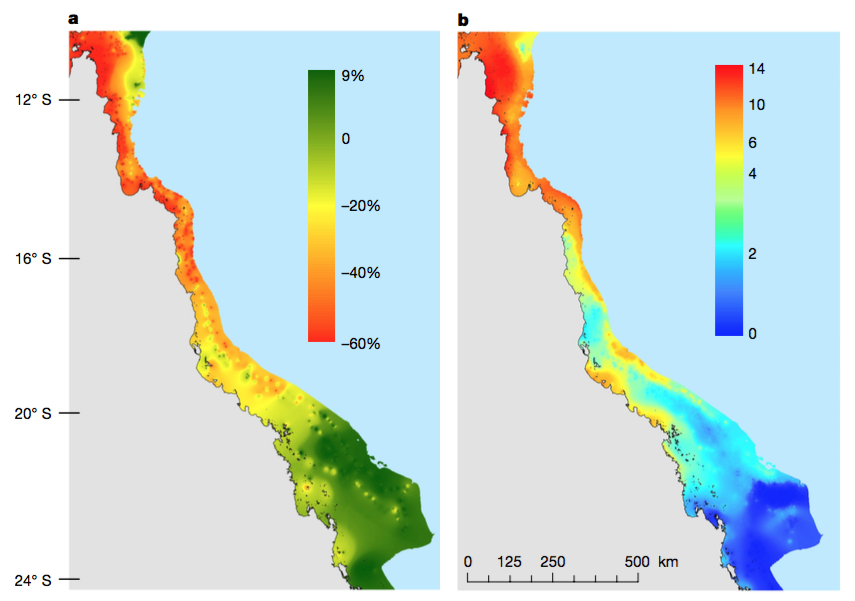
The record-breaking marine heatwave in 2016 across the Great Barrier Reef has left much of the coral ecosystem at an “unprecedented” risk of collapse, research shows.A new study published in Nature finds that the surge in sea temperatures during the 2016 bleaching event led to an immediate and long-lasting die-off of coral.This, in turn, led to vast swathes of the reef being transformed into “highly altered, degraded systems”, which are now vulnerable to total “ecological collapse”, the authors conclude.The large-scale loss of coral is a “harbinger of further radical shifts in the condition and dynamics of all ecosystems”, they add, “if global action on climate change fails to limit warming to 1.5-2C above the pre-industrial baseline”.§ Turning white
20162017zooxanthellaestark white skeletonstarvetwo to several hundred years94%“The die-off of corals drove a radical shift in the composition and functional traits of swaths of the Great Barrier Reef from mature and diverse assemblages to highly altered, degraded systems.”
§ Coral carnage
§ Lasting damage
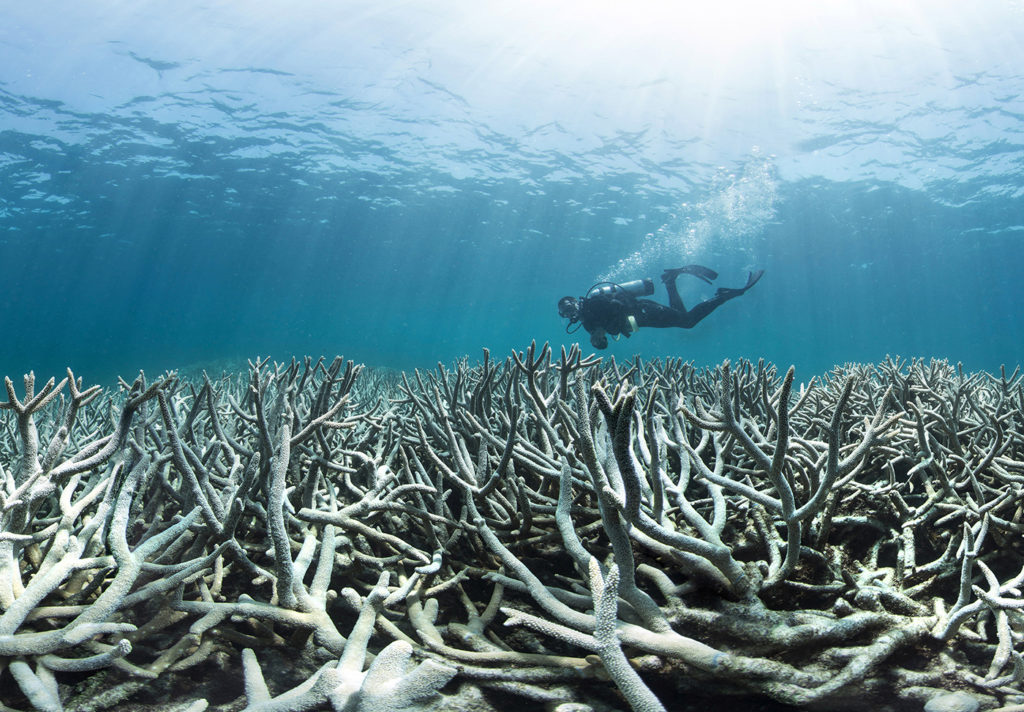
“What you are seeing here is ecological homogenisation or flattening. It is a reduction in the diversity of corals that makeup the community. The problem with this is that one of the aspects that makes coral reefs important is their high biological diversity — the large number of species that live on them. Less diversity of corals means less diversity of the fish, crabs, shrimp, clams, worms and other organisms that live on the reefs.”
“The Great Barrier Reef lost approximately 29% of its corals in 2016 and another 22% in 2017. The second consecutive year of bleaching damaged many of the hardier corals that had survived the first bleaching event.
“Even worse, our paper in Science earlier this year showed that severe coral bleaching around the world happened about once every 30 years in the 1980s, but once every 6 years in the 2010s. This doesn’t give corals enough time to recover.”
§ Place for Paris
Paris AgreementProf Terry HughesAustralian Research Council Centre of Excellence for Coral Reef Studies“We now have an international mechanisms, the Paris Agreement, to limit climate change. If we can achieve the 1.5-2C target, we can still have a healthy Great Barrier Reef.
“But it’s clear now that the future mix of coral species will be very different from just two years ago, before the unprecedented back-to-back bleaching in 2016 and 2017. Our study shows that this transition to a new, highly altered system is already underway – faster than any of us anticipated.”
Prof Nick GrahamLancaster University“Huge losses of coral also occurred in many other countries across the Indian and Pacific Oceans in 2016. A future with coral reefs, their rich diversity, and the livelihoods they provide to millions of people, is quite simple. It will only be possible if carbon emissions are rapidly reduced and we limit warming to 1.5-2C.”
Article information
Hughes, T. P. et al. (2018) Global warming transforms coral reef assemblages, Nature, doi:10.1038/s41586-018-0041-2