Guest post: Exceeding 1.5C of global warming will hit poorest the hardest
Dr Andrew King is a climate scientist at the University of Melbourne and Luke Harrington is a climate scientist at the University of OxfordClimate change is increasing the frequency of heat waves, changing rainfall patterns, raising sea levels and damaging coral reefs through increasing bleaching events.These effects of climate change are pervasive, so the vast majority of the global population will be impacted in some way as the world warms. However, these impacts will not be felt equally from one country to the next.Our research, published today in Geophysical Research Letters, shows that it will be the poorest nations who will see the biggest shifts in local climate.§ Limiting global warming benefits the tropics
Paris Agreementpre-industrial levelsdangerous consequencesemissions trajectory we are followingmore than 1C of global warming to datethe signal-to-noise measure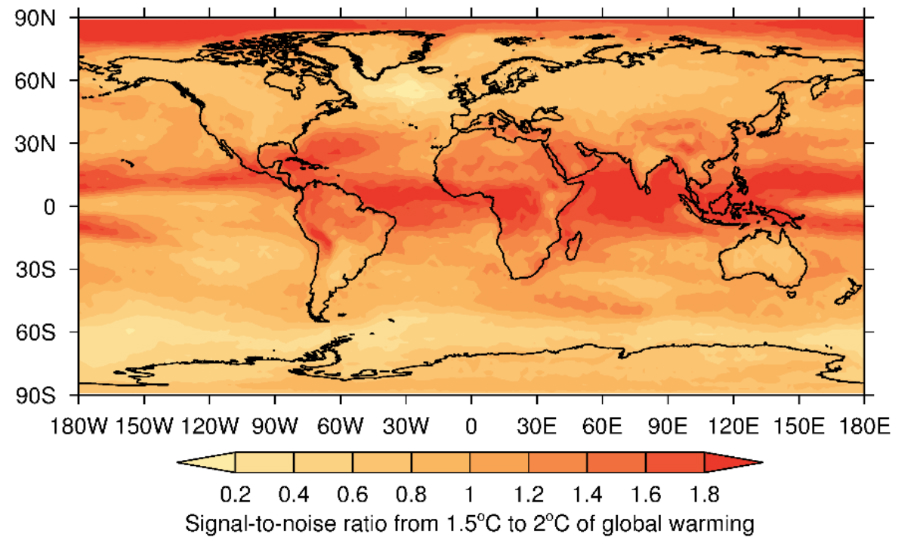
§ The inequality of climate change
global climate change has affected the poorest firstshared socioeconomic pathways by which time 2C may have been breached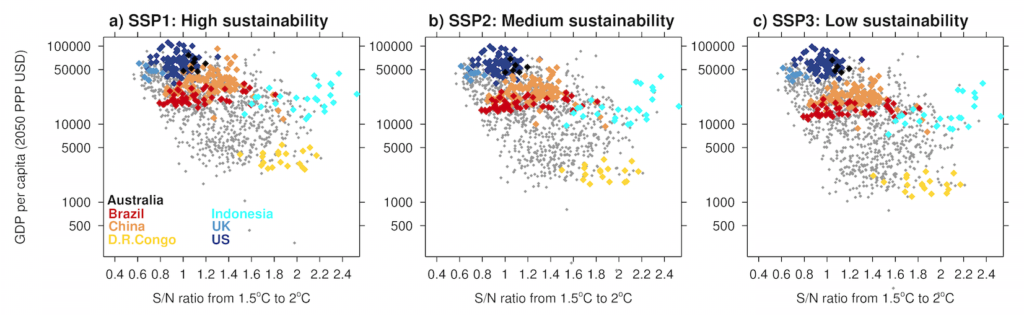
§ An impetus to act
frequency of heat extremes and their impactsdroughtsextreme heavy rain eventsplant and animal speciesGreat Barrier ReefUN Sustainable Development GoalsArticle information
King, A. D. and Harrington, L. J. (2018) The Inequality of Climate Change from 1.5C to 2C of Global Warming, Geophysical Research Letters, doi:10.1029/2018GL078430