Guest post: Seven key things to know about ‘negative emissions’
Prof Jan Minx is head of the applied sustainability science working group at the Mercator Research Institute on Global Commons and Climate Change (MCC) and Priestley Chair of climate change and public policy at the University of Leeds; Dr Sabine Fuss is head of the sustainable resource management and global change working group at the MCC; and Prof Gregory Nemet is associate professor of public affairs and environmental studies at the University of Wisconsin at Madison.Despite the ambitious long-term climate goals of the Paris Agreement, there remains a distinct lack of success at ushering in immediate and sustained reductions in global CO2 emissions.This cognitive dissonance has seen the topic of “negative emissions” – also known as “carbon dioxide removal” (CDR) – move into the limelight in climate science and policy discussions.Increasingly, the only way to bridge the growing gap between short and long-term climate policy ambition appears to be developing the ability to remove billions of tonnes of CO2 from the atmosphere and store it on land, underground, or in the oceans.Yet, the current knowledge on negative emissions technologies (NETs) is diffuse and incomplete. This makes it hard for assessment bodies, such as the Intergovernmental Panel on Climate Change (IPCC), to evaluate the state of knowledge.In a three-part literature review, published in Environmental Research Letters, we did some of the leg work and systematically assessed what we know and do not know about NETs. We presented our findings at last week’s international conference on negative emissions.Here are seven central insights from our three papers.§ 1. CDR should not be framed as geoengineering
solar radiation management
§ 2. The literature on NETs is growing rapidly and diversifying
fourth assessment cyclefifth assessment report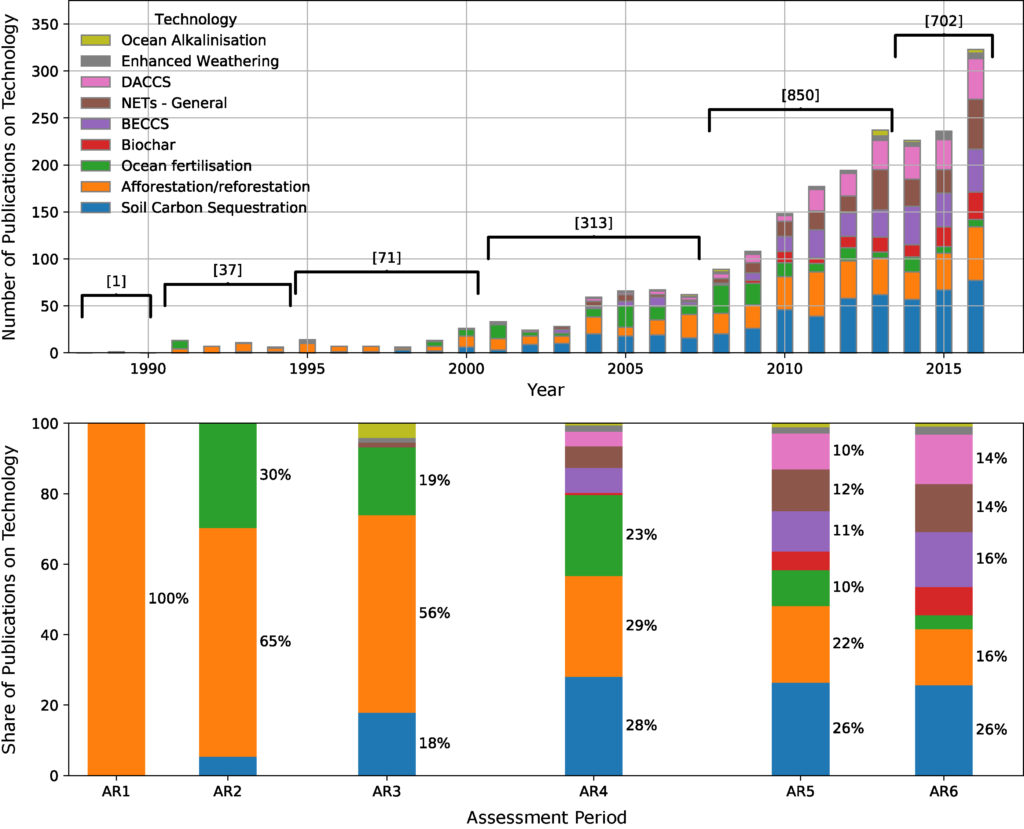
§ 3. Modelling scenarios depend on negative emissions for 1.5C goal, but not for 2C
without some form of NETssome recent scenariosstudynationally determined contributionscarbon budgetbioenergy with carbon capture and storagesubstantially more stringent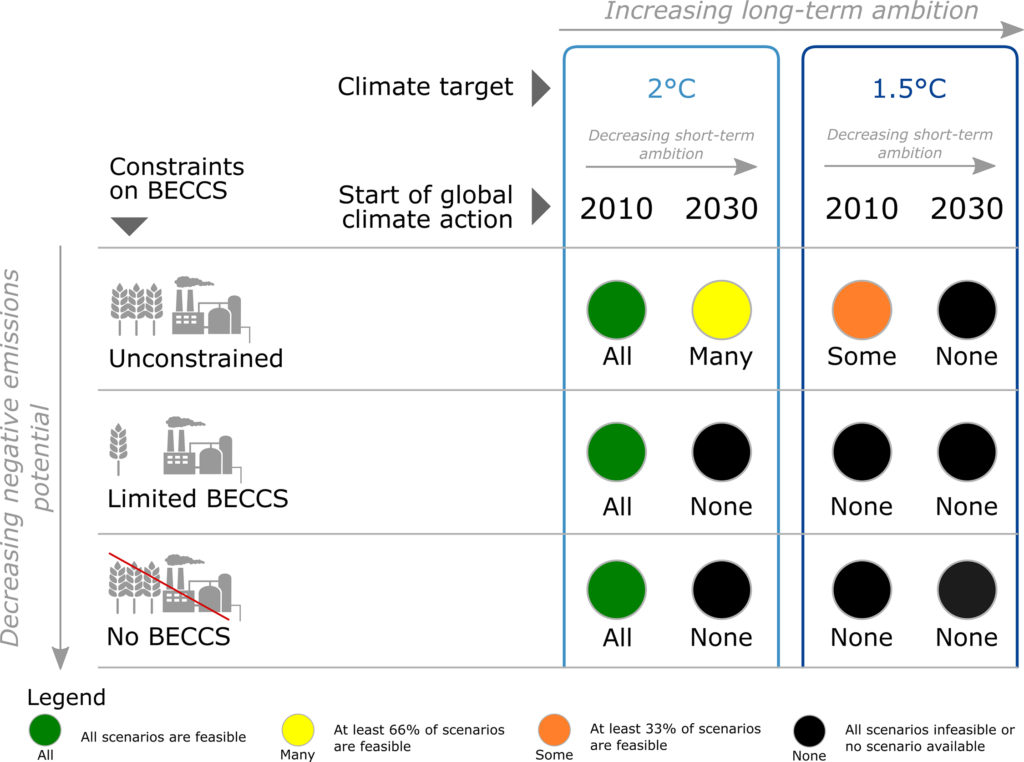
§ 4. How society develops is crucial for the amount of NETs needed
shared socioeconomic pathways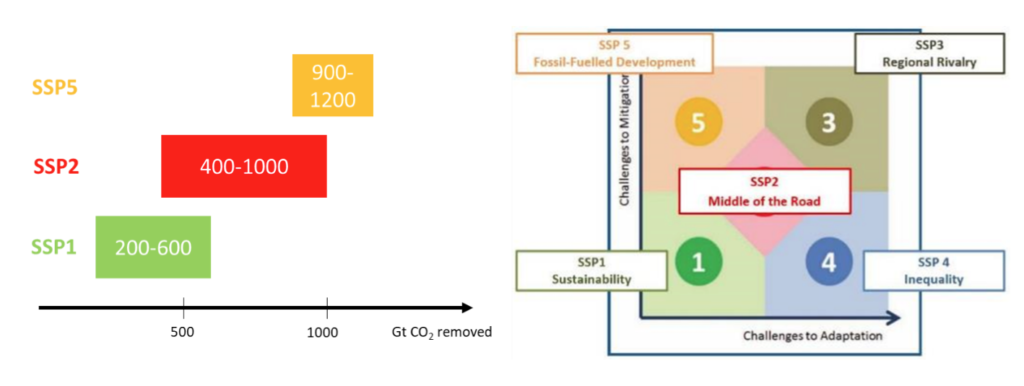
§ 5. Most NETs show potential for large-scale deployment, but all have limits
their wider impacts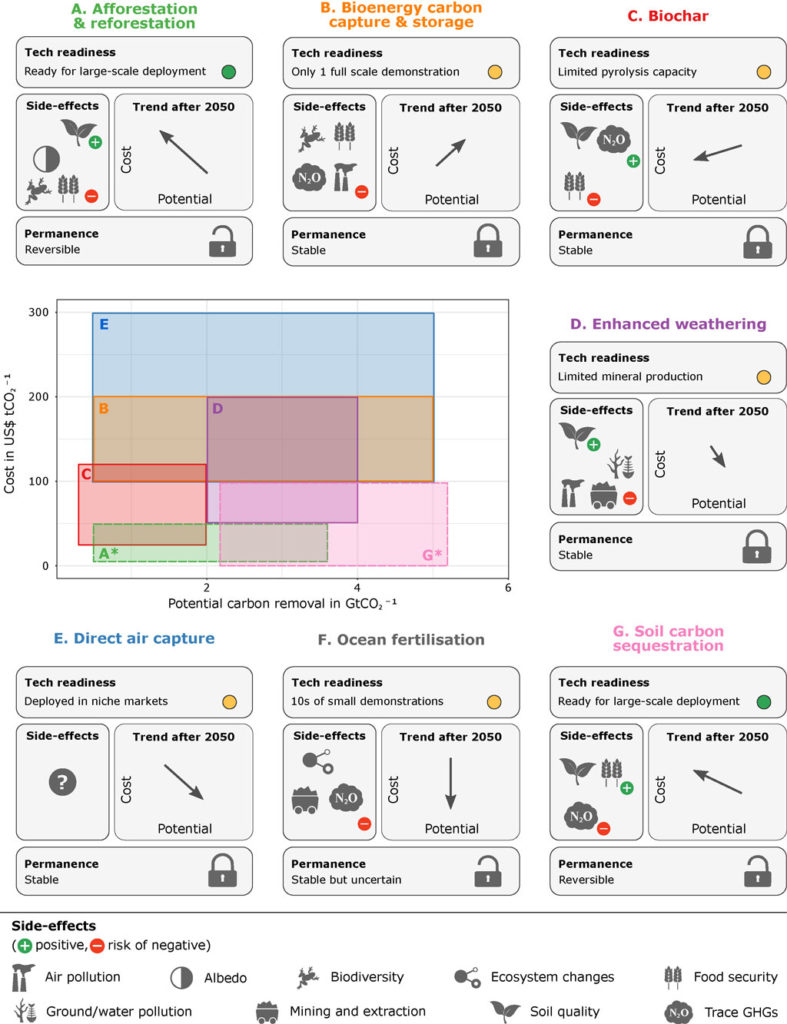
§ 6. Adverse side effects of BECCS relate specifically to bioenergy
There is concern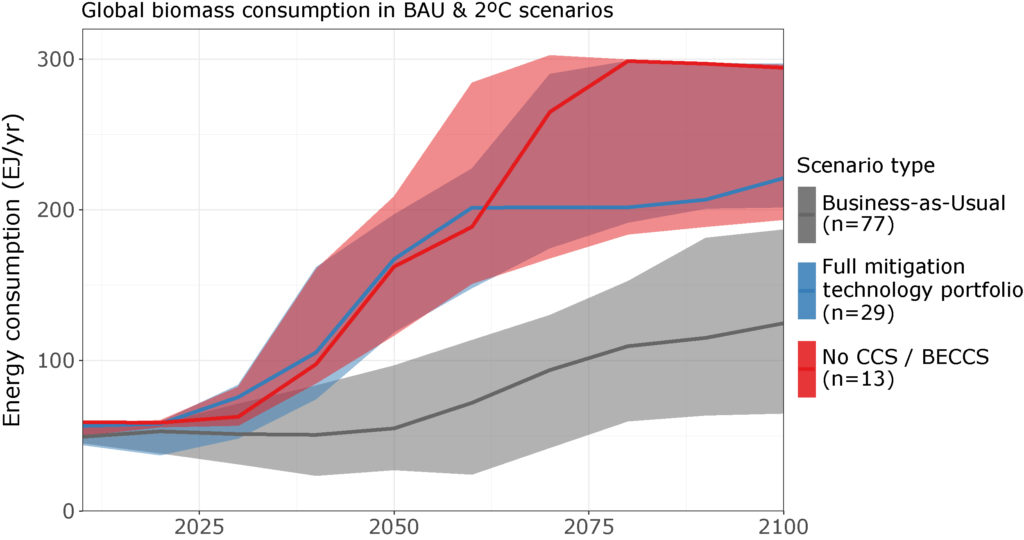
§ 7. A big gap exists between R&D of NETs and actual deployment
early adopters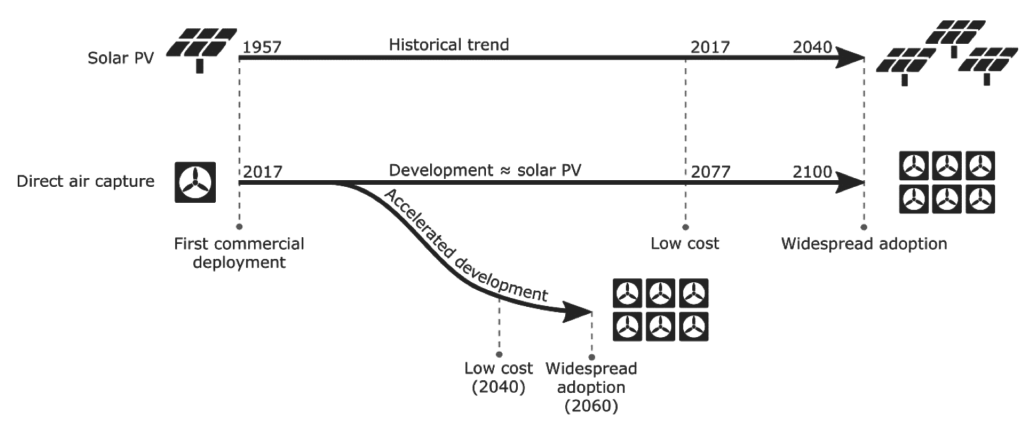
Article information
Minx, J. C. et al. (2018) Negative emissions – Part 1: Research landscape, ethics and synthesis, Environmental Research Letters, doi:10.1088/1748-9326/aabf9b
Fuss, S. et al. (2018) Negative emissions – Part 2: Costs, potentials and side effects, Environmental Research Letters, doi:10.1088/1748-9326/aabf9f
Nemet, G. F. et al. (2018) Negative emissions – Part 3: Innovation and upscaling, Environmental Research Letters, doi:10.1088/1748-9326/aabff4