Guest post: Unprecedented summer heat in Europe ‘every other year’ under 1.5C of warming
Dr Andrew King is a climate scientist at the University of Melbourne and Dr Markus Donat is a climate scientist at the University of New South WalesAs summer gets underway in the northern hemisphere, much of Europe has already been basking in temperatures of 30C and beyond.But while the summer sun sends many flocking to the beach, with it comes the threat of heatwaves and their potentially deadly impacts. Tens of thousands of people across Europe died in heatwaves in 2003 and 2010, for example, while the “Lucifer” heatwave last year fanned forest fires and nearly halved agricultural output in some countries.With international ambition to limit global temperature rise to “well below” 2C above pre-industrial levels now enshrined in the Paris Agreement, we have examined what impact that warming could have on European summer temperatures.Our results, published today in Nature Climate Change, find that more than 100 million Europeans will typically see summer heat that exceeds anything in the 1950-2017 observed record every other year under 1.5C of warming – or in two of every three years under 2C.§ Human influence on European climate
event attribution record hot summer of 2003 spikes in mortality ratesclimate model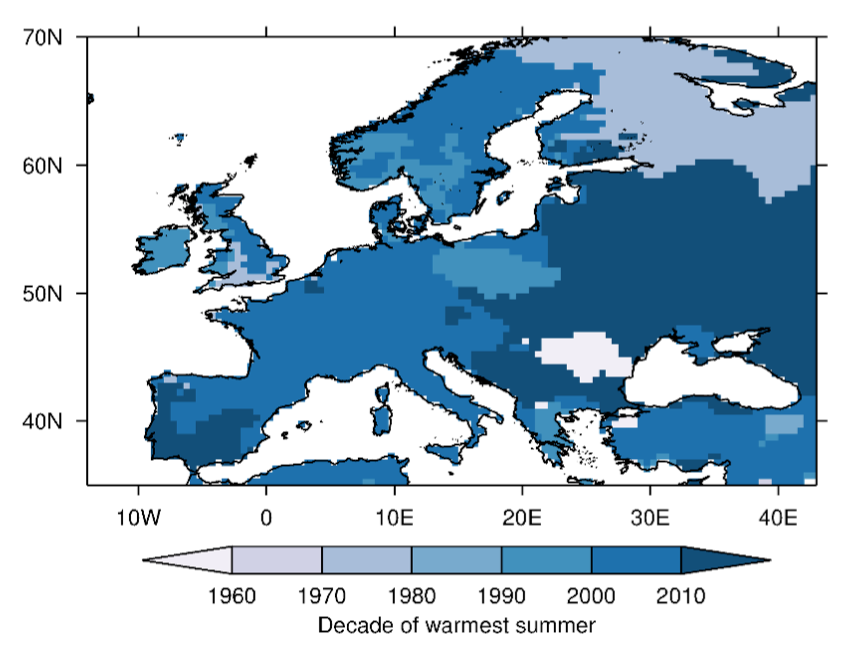
§ The impact on humans
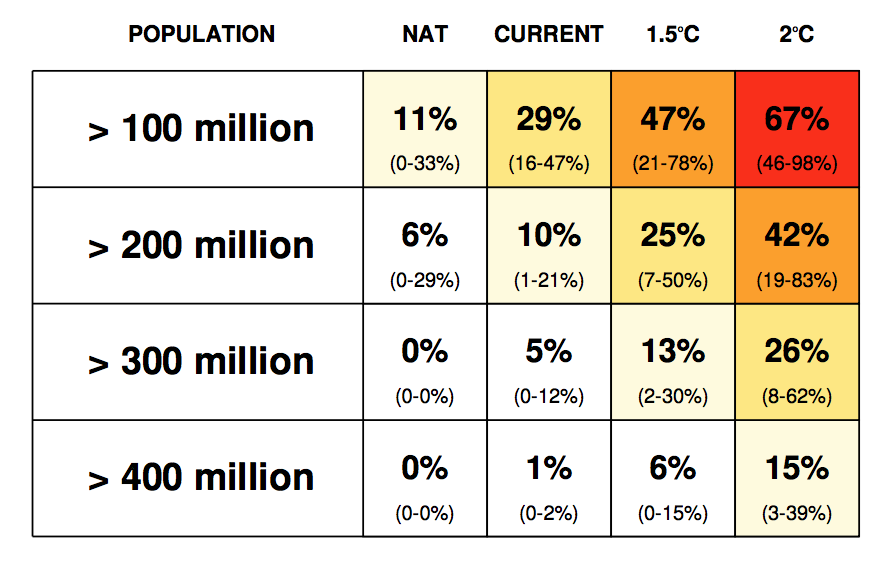
§ Benefits of climate action
world’s poorestcurrently rated as inadequateperiodic stocktakesArticle information
King, A. D. et al. (2018) Reduced Heat Exposure by Limiting Global Warming to 1.5C, Nature Climate Change, doi:10.1038/s41558-018-0191-0