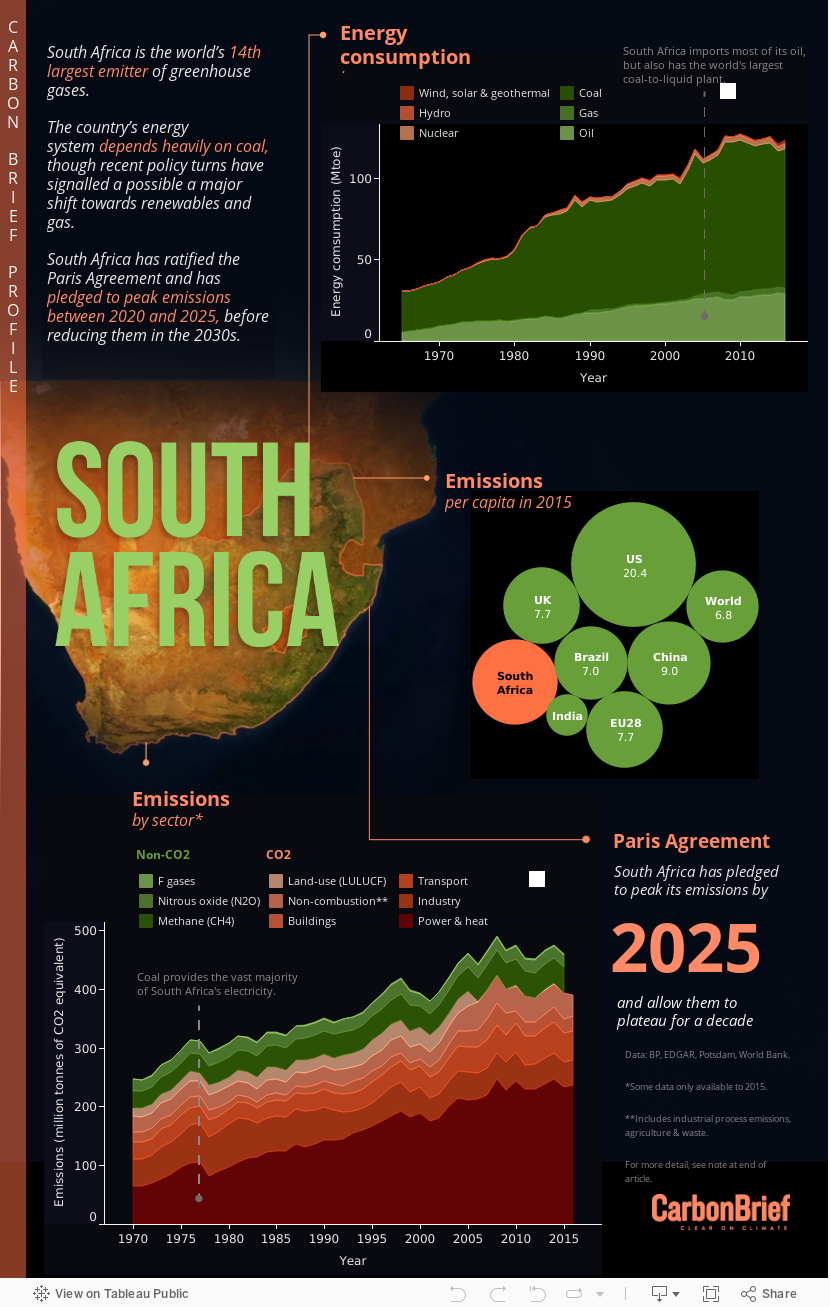
In the fourth article in a series on how key emitters are responding to climate change, Carbon Brief looks at South Africa’s heavy dependence on coal and expanding effort to develop renewables.[contentbox id=”29536″]South Africa is the world’s 14th largest emitter of greenhouse gases (GHGs). Its CO2 emissions are principally due to a heavy reliance on coal.However, a recently released draft electricity plan proposes a significant shift away from the fuel, towards gas and renewables. While coal would continue to play a role for decades, the plan would see no new plants built after 2030 and four-fifths of capacity closed by 2050.South Africa has pledged to peak its emissions between 2020 and 2025, allowing them to plateau for roughly a decade before they start to fall.
“If people around the world ever thought climate change is just a fable‚ we in South Africa are now seeing the real effects of climate change. We are facing a real, total disaster in Cape Town, which is going to affect more than four million people.”
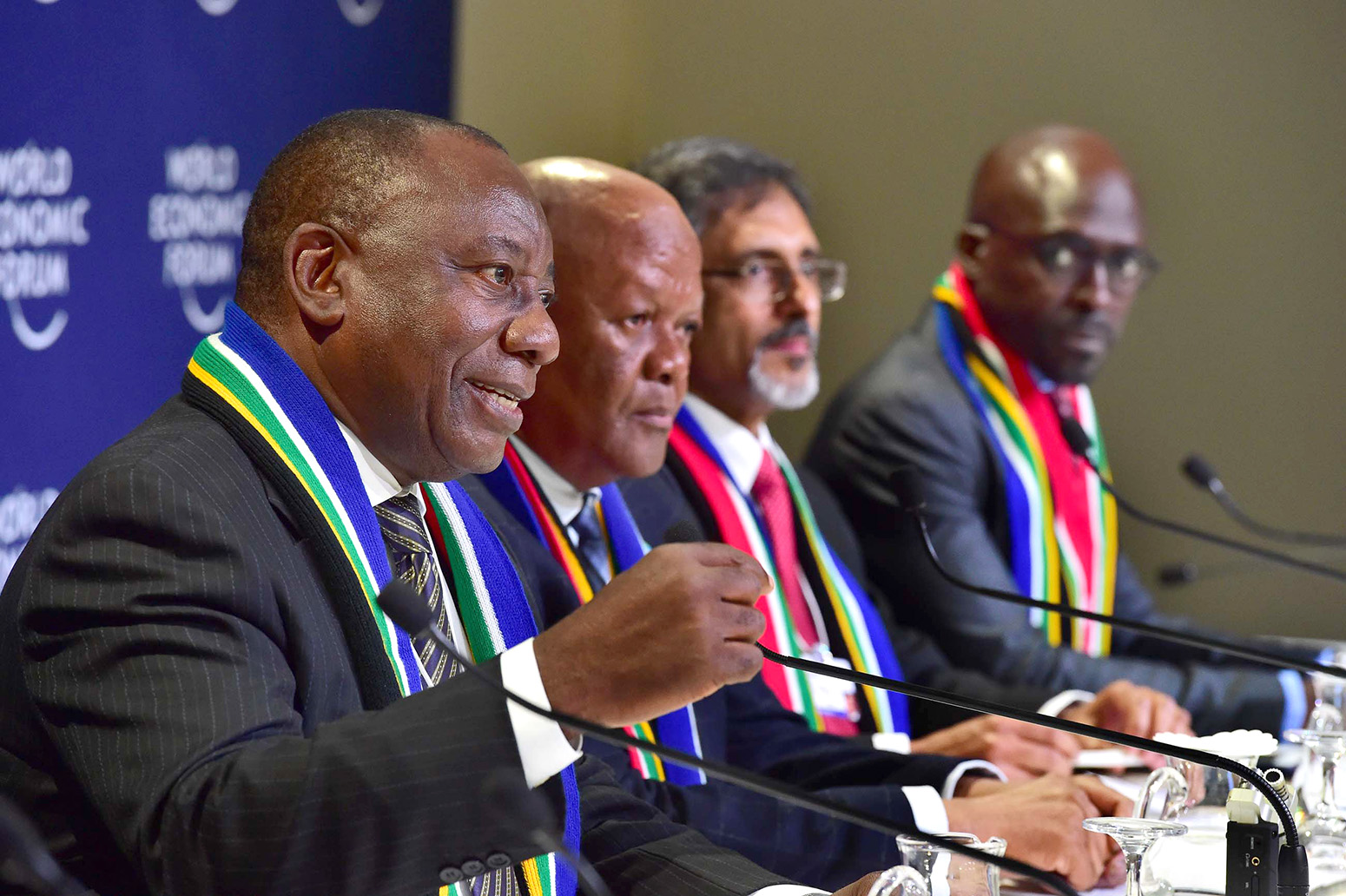
polls favourelectionNelson MandelaDAreceivedhostedUNFCCCParis AgreementcalledshowSouth Africa is one of Africa’s most industrialised countries and has the continent’s second largest economy after Nigeria. In the decades since ended in the early 1990s, its economy has in size, but faltered in recent years. It currently 32nd in the world.President , leader of the governing African National Congress () party, was by parliament in February 2018. President Jacob Zuma, his predecessor of the same party, had been in office for 9 years. He the day before Ramaphosa’s election while facing his ninth vote of no confidence.South Africa’s climate efforts have been , particularly due to its continuing on coal. While Zuma vocally supported , his government was of delaying the development of policies to cut emissions.Ramaphosa’s cabinet has recently plans for a major shift away from coal and expansion of renewables. He also told that Cape Town’s showed climate change was a reality, adding:The country will return to the polls by summer 2019 to elect a new National Assembly, which will in turn determine the next president. Current the ruling ANC party, which has been in power since the end of apartheid and the of in 1994. The centrist Democratic Alliance () party – the official opposition – 22% of votes in the last election in 2014, compared to the ANC’s 62%.In 2011, South Africa the 17th formal meeting of the (United Nations Framework Convention on Climate Change) in Durban. Here, countries agreed to establish a new universal and legally binding climate treaty in 2015 for the post-2020 period. This, ultimately, led to the 2015 . The UNFCCC has the Durban conference a “turning point” in international climate negotiations.Polls 45% of South Africans consider climate change to be a very serious problem, in the middle of the range for the world’s major economies.
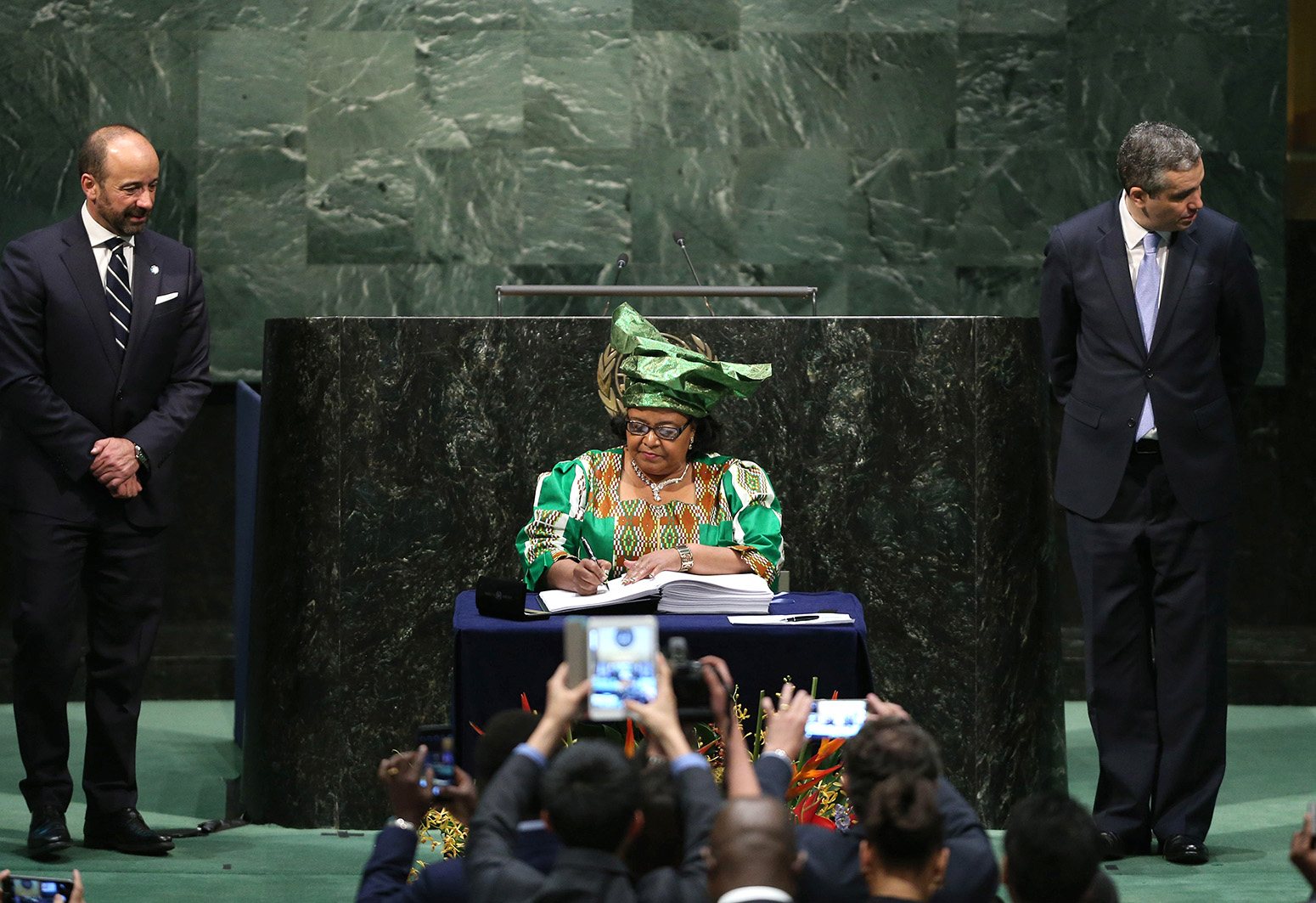
four negotiating blocsBASICAfrican GroupG77 + ChinaCoalition for Rainforest NationsdataPIKclimate pledgeNDCParis climate talksImage - The Minister of Environmental Affairs of South Africa Bomo Edith Edna Molewa signs the Paris Agreement on climate change at United Nations headquarters in New York. 22 April, 2016. Credit: Xinhua / Alamy Stock Photo. - The Minister of Environmental Affairs of South Africa Bomo Edith Edna Molewa signs the Paris Agreement on climate change at United Nations headquarters in New York. 22 April, 2016. Credit: Xinhua / Alamy Stock Photo. FY6450 (note)carbon budgetClimate Action Trackerratesfair shareLULUCFstood atClimate TransparencyratesSouth Africa is part of at international climate negotiations. These include , a coalition of four major emerging economies (along with Brazil, India and China); the ; the ; and the (CfRN).The country’s GHG emissions in 2015 sat at 460m tonnes of CO2 equivalent (MtCO2e), according to compiled by the Potsdam Institute for Climate Impact Research (), putting it in 14th place worldwide. Emissions rose steadily for much of the past 50 years, growing from around 250MtCO2e in 1970 to a peak of 490MtCO2e in 2008. They have since declined – unevenly – as the economy faltered.South Africa submitted its , or “nationally determined contribution” (), for the on 25 September 2015. This pledges a “peak, plateau and decline” approach, whereby emissions would peak between 2020 and 2025, plateau for roughly a decade, and then start to fall. Emissions during 2020-2025 would be between 398-614MtCO2e, it says, including land use and all sectors of the economy. This “plateau” would translate to a 14-75% rise above 1990 levels.South Africa says its pledge is an “equitable contribution” to global mitigation efforts, given its emissions to date and its national circumstances. It points to its “overriding priorities to eliminate poverty and eradicate inequality” and notes that the country is “facing acute energy challenges that hamper economic development”. Its “fairly apportioned” share of the global would exceed the upper limit of its trajectory range, it adds.However, (CAT), an independent scientific analysis produced by three research organisations tracking climate action, South Africa’s NDC as “highly insufficient”. This means its pledge is outside a “” of the emissions cuts needed to meet the goals of the Paris Agreement, and “not at all” consistent with limiting global warming to less than 2C or 1.5C. If all governments had similar targets, global temperature rise would likely reach 3-4C by 2100, says CAT.Under its currently implemented policies and assuming continued low economic growth, South Africa will reach the upper end of its 2030 emission reduction targets in 2020 and 2025, says CAT. By 2030, emissions would breach its Paris pledge, with emissions around 27MtCO2e higher than the upper end of the 2030 target.Overall, CAT projects that South Africa’s emissions will increase to 90% above 1990 levels by 2030, excluding land use and forestry (land use, land-use change and forestry, or “”). Higher economic growth than anticipated could further increase this.South Africa’s per capita emissions 9.5 tonnes of CO2 equivalent (tCO2e) in 2015, around half of US per capita emissions but well above the world average of 6.8tCO2e., a “global partnership with a shared mission to stimulate a ‘race to the top’ in G20 climate action”, (pdf) South Africa’s climate policies predominantly as “medium” in terms of consistency with the Paris Agreement.
considerableload sheddingEskomdescribedCost and time overrunspaperNPC2018 draft IRPEmbedded component (note)2010 IRPIEPliving plan20132016indicatesaccording to CATwarnedsayssaidunionsindustry.heavy industrySouth Africa has seen energy sector challenges in recent years. For example, shortages mean it has had to repeatedly curb electricity supply in some areas – known as “” – to protect the power system from total blackout.In addition, national power supplier has experienced major financial problems, which the treasury has as the single biggest risk to the South African economy. Eskom is responsible for 95% of electricity supply, operates the country’s grid and owns most of its coal-fired power plants. at two large coal plants it is building are a major cause of its financial problems.“Worrying” allegations of financial irregularities and governance concerns have also surfaced at Eskom, according to a released in February 2018 by the country’s independent National Planning Commission ().In August 2018, South Africa’s government released a long-awaited draft update to the country’s Integrated Resource Plan (). This sets out the government’s plans for electricity capacity expansion up to 2030, based on its analysis of the “least cost” option.The current electricity plan, known as the , was finalised in 2011 as part of the broader Integrated Energy Plan (), which covers all energy including liquid fuels. As a “”, it was supposed to be updated regularly, but the cabinet failed to adopt either of two proposed drafts in and . Importantly, the plan has legislative power, meaning the government is bound by it when deciding what new power can be procured.Until a new draft is adopted, the 2010 version remains official policy. It contains 2030 targets for all technologies, including a large expansion of nuclear and continued growth for coal. The plan also sets an overall cap on emissions from electricity generation, from 2025 onwards.In contrast, the draft 2018 update puts the greatest emphasis on new renewables and gas in its “least-cost plan” to 2030. It considerably reduces plans for new coal and excludes new nuclear. However, it still nuclear and “clean” coal could be considered in the longer term up to 2050.The revised plan, if adopted, “would mark a major shift in energy policy…remarkable for a coal-dominated country like South Africa,” . However, others have its continued reliance on a “coal-based business model” is not financially viable and will require large bailouts into the future.Implementation of this plan could bring South Africa close to being within the emissions range of its Paris target for 2030, CAT . However, more ambitious plans would still be needed to meet the pledge, it adds.The draft IRP has now gone to public consultation for 60 days, ending in November. While the cabinet has not given a date for final adoption, energy minister Jeff Radebe has he hopes it will be soon after the comment period. The update faces opposition from some and the nuclear Unusually – and significantly – it is broadly supported by , which favours an ambitious shift towards cleaner energy.
“These are already having profound implications for South African electricity consumers. For example, Eskom’s primary energy costs have increased by 300% in real terms over the past 20 years.”
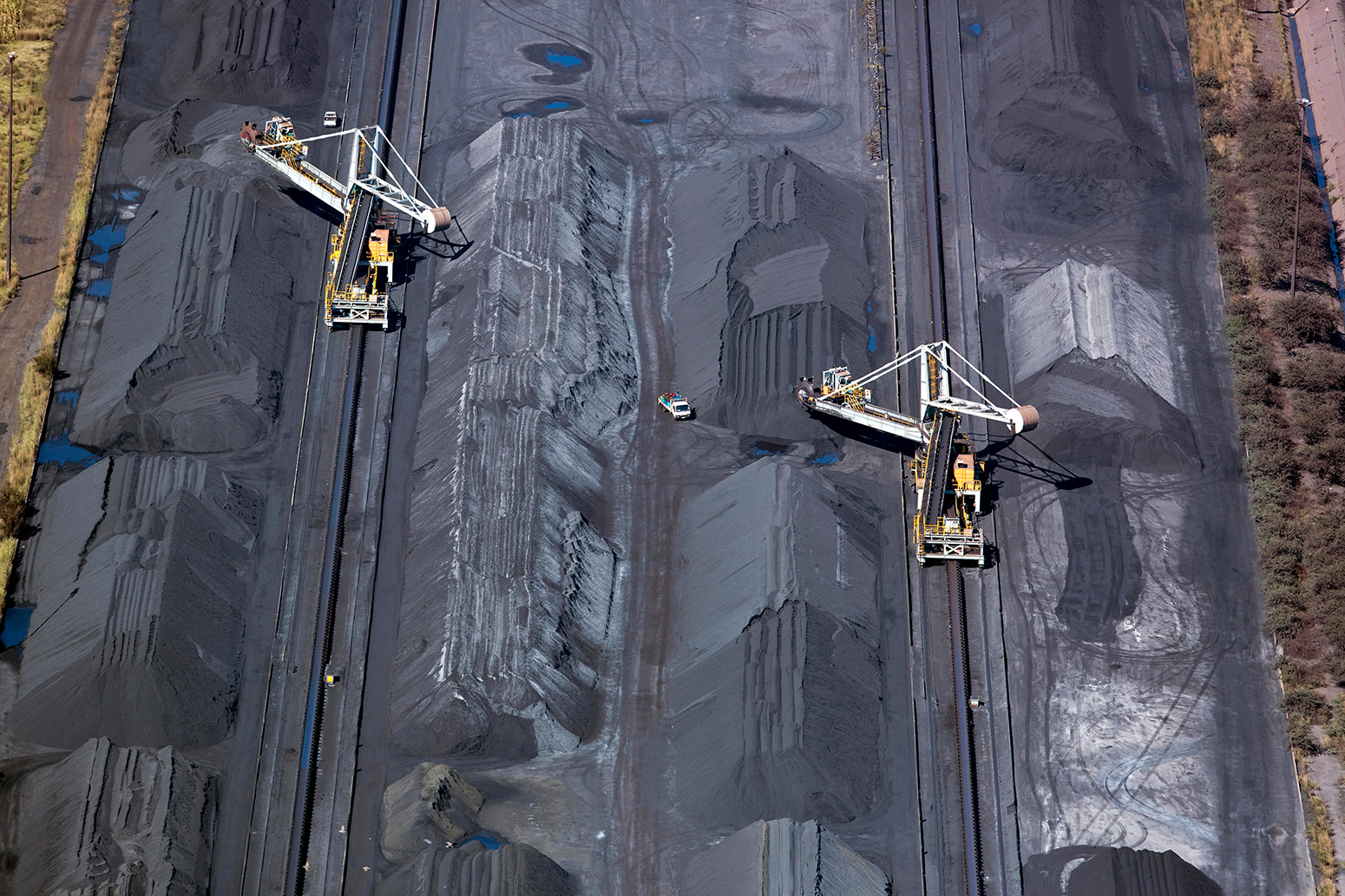
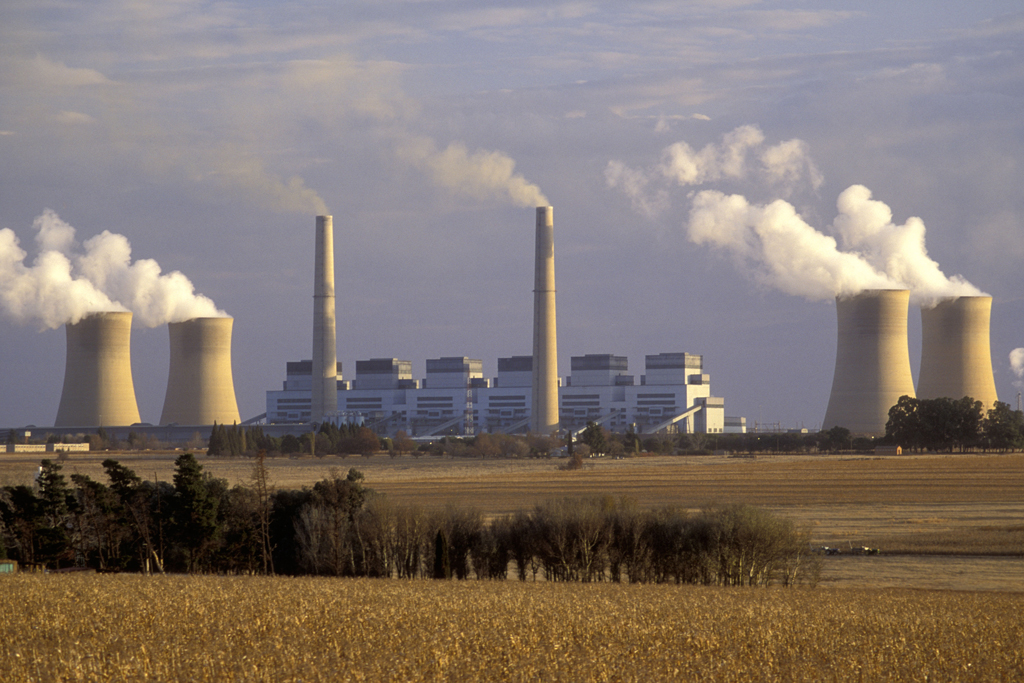
currently sitsImage - Coal cranes at Lethabo Power Station, South Africa. Credit: Minden Pictures / Alamy Stock Photo. - Coal cranes at Lethabo Power Station, South Africa. Credit: Minden Pictures / Alamy Stock Photo. H81MDE (note)just transitionpolitically salientSomepeaked80,000total employmentfifth largestimportantinvokedSouth Africa is the world’s coal producer. Its sizeable reserves have led coal to form the backbone of its economy for well over a century. However, cheap, easily accessible coal reserves be nearing an end. There’s also of the large health impacts of coal power in the country.Coal has provided the vast majority of South Africa’s electricity for decades, as the chart below shows. In 2017, coal produced 88% of the country’s electricity.Sources of electricity production in South Africa, 1985-2017. Source: . Chart by Carbon Brief using .South Africa’s reliance on coal means around 80% its emissions come from energy supply, according to the NPC.As of July 2018, South Africa has 42GW of operating , the seventh largest fleet in the world, according to the . It also has 6GW of new coal-fired plants under construction and a further 3GW in the planning stage. coal generation fleet is ageing and has experienced a number of reliability issues. Two new large-scale coal power plants currently under construction – and – have also seen major cost and time overruns. These two coal plants are set to provide 4.8GW , some of which is already operating.Cost increases, energy security risks, export demand risks and low local demand growth mean the coal sector is facing significant challenges, says a 2018 from the Energy Research Centre () at the . It adds:Coal project cost increases and overruns have led to rapidly increasing electricity prices, the report adds, in turn stagnating demand for electricity. Electricity demand has been declining for years in South Africa and at 2007 levels. Significantly, this is some 30% lower than projected in the 2010 IRP.The draft IRP update intends to decommission 12GW of old Eskom coal plants by 2030. However, the plan does not cancel the 6GW of coal power under construction and allows for a further 1GW to be built, based on two already-announced projects.The draft assumes that no new coal power plants will be built after 2030, “unless affordable cleaner forms of coal to power are available”. This will leave South Africa with 34GW of coal capacity in 2030 – 44% of installed power capacity – down from 39GW in 2018, the plan says. (The government figure of 39GW in 2018 is lower than the Global Coal Plant Tracker’s 42GW. This lower number appears to be net of onsite consumption).By 2050, 34GW of coal could have closed down, the plan indicates, some 83% of current current capacity. This would leave South Africa with around 12GW of coal power in 2050, less than a third of its 2018 level.The issue of a away from coal is also in South Africa and is mentioned in its NDC. have cautioned against the expansion of renewables due to its impact on coal-sector jobs. Employment in coal mining at around 135,000 in 1981 and had fallen to by 2015, equivalent to 0.5% of in South Africa. The 2018 IRC says the government will produce a socio-economic impact analysis on the community impacts of post-2030 coal decommissioning.South Africa is the world’s exporter of coal, sending around 30% of its production overseas. Around half of this now goes to India, while exports to Europe are significant, but falling. Coal is an foreign exchange earner for South Africa, accounting for around 12% of its exports. Loss of these revenues has been as a risk of moving away from coal.
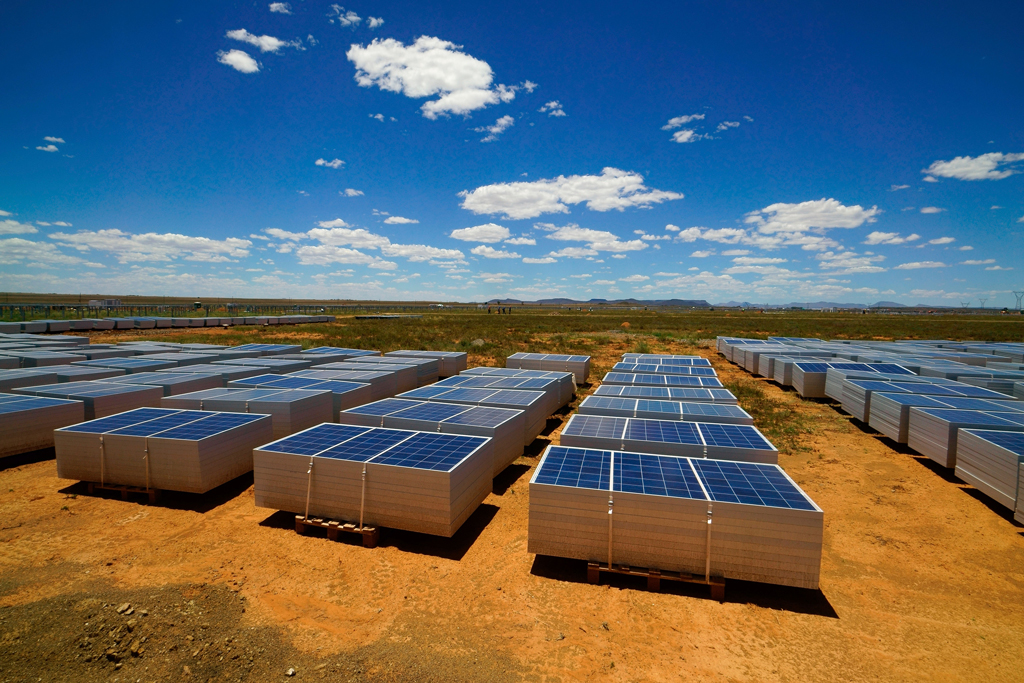
provided 3.4%fallen significantlyBNEFincrease reaching financial closefeed-in-tariffschemeREIPPPPincludedImage - Jinko Solar photovoltaic systems by Scatec Solar, Karoo semi-desert near Hanover, Northern Cape, South Africa. Credit: imageBROKER / Alamy Stock Photo. - Piles of solar photovoltaic cells in semi-desert near Hanover, Northern Cape, South Africa (note)analysisCSIRsigned offstalledunder Zumadelayedcannot affordannouncedcriticisedCahora Bassaimported fromRenewable power has risen rapidly in South Africa since 2013 and of electricity in 2017, according to BP.The cost of renewables, notably solar and wind, has in South Africa. Solar PV and wind costs have fallen 80% and 60%, respectively, in just four years, according to the NPC paper. New renewable capacity is now “considerably cheaper” than coal plants proposed or under construction, the ERC report says.South Africa’s investment so far in 2018 has been the highest for five years, according to Bloomberg New Energy Finance (). Investment sat at $2.6bn in the third quarter of 2018, it says. This is a 90-fold compared to the same period in 2017, in part due to a $1.4bn wind project in August.In 2012, South Africa replaced its with a new Renewable Energy Independent Power Producer Procurement Programme (). This uses a bidding system to fund renewable capacity procurement, guaranteeing projects access to the grid.The 2010 IRP plans for 17.8GW of new renewables capacity (excluding hydro) to be installed by 2030, made up of 8.4GW of each of wind and solar PV, plus 1.2GW of concentrated solar power (CSP). This means renewables capacity in 2030 would be 18.8GW, 21% of all capacity.The draft 2018 IRP adjusts these 2030 plans to 8.0GW solar, 11.4GW wind, and 0.6GW CSP, totalling 20GW of renewables excluding hydro. Since it also substantially reduces total capacity from all sources, this means renewables would provide 27% of installed capacity in 2030.By the end of 2017, 8.1GW of contracts had been given to renewable energy bidders, with 3.8GW connected to the grid, according to by the Council for Scientific and Industrial Research ().In April 2018, Eskom 27 agreements worth 56bn rand ($4.7bn) for a further 2.3GW of new renewable energy projects. The deal had been for almost two years . Even the signing was for a month when two unions launched a legal challenge to prevent the deals from closing, citing concerns over coal jobs.Opponents of renewable contracts have also argued that Eskom the financial burden, even though the contracts are paid for by electricity consumers rather than Eskom itself. Doubts over Eskom’s solvency mean uncertainty and delays for new renewables are likely to continue, according to CAT.In June, the government it would launch a new 1.8GW bidding round for renewables in November 2018.The 2010 IRP and previous unpassed draft IRPs were for imposing “artificial limits” on the amount of new renewables which could be built each year, even in cases where they were the cheapest option. The new 2018 draft also sets out yearly limits for renewables, arguing this “provides for smooth roll out of renewable energy” and will not impact the total amount of renewables deployed.Hydroelectricity plays a relatively small role in South Africa’s electricity system, with only 0.7GW of installed capacity. However, it also imports 1.5GW from hydroelectric dam in Mozambique. The 2018 draft IRP includes plans for an additional 2.5GW of hydropower by 2030, which will be the Democratic Republic of the Congo, meaning hydro will provide around 6% of total capacity in 2030.
“There are no signs of policy-driven emissions reductions in the near future for emissions-intensive subsectors [such] as steel production and mining in [the] context of the ongoing economic stagnation in South Africa.”
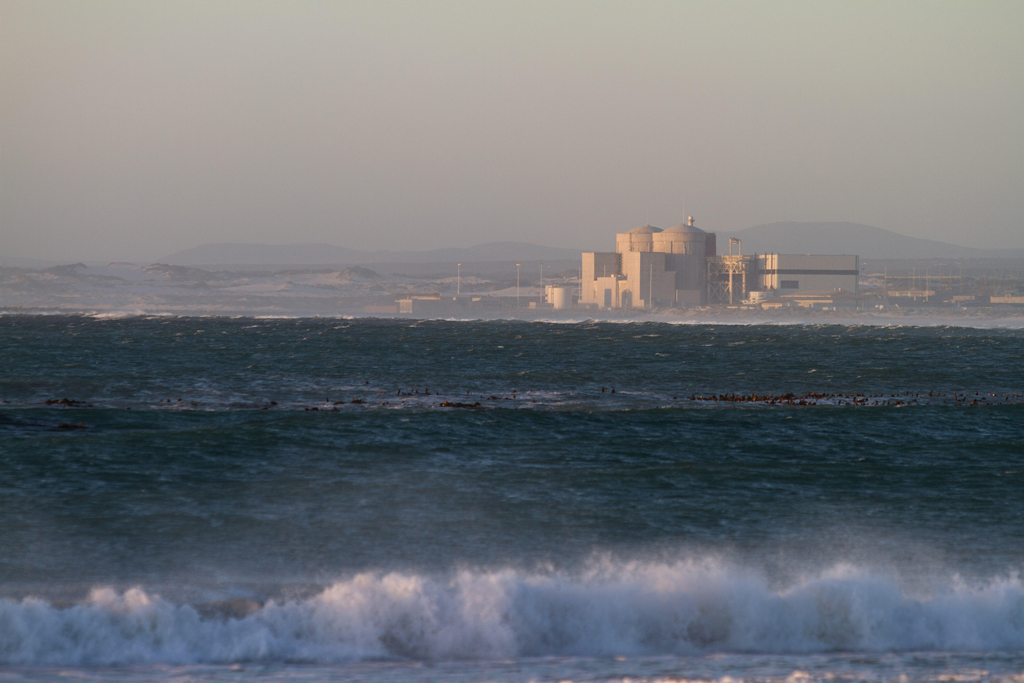
UraniumKoebergKoebergSouth Africa has the world’s mining sector, which contributed 8% of its GDP in 2017. Its economy also relies significantly on heavy industry, which in turn relies largely on electricity – and, thus, coal – as an energy source. Emissions also come from industrial-process emissions, especially steel and production.Policy and planning documents generally address sustainable industrial economic development, but “barely mention mitigation targets for the industry sector or concrete measures for implementation”, according to CAT.South Africa has one of the in the world, with energy consumption per unit of GDP more than twice as high as the global average in 2012. The South African government released its first National Energy Efficiency Strategy () in 2005, which aimed to reduce energy intensity of the economy by 12% in 10 years. It is now considering a post-2015 replacement, released as a in . This outlines plans to make energy efficiency the “first fuel” in driving sustainable economic growth in the country. It targets a 29% reduction in the energy intensity of the economy by 2030 compared to 2015, with individual targets for each sector.However, CAT warns its proposed measures, such as the Industrial Energy Efficiency Project (), may only lead to small emissions reductions. It adds: also plays a significant role in the domestic mining industry. However, South Africa has only one nuclear power station, the 1.9GW plant, which is owned and operated by Eskom and has been running since 1984. It supplied 6% of the country’s electricity in 2015.Unlike previous drafts, the 2018 electricity plan does not outline any new nuclear capacity up to 2030, although it does not exclude it from future planning. The plant will reach the end of its life in the mid 2040s.
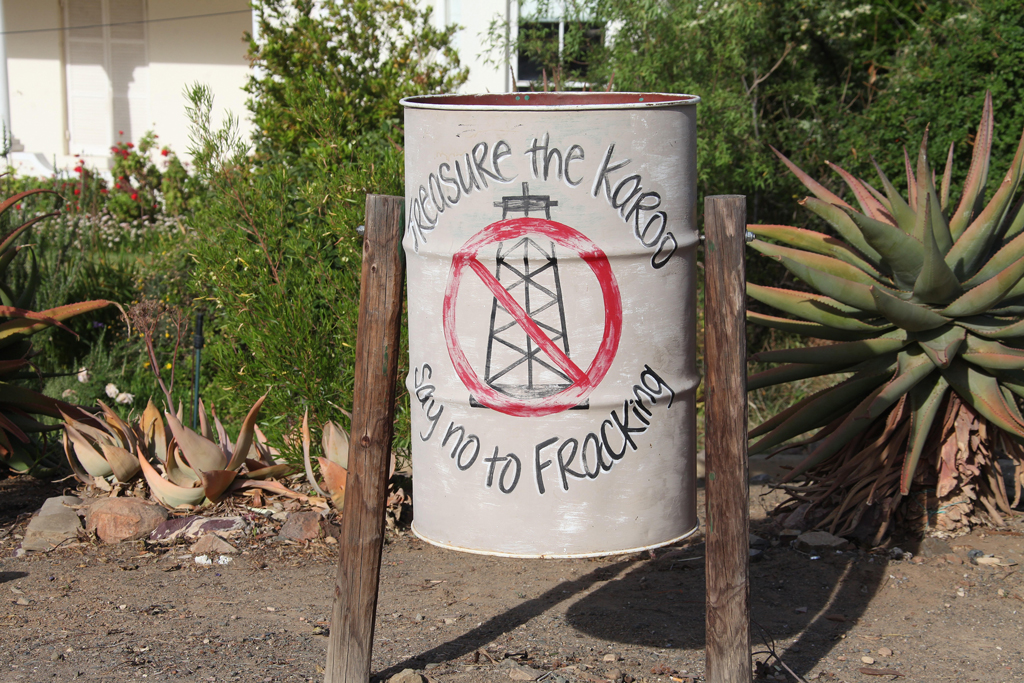
80% of its fuelusesSasolworld’s largestsaidincludingGreen Transport StrategyBiofuels Industrial Strategyfrom 2015now hopeselectric vehicle (EV) roadmapfewer than 500Bus Rapid Transit Systemsmixed successpipelineImage - Dustbin art in the South African Karoo town of Prince Albert. Credit: jackie ellis / Alamy Stock Photo (note)supportKaroocalledAnalysiscurrent gas consumptionEIAestimatesprevious estimatesunclearsaywater resourcesSouth Africa has no crude oil reserves and imports . It also coal-to-liquid (CTL) and gas-to-liquid (GTL) technologies to produce significant amounts of synthetic fuel for the transport sector.These expensive and energy-intensive processes are a legacy of the apartheid era, when sanctions prevented fuel imports. Last year, Johannesburg-based firm – which owns the CTL plant – it was turning away from the process due to low financial returns and high CO2 emissions.Transport accounted for around 11% of South Africa’s GHG emissions in 2015, up from 9% a decade earlier. Several attempts have been made to introduce policies to reduce transport emissions, a 2017 draft up to 2050. While this warns the country’s transport emissions are set to roughly triple by 2050, it does not set any reduction targets.The 2007 , meanwhile, mandated the blending of biofuels into diesel and petrol, in theory applied . However, it has not yet been enforced, largely due to concerns over the impact of large-scale biofuels production on food security, according to CAT. The government to finalise a new biofuels regulatory framework by March 2019.An was also released in 2013, but so far there are EVs on the country’s roads. Efforts to introduce to boost affordable public transport have also seen .Gas currently plays a small role in South Africa’s energy mix, providing just 3% of total supplies in 2016. There is a small amount of domestic offshore production, with most gas imported via a from Mozambique. The 2018 IRP draft foresees an increasing share of gas power generation to complement renewables, as South Africa’s coal fleet is slowly decommissioned.In 2017, the government gave its to shale gas exploration and extraction in the semi-arid region, citing efforts to reduce the country’s carbon footprint. In September 2018, energy minister Radebe for all impediments to shale gas exploration to be removed as part of the government’s response to record-high fuel prices. last year by geologists put the estimated shale-gas resource at 13tn cubic feet (tcf), equal to around 80 years worth of South Africa’s and around a tenth of global annual consumption. This would put South Africa 34th out of 46 nations in US Energy and Information Administration () of shale resource – some 30 times less than . It also remains whether any shale resource would be economically and technically viable.Opponents of shale gas development in the region it will threaten its famed rugged scenery and rare wildlife, such as the mountain zebra, as well as .
National Climate Change Response white paperlack of institutional capacitySocio-Economic Impact Assessment Systempublished a draftestablishment of a ministerial committee on climate changeImage - Kinros power station near Bethal South Africa. Credit: Images of Africa Photobank / Alamy Stock Photo - Kinros power station near Bethal South Africa. Credit: Images of Africa Photobank / Alamy Stock Photo (note)praised1.5C warming ambitionCampaigners have also arguedended in Augustproposed legislationoriginally mootedpublished a second draftbudget speechchanged hands twiceproposes to implement the taxpostponed implementationincrease petrol and diesel prices1-2%criticised by the steel and mining industries95% of emissions are exemptFebruary 2019carbon emissions taxincorporated into the priceIn 2011, the South African government approved its (pdf), which aims to “effectively manage inevitable climate change impacts” and “make a fair contribution to the global effort to stabilise GHG concentrations in the atmosphere”.However, factors such as have restricted implementation of the white paper. A government (pdf) report, published in 2017, found that the lack of legally enforceable regulations represented “a fatal risk” to achieving the aims of the white paper.In June 2018, South Africa of a new National Climate Change Bill. Its purpose is to “build an effective climate change response and ensure the long-term, just transition to a climate resilient and lower carbon economy and society”.The bill acknowledges that human-caused climate change “represents an urgent threat to human societies” and sets out targets for reducing emissions and the need to adapt to climate impacts.It mandates that the government must, within two years of the bill becoming law, “establish a national environmentally sustainable development framework” to achieve the act’s objectives. It also requires the with responsibility “for the coordination of climate change responses”, and a committee on climate change for each province.Each provincial committee will be required “to undertake a climate change needs and response assessment” within the first year of the bill, and review it every five years. A “climate change response implementation plan” must then be completed within the following year.The bill also sets out a requirement for emissions targets for “greenhouse gas emitting sectors and sub-sectors” every five years. The bill itself does not specify the ambition of these targets.The draft bill has received a mixed response, being for providing “a clear signal that climate change is a cross-sectoral, holistic challenge”, but criticised for not including a specific reference to the Paris Agreement’s . that the government’s pro-coal policies contradict the goals of the climate bill. The consultation period for the bill .South Africa has also (pdf) for a carbon tax, which was in a National Treasury discussion paper in 2010. The treasury in December 2017, for consultation until March 2018. In a (pdf) in February 2018, the then finance minister, Malusi Gigaba (the position has since ), announced that the government from 1 January 2019. However, the new finance minister, Tito Mboweni, has since (pdf) – by six months to 1 June 2019 – after hearing “concerns of business and labour during the parliamentary hearings”.The tax would cover emissions from fossil fuel combustion, industrial processes, product use emissions, and fugitive emissions from mining. It would potentially by up to 23 and 29 cents per litre (approximately ), respectively. The tax has been as unaffordable.The tax would be set at 120 rand (around $8) per tonne of CO2 equivalent. However, during the first phase up to 2022, a basic tax-free threshold of 60% of emissions, plus additional allowances, may mean around . This would put the effective tax rate at around R6-48 ($0.4-3) per tonne.(Update 29/3/2019: In , South Africa’s parliament approved the long-delayed carbon tax bill. The new law allows a tax rate of 120 rand ($8.48) per tonne of CO2 equivalent. It also confirms that total tax-free allowances can be as high as 95% during the first phase.)New passenger vehicles are also subject to a , which was effective from 1 September 2010. It has a flat rate of R75 (around $7) for each gram per kilometre above 120g/km, of new cars.
This article was updated on 08/11/2018 to note that the implementation of a carbon tax has been further delayed by an additional six months.
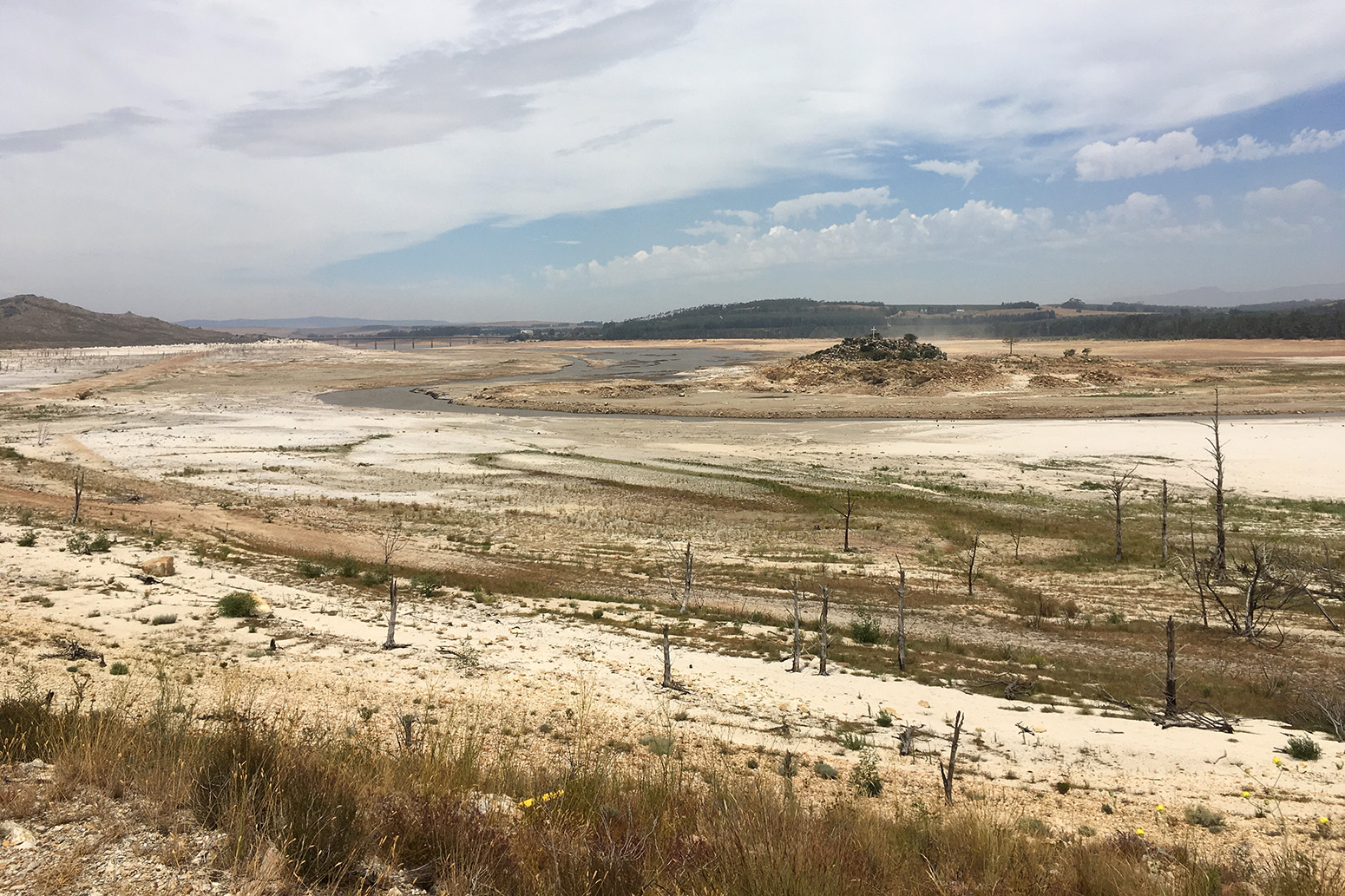
Average temperatures in South Africa have risen around over the past five decades as the global average of 0.65C. Maximum and minimum daily temperatures have been increasing in almost all seasons and regions. (Search for places within South Africa in Carbon Brief’s of rising local temperatures.)Changes in rainfall show weaker trends, but there is a tendency towards a in almost all regions. In contrast, extreme rainfall events have increased in frequency, particularly in spring and summer.The impact of climate change has been brought to the fore with the recent severe drought in the Cape Town region and the lingering threat of “”, when taps in the city run dry and residents would be required to queue for water.A rapid assessment attribution study found that human-caused climate change made the lack of rainfall that led to the three-year drought around .Agriculture in South Africa associated with climate change, such as changing rain patterns, increased evaporation rates, higher temperatures, increased pests and diseases, shifting growing regions and reduced yields.On 31 August 2018, South Africa submitted its under the UNFCCC. The report highlights trends and projected changes in climate and provides an inventory on GHG emissions.Projections for the future suggest that under an intermediate emissions scenario (), South Africa is likely to warm by 2-3C by mid-century, reaching 3-4C and beyond by the end of the century. Under a no mitigation, business-as-usual emissions scenario (), warming could exceed 4C across the whole country by the end of the century, even surpassing 6C in some western inland areas.Rainfall projections are generally less clear-cut, but predominantly suggest a significant decrease in average rainfall towards the middle and end of the century.According to its National Communications report, South Africa has a rich biodiversity containing almost 10% of the world’s total known bird, fish and plant species, as well as around 6% of mammal and reptile species. The habitats of these species are projected to change dramatically in a warmer, drier climate.The South African government is currently developing a National Climate Change Adaptation Strategy, which will serve as its submission of a National Adaptation Plan to the UNFCCC. A (pdf) of the strategy was issued for consultation in October 2017. A final draft is expected this year.Its “strategic outcomes” include producing adaptation plans that cover at least 80% of the economy by 2025; implementing an adaptation, vulnerability and resilience framework across all “key adaptation sectors” by 2020; and defining and legislating for adaptation governance through the new National Climate Change Bill.