Guest post: Credible tracking of land-use emissions under the Paris Agreement
Dr Giacomo Grassi is a scientific officer at the Joint Research Centre of the European Commission; Dr Jo House is a reader in environmental science and policy at the University of Bristol’s Cabot Institute; Dr Werner Kurz is a senior research scientist at Natural Resources Canada, Canadian Forest Service; and Dr Glen Peters is a research director at the CICERO Center for International Climate Research in Norway.The global modelling community and national governments apply different methods to measure and report land-based greenhouse gas (GHG) emissions. Both methods can be justified, but the differences make it difficult to track progress towards the goals of the Paris Agreement.In a new paper in Nature Climate Change, we quantify the differences in independent estimates of land-related GHG uptakes and emissions (known collectively as “fluxes”) between those reported by countries in their GHG inventories and those produced by the global modelling community. It explores the reasons for these differences and outlines ways to reconcile them.§ Stocktake
well below 2Cnegative emissionsquarter of planned emission reductionsstudiesbeen identifiedglobal stocktakenationally determined contributions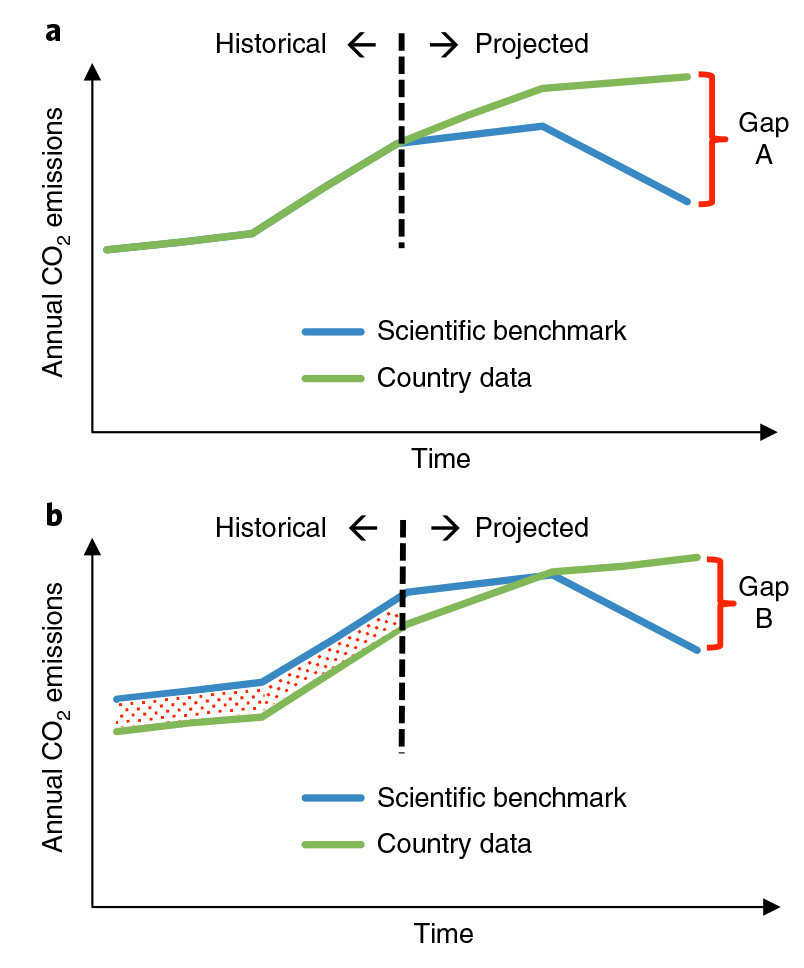
§ Conceptual gap
Global Carbon Projectfifth assessment reporttotal human-caused CO2 emissions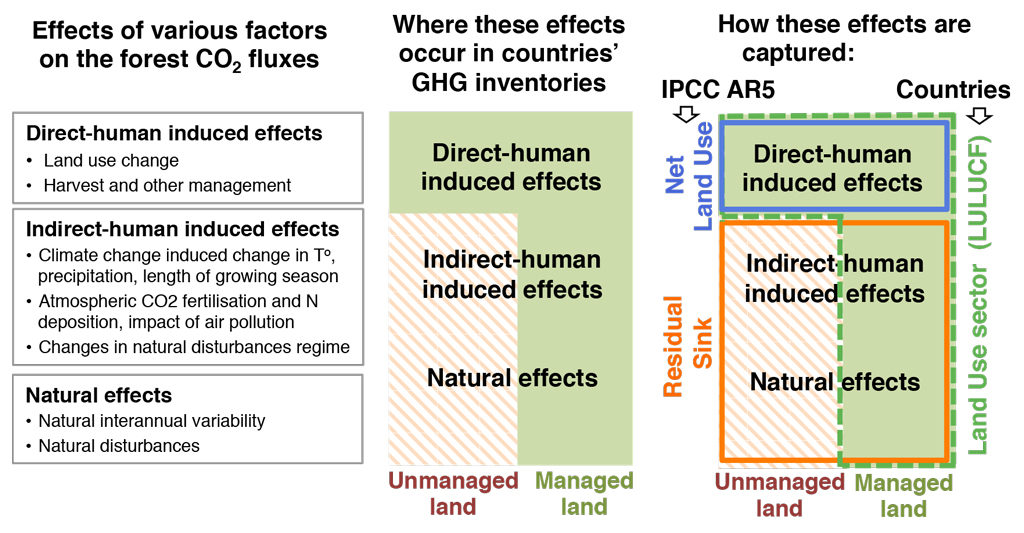
§ Speak the same language
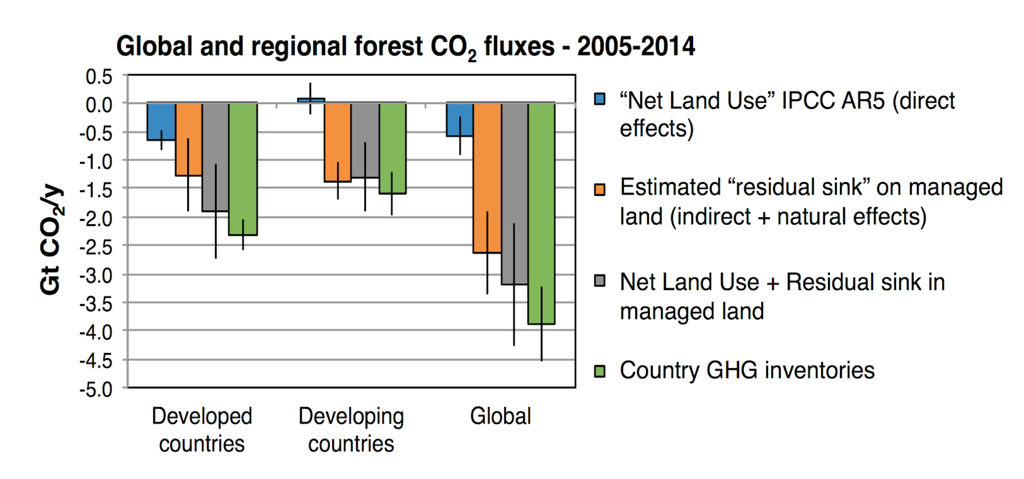
§ Recommendations
Image (note)
special report on climate change and landAR6
Glossary
Integrated Assessment Models: IAMs are computer models that analyse a broad range of data – e.g. physical, economic and social – to produce information that can be used to help decision-making. For climate research, specifically, IAMs are typically used to project future greenhouse gas emissions and climate impacts, and the benefits and costs of policy options that could be implemented to tackle them.
Integrated Assessment Models: IAMs are computer models that analyse a broad range of data – e.g. physical, economic and social – to produce information that can be used to help decision-making. For climate research, specifically,… Read More
Article information
Grassi, G., et al. (2018) Reconciling global model estimates and country reporting of anthropogenic forest CO2 sinks, Nature Climate Change, doi:10.1038/s41558-018-0283-x