The Lancet: Extreme heat threatens ‘systemic failure’ of hospitals
The recent impact of climate change on heat-related diseases should be seen as a harbinger of future dangers posed to human health, a landmark report finds. These risks include the threat of a “systemic failure” of the world’s hospitals.The findings come from the second Lancet Countdown report: an annual review of the scientific evidence of climate change’s effect on human health produced by 27 academic organisations from across the world.Speaking at a press conference to mark the report’s launch, the authors added that the twin pressures of rising temperatures, which could cause influxes in patients suffering from heat-related illnesses, and extreme weather, which may damage infrastructure, could overwhelm health services.Climate change is already having a notable impact on many other aspects of human health, the report finds, including by negatively affecting nutrition, mental wellbeing and labourers’ capacity to work outdoors.However, there is “cause for hope”, the authors add, pointing to a ramping up of interest in low-carbon “healthy” diets and modes of transport in recent years, as well as the possible health benefits of a phase out of coal-fired power.§ Feeling the heat
The report aims to take “the pulse of climate change and its health impacts” by tracking 41 indicators every year. Several of these indicators are linked to how extreme heat is increasingly affecting human health.One finding is that, in 2017, the number of “vulnerable” people exposed to heatwaves increased by 157 million, when compared to the average number of people exposed from 1986-2005.(Vulnerable is defined as being over the age of 65, while a “heatwave” is defined as three consecutive nights where temperatures are in the top 1% of the 1986-2005 average for the region.)This means that 18 million more people were exposed to heatwaves in 2017 than in 2016, the report says. The chart below shows the change in the number of vulnerable people exposed to heatwaves from 2000 to 2017 (blue line), relative to the average for 1986-2005 (red line).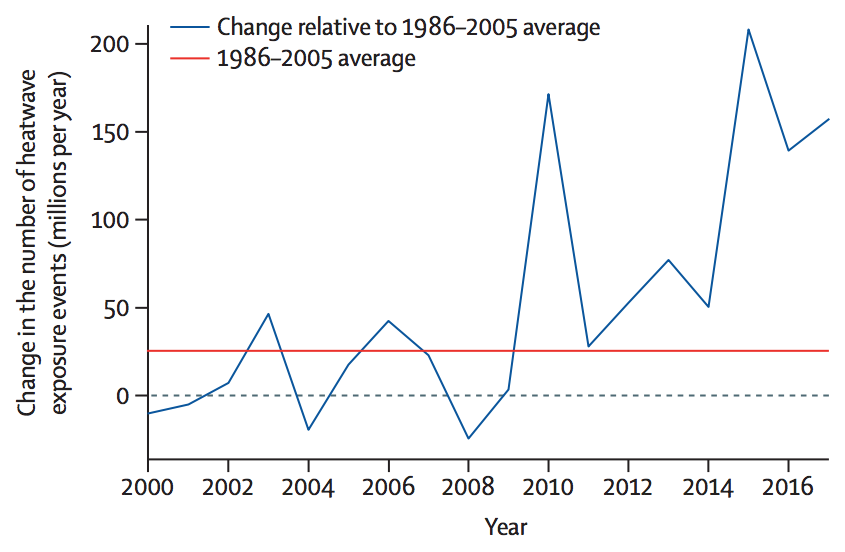
“Heat has its effects directly on people – either in the form of heat stress and heat stroke, which I think we’re familiar with, but also in terms of dehydration. When you dehydrate someone enough, you end up with things like acute kidney failure; you end up exacerbating chronic renal failure and congestive heart failure.
“Some of those impacts from heat, either directly, or on our kidneys or hearts…we think really are the canary – ironically – in the coal mine, in terms of the early health impacts of climate change.”
Another finding of the report is that, while the average global temperature has risen by 0.3C since the 1986-2005 period, the average temperature that vulnerable people are actually exposed to has risen by 0.8C.This is shown on the chart below. It shows the rise in the global average surface temperature from 2000 to 2017, when compared to the average from 1986 to 2005 (red), alongside the rise in the temperatures that vulnerable people are typically exposed to (blue).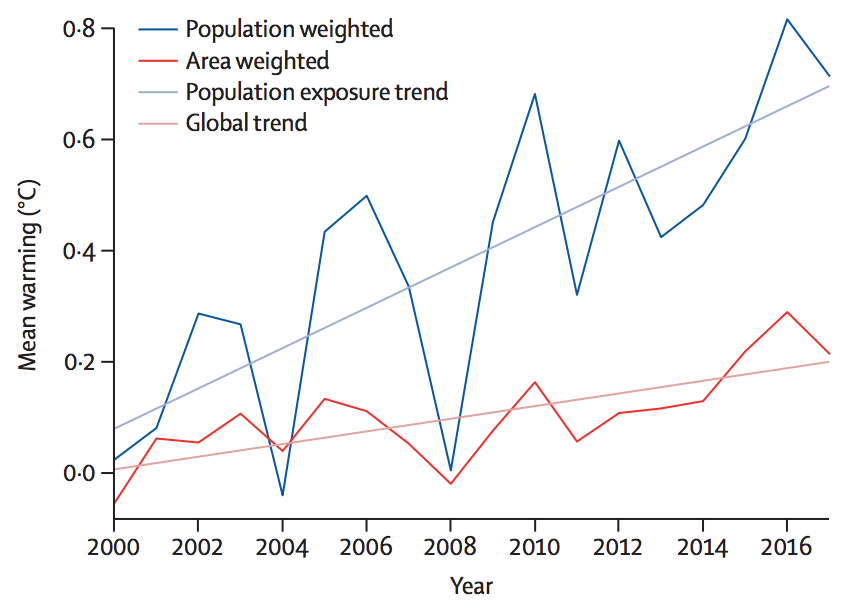
“The climate is changing – but people are migrating and ageing into the areas that are worst affected by climate change. We are – in the way that populations are evolving – maladapting to the worst areas.”
The report finds that regions with ageing populations, such as the Mediterranean, are particularly vulnerable to heat-related health risks. In Europe, 42% of people aged over 65 are currently vulnerable to heat exposure, the report finds. This figure is likely to grow as warming worsens and populations continue to age.§ Boosted bugs
Another set of indicators in the report track how climate change is altering the spread of infectious diseases. The authors do not have the capacity to track how warming is affecting every disease, say the authors, and so have selected a small number of “example” diseases to follow each year.One of these is dengue fever – a mosquito-spread disease native to much of southeast Asia, central and south America, Australia and Africa.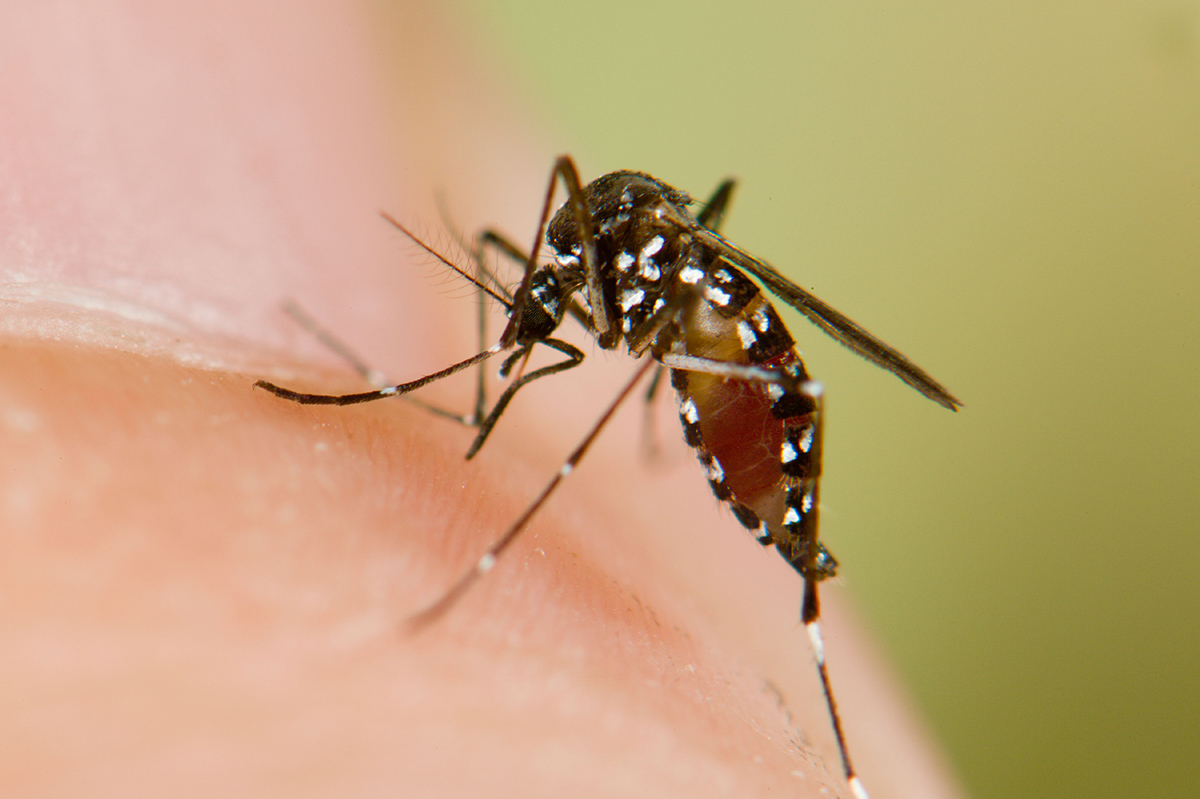
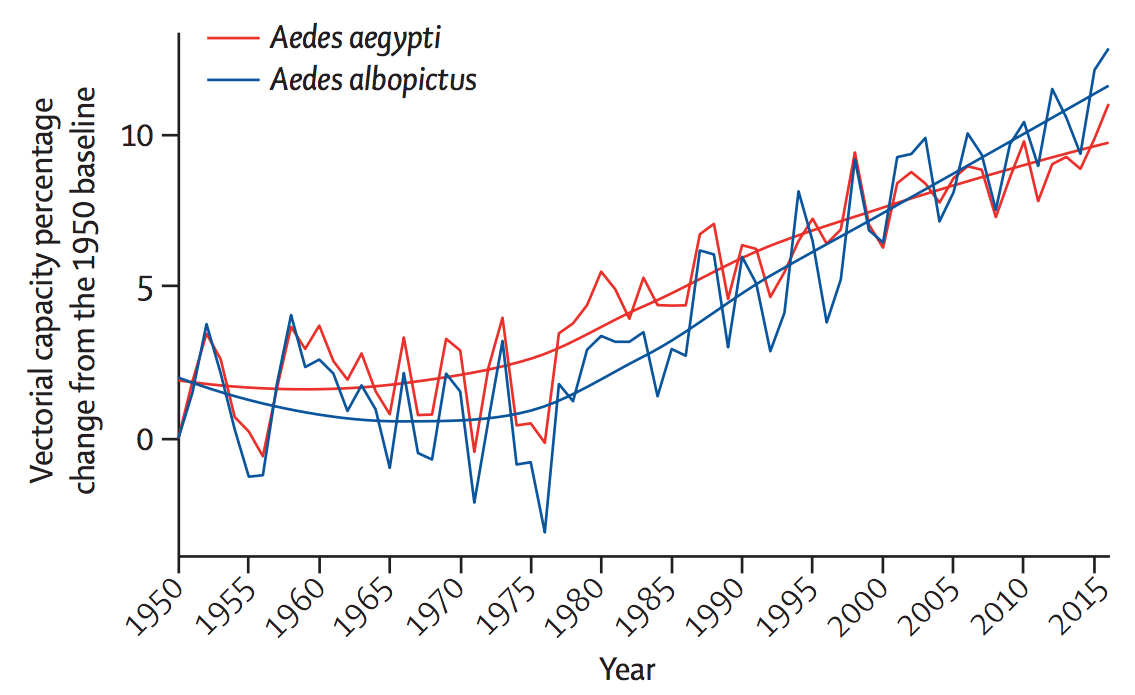
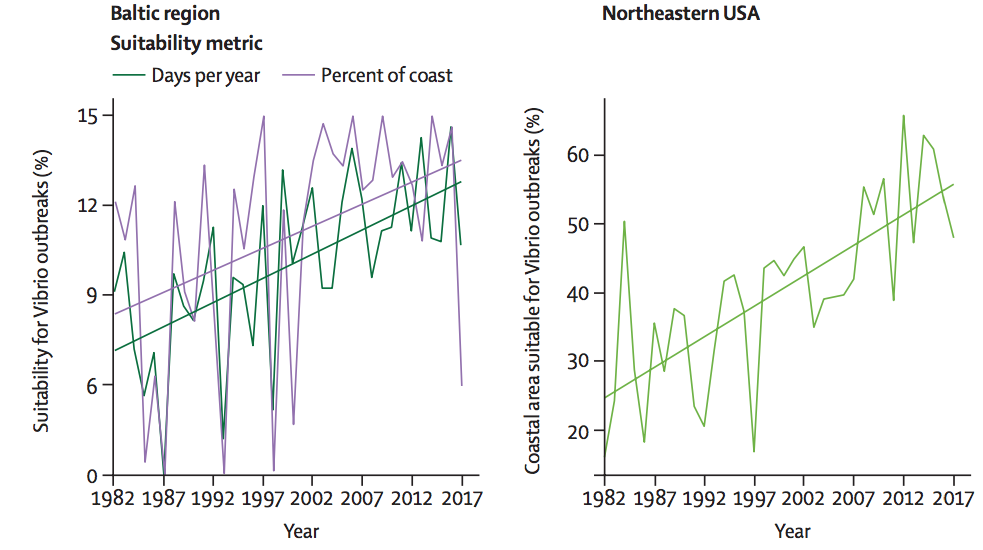
“We’re tracking exposure, we’re not tracking the actual health outcomes. [This is] because health outcomes depend on human systems and institutions, and to what extent countries are getting richer and coping more [with disease risk].”
§ Waning workforce
The report also tracks how rising temperatures are affecting occupational health – particularly for outdoor workers. Previous research suggests that increasing levels of heat and humidity are making working outside for long periods “intolerable”.Using modelling, the authors find that, in 2017, the equivalent of 153bn hours of labour were likely lost as a result of extreme heat. Around 80% of these losses came from the agricultural sector, the report says.The distribution of hours lost from the agricultural sector are shown on the map below, where dark colours indicate a large increase in the number of hours lost (per person per year) from 2000-17, in comparison to the hours worked in 1986-2005.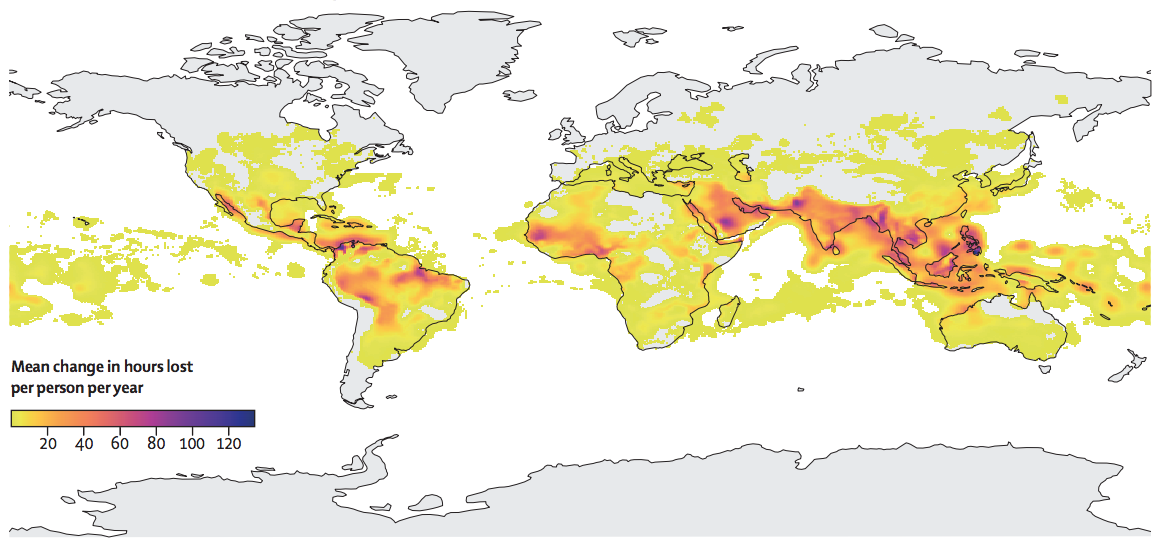
“For some countries, where the yield gap – the difference between actual and maximum potential yield – is small, falling yields reflect the negative effects of climate change outweighing any technological improvement.”
This year’s report also offers, for the first time, “preliminary results” of how climate change could be impacting mental health. The report says:“Climate change aggravates risks to mental health and wellbeing when the frequency, duration, intensity and unpredictability of weather-related hazards change. The resultant weather effects increase the number of people exposed or re-exposed to extreme events, and their consequent psychological problems, with suicide an extreme manifestation of trauma.”
§ Paltry preparations
In addition to tracking how climate change is affecting health, the report tracks the extent to which countries are adapting and preparing for future threats.A survey undertaken by the report’s authors across 478 cities finds that 51% expect climate change to “seriously compromise” their public health infrastructure.Health infrastructure, such as hospitals and ambulances, could face additional physical damages as climate change makes extreme weather more likely, Watts said:“When we talk about public-health infrastructure being compromised, we usually talk about systemic failure. So, this is the shutdown of a hospital, or the shutdown of power to get to the hospital – but that’s OK because, perhaps, that hospital has a generator. But that generator was in the basement and the flood that shutdown the power in general also shut down the back-up of power.”
At present, around 4.8% of all adaptation funding is spent directly on public health infrastructure, the report finds. “Given the scale of the impacts we’re talking about here, that’s not enough,” Watts said.However, despite major challenges ahead, there is “cause for hope”, Watts added:“This is when we start to talk about the health benefits of coal phase out and the reductions in deaths from air pollution, and the investment in healthy transport infrastructure and diets.
“I don’t think we’ve had enough of a trend to say the world is going in one direction or the other just yet. But, what we do know is, whichever way we go, it [will] end up shaping the health profile of countries for the next century.”
Article information
Watts et al. (2018) The 2018 report of the Lancet Countdown on health and climate change: shaping the health of nations for centuries to come, The Lancet, doi:10.1016/S0140-6736(18)32594-7