Natural ocean fluctuations could help explain Antarctic sea ice changes
Since satellite records of sea ice began in the 1970s, the world’s poles have shown a contrasting picture. While Arctic sea ice levels have fallen steadily over the past few decades, Antarctic sea ice levels have shown a less clear trend; increasing for several decades before falling to new lows in the last few years.Now, a study offers a new theory that could help explain Antarctic sea ice changes. It suggests that, for the last few decades, natural fluctuations could have trapped heat deep in the Southern Ocean – leaving surface water relatively cool and helping to preserve the ice.This natural ocean variability could be acting “in concert with other previously identified factors” – such as changes to surface winds and the cooling effect of melting Antarctic ice sheets – to allow Antarctic sea ice to persist in some parts of the Southern Ocean in spite of global warming, the authors say.If the theory is correct, it could mean that the world will see a “decrease in [Antarctic] sea ice cover in coming years”, another scientist tells Carbon Brief. This is because the ocean’s trapped heat will eventually reach the surface and – combined with the impact of climate change – cause sea ice to melt away, he says.§ Enigmatic ice
rapid declineresearch suggesting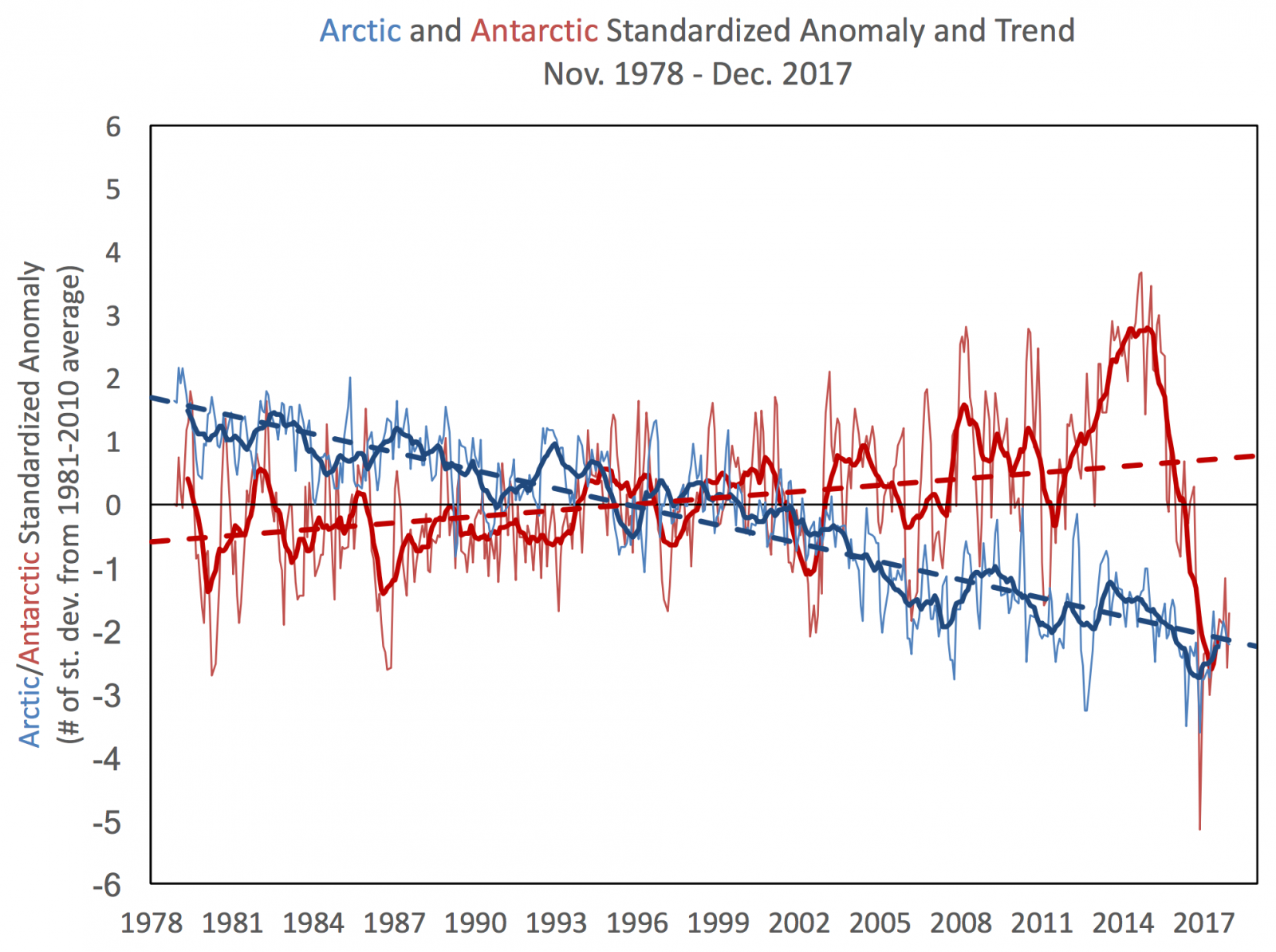
“Observations clearly show an expansion of Southern Ocean sea ice extent and a cooling sea surface temperature trends during the satellite era. We proposed a new hypothesis to explain these observed trends over the Southern Ocean: natural variability involving Southern Ocean convection may have contributed strongly to the observed trends.”
§ Oscillating oceans
climate model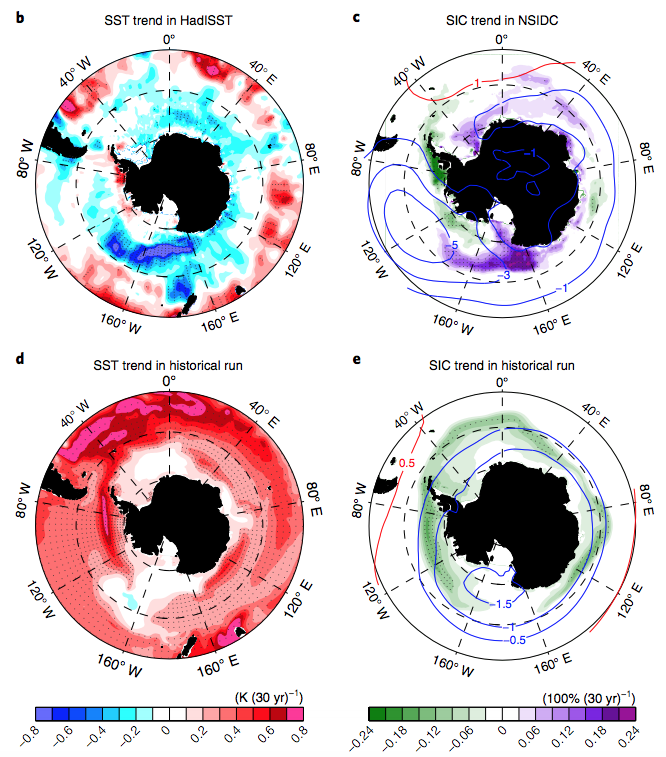

“We found that this natural variability in the model can produce approximately 30-year trends in sea surface temperatures and sea ice that resemble the observations. This suggests that natural internal variability associated with the Southern Ocean convection may play a significant role in the observed trends.”
§ Testing the theory

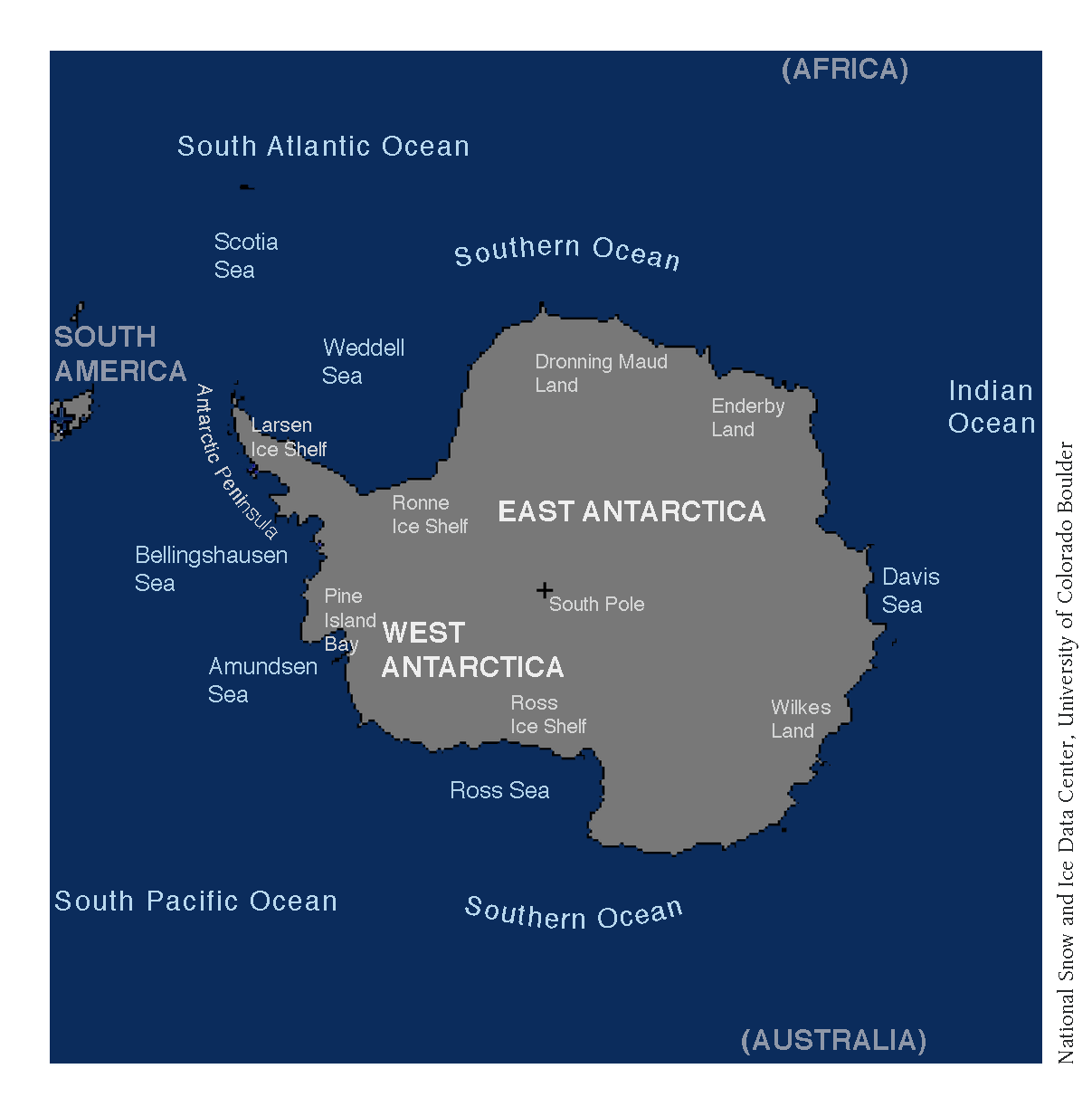
“Remarkably, this simulation captures the principal features of the observed sea surface temperatures and sea ice trends, including the overall cooling trend and sea-ice expansion, the maximum cooling trend (sea ice increase) over the Ross Sea and a warming trend (sea ice decrease) in the Amundsen-Bellingshausen seas.”
§ Missing puzzle piece?
Prof Marilyn RaphaelUniversity of California, Los Angeles“There is still debate on how much of the present trends in Antarctic sea are due to natural variability. This research presents further evidence to suggest that it is. The study also highlights the role of slowly varying mechanisms in the ocean in a way that has not been done before.”
Dr Laura LandrumDr Marika HollandNCAR“This may be an important piece of the puzzle as to why sea ice has expanded in the Southern Ocean over the satellite era.”
Dr Will HobbsUniversity of Tasmaniacold windsbecome weaker“Those explanations do a good job of explaining sea ice changes in some regions, and in particular the intense sea ice loss near the Antarctic Peninsula and increase in the eastern Ross Sea. They haven’t really been able to explain to very intense sea ice increase in the western Ross Sea, though, which is the strongest observed sea ice trend in Antarctica and explains much of the overall increase.
“There’s clearly an ocean component to this story, which this study seems to clarify. Assuming this theory is correct, we might expect to see a decrease in sea ice cover in coming years, as, eventually, enough heat builds up that it has to come to the surface and melt ice – combined with the impacts of human emissions.”
record lows“It’s intriguing to wonder whether this is what happened in 2016 when Antarctic sea ice suddenly dropped to record lows, but more work would be needed to state whether that was actually the case, or just due to an atmospheric anomaly.”
“The trapped heat can reach the sea surface and melt sea ice once the subsurface heat has accumulated to a strong enough degree.”
Article information
Zhang, L. et al. (2018) Natural variability of Southern Ocean convection as driver of observed climate trends, Nature Climate Change, doi:s41558-018-0350-3