Guest post: Observations and models agree that the oceans are warming faster
Dr Lijing Cheng is an associate professor at the Institute of Atmospheric Physics in China; Prof John Abraham is a professor in the School of Engineering at the University of St. Thomas; Zeke Hausfather is the US analyst for Carbon Brief; and Dr Kevin Trenberth is a senior scientist at the National Center for Atmospheric Research.Ocean heat content (OHC) is one of the main measures of climate change, with around 93% of all heat trapped by greenhouse gases in the atmosphere accumulating in the Earth’s oceans.The “fingerprint” of human influence on the climate is much easier to detect in the oceans, as it is much less affected by year-to-year natural variability than more commonly used surface temperature records.Back in 2013, the IPCC Fifth Assessment Report (AR5) featured five different OHC estimates that generally showed oceans warming more slowly than most models projected.However, over the past five years the research community has made substantial progress in improving long-term OHC records and has identified several problems with prior OHC estimates. Improvements include properly accounting for limitations in some older OHC instruments and taking advantage of better methods of accounting for gaps in the coverage and completeness of ocean temperature measurements.In a new “perspectives” paper for the journal Science, we show that these updated OHC estimates agree well with climate model projections over the past few decades. This means that scientists can have more confidence in climate model simulations of OHC changes now and into the future.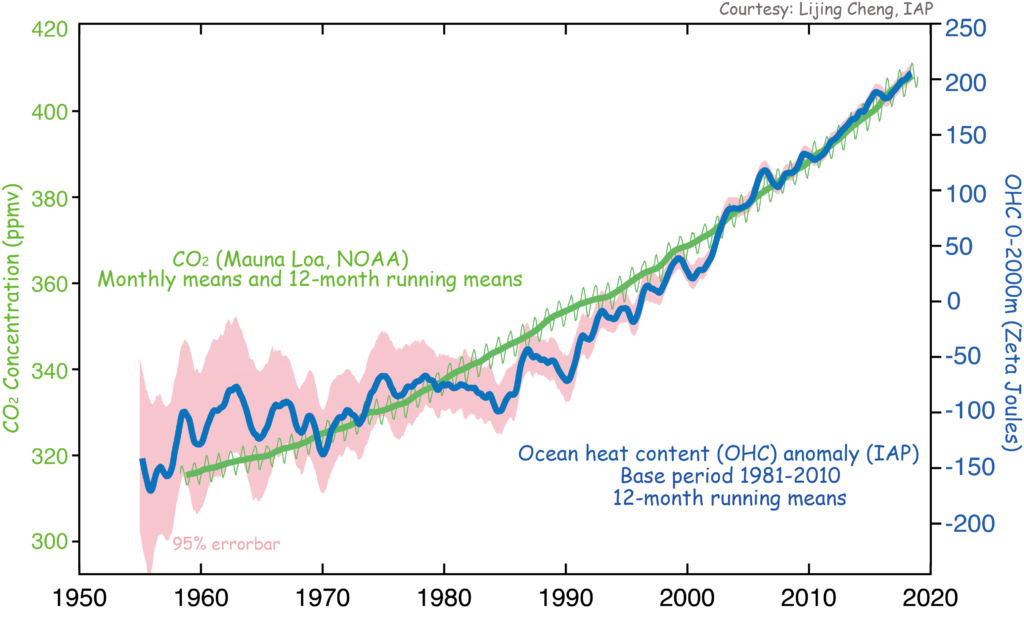
§ Recent records show more warming
Argo floatsfreely available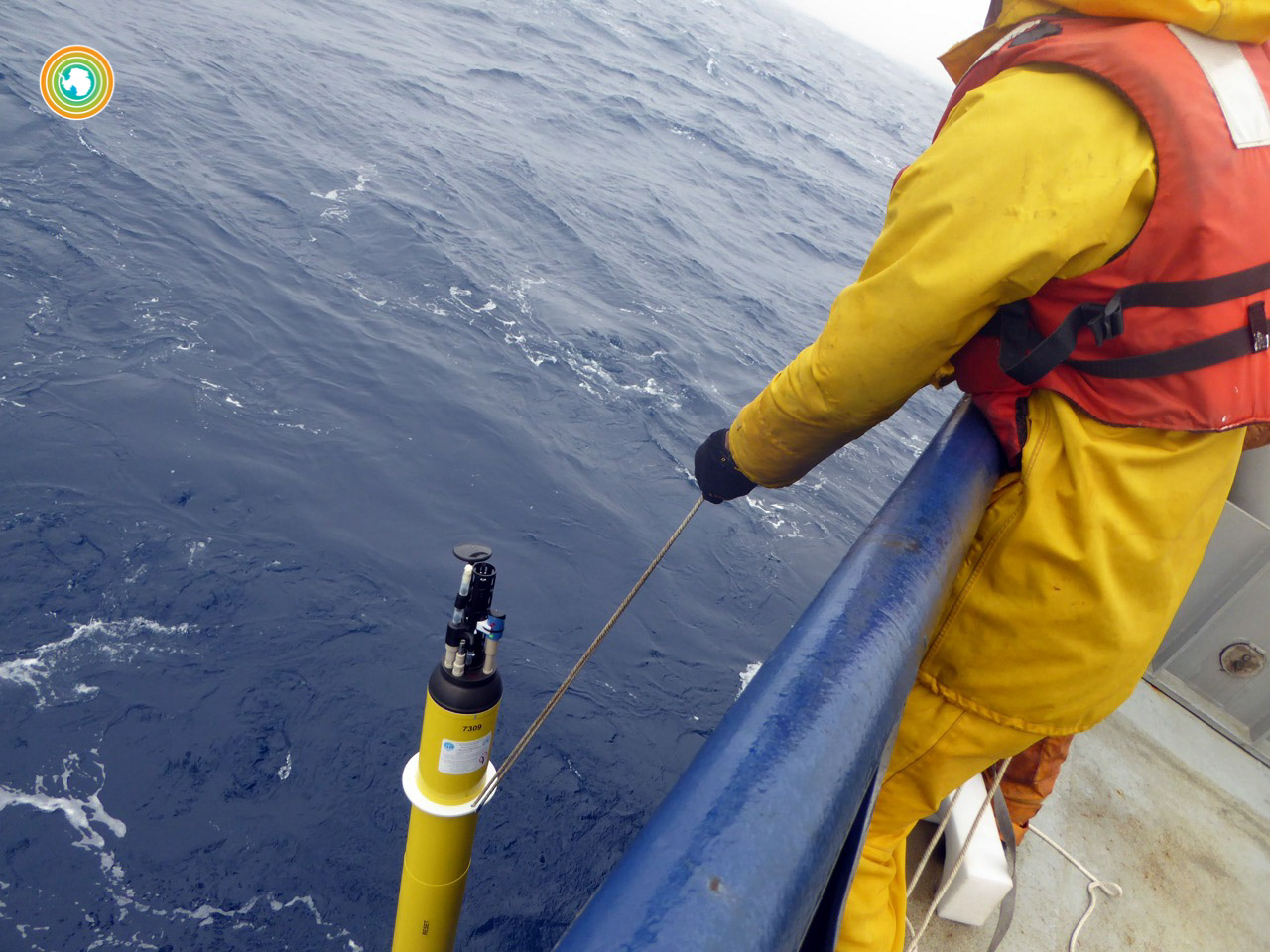
Article information
References:
Cheng, L. et al. (2018). How fast are the oceans warming? Observational records of ocean heat content show that ocean warming is accelerating. Science. doi.org/10.1126/science.aav7619
Domingues, C. M. et al. (2008). Improved estimates of upper-ocean warming and multi-decadal sea-level rise, Nature. doi.org/10.1038/nature07080
Cheng, L. et al. (2017). Improved estimates of ocean heat content from 1960 to 2015. Science Advances. doi.org/10.1126/sciadv.1601545M
Ishii, M. et al. (2017). Accuracy of global upper ocean heat content estimation expected from present observational data sets. SOLA. doi.org/10.2151/sola.2017-030
Resplandy, L. et al. (2018). Quantification of ocean heat uptake from changes in atmospheric O2 and CO2 composition. Nature. doi.org/10.1038/s41586-018-0651-8