Guest post: Energy efficiency contributed 25% of UK economic growth since 1971
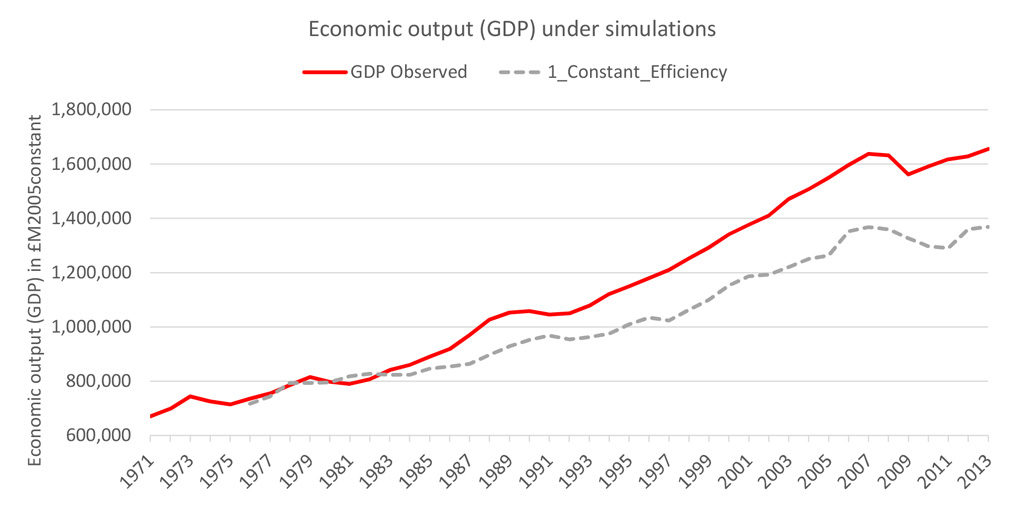
Dr Paul Brockway is a university academic fellow at the University of Leeds; Dr Marco Sakai is lecturer at the University of York; Prof John Barrett is chair in energy and climate policy at the University of Leeds; and Prof Peter Taylor is chair in sustainable energy systems at the University of Leeds.Improving energy efficiency is seen as a key strategy for meeting global climate goals under the Paris Agreement.Yet the historical record shows global energy use has been closely coupled to economic output, with the two generally increasing in lockstep. This is a concern, given the need to limit growth in energy use even as global GDP is expected to continue rising.Moreover, the precise nature of interactions between the economy and energy use are poorly understood, beyond their past close coupling. One little-studied aspect of this conundrum is the last stage of energy use – for example, the useful energy contained in hot water or lighting.Many current models fail to properly account for the conversion of energy inputs, such as coal, into this useful energy stage. Including this process in our models might help us to better understand the coupling between energy use and GDP – and what we might do in response.In a new study in the journal Energies, we try to accurately model this chain of successive energy conversions to explore the energy-economy relationship in the UK. We find that gains in energy efficiency have contributed a quarter of all growth in UK GDP over the period 1971-2013.In short, energy has a much larger role in economic growth than conventional wisdom supposes.§ Model efficiency
Research suggests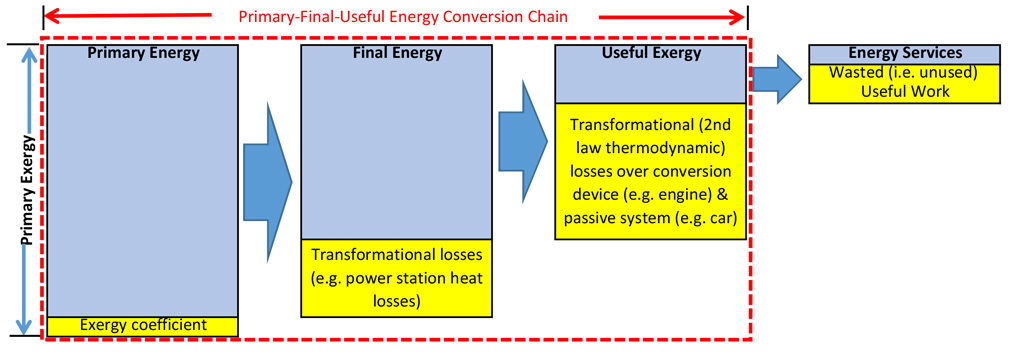
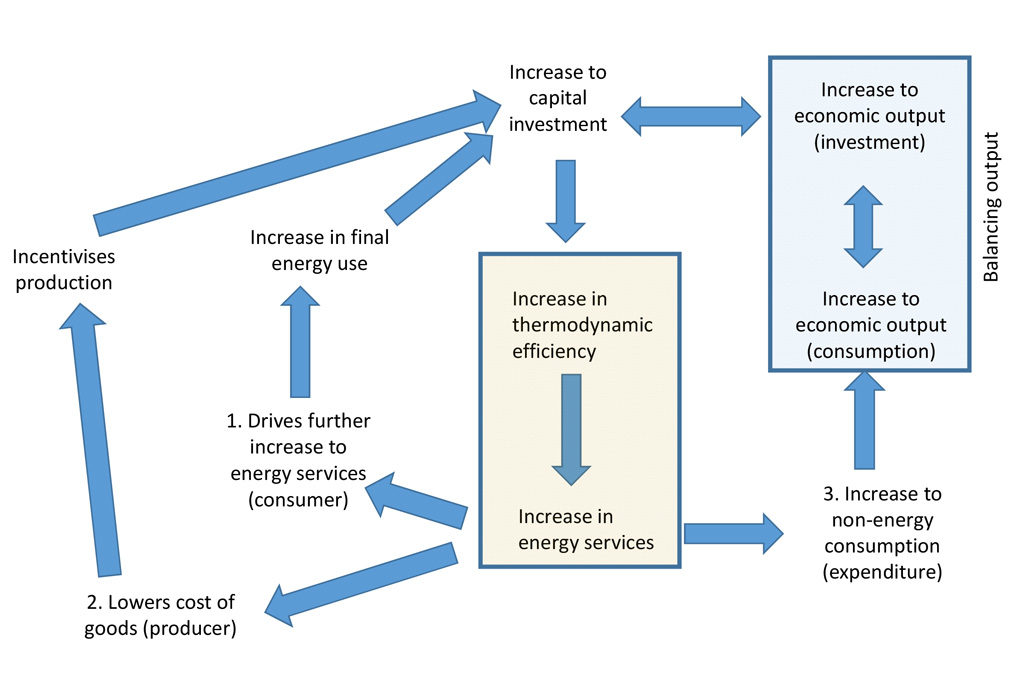
§ Efficiency driving growth
§ Decoupling challenge
aspects of societyless likelyreduce primary energy demandsufficiencyArticle information
Sakai, M. et al. (2018) Thermodynamic efficiency gains and their role as a key ‘engine of economic growth’, energies, doi: 10.3390/en12010110