Australian election 2019: What the manifestos say on energy and climate change

Josh Gabbatiss

Update 21/05/2019: After an election in which climate change was assumed to be a crucial deciding factor, the ruling Liberal-National Coalition emerged victorious. Since the results were announced, many commentators have reflected on the implications of this result for politicians around the world pushing an overtly environmental agenda. See our tracker, above, to get a sense of the policies being promoted by the different parties in the run up to the election.Following its hottest summer on record, Australia will head to the polls on 18 May with climate set to be high on the agenda for many voters.To understand the issues at stake, Carbon Brief has assessed and collated the various commitments to tackling climate change and improving the energy system being made by Australia’s major political parties.Australian politics is dominated by the Coalition – an effectively permanent alliance of the centre-right Liberal and National parties – and the Labor party. Significant minority parties include the Australian Greens, as well as the nationalist Pauline Hanson’s One Nation party and the centrist Centre Alliance.Climate and energy have been critical issues in Australian politics in recent years, helping to drive the rise and fall of several prime ministers. This importance is reflected in the manifestos of the major parties. Labor has pledged to significantly accelerate the nation’s shift towards renewables in a bid to meet far more ambitious emissions cuts than currently set out by Scott Morrison’s coalition government.

Treasurer Scott Morrison hands Deputy PM Barnaby Joyce a lump of coal during Question Time https://t.co/uJIjThkFpT #auspol #PicoftheDay pic.twitter.com/5pbNrEV6Bv

— AAP Newswire (@AAPNewswire) February 9, 2017
Meanwhile, the ruling Liberals and their coalition partners the Nationals, who traditionally represent the country’s rural voters, have emphasised their focus on reliable, affordable power for Australians.Navigate the grid, above, to explore the main parties’ climate and energy plans. Hover over the entries to view the full text and use the drop-down menus at the top left of the grid to select specific topics. The entries in the grid are direct quotes taken from the manifesto webpages (Liberal, Labor, Nationals, Greens).The summary below highlights the key issues being contested by the different parties, as well as analyses some of the most interesting pledges.

§ Emissions targets

faced criticismindependent analysisin-depth profile of AustraliaClimate Change Action PlanrecommendationClimate Change Authority

“[Labor’s climate goal] will reduce the average full time wage by $9,000 in real terms, reduce the number of jobs by 336,000 and increase wholesale electricity prices by 58%.”

Australiannews outletsdismissedsaid
The current government has for its perceived failings to get to grips with climate change by tackling Australia’s greenhouse gas emissions, which reached a record high in 2018.As it stands, Australia has committed to an emissions reduction target of between 26% and 28% on 2005 levels by 2030. In its “Our Plan” manifesto, the Liberal Party says it will achieve this goal despite suggesting the nation is currently on track to miss it.[See Carbon Brief’s recent for more on the debate over whether or not it will meet its existing climate pledges.]Meanwhile, Labor has produced a “”, in which it sets out rather more ambitious targets. These include reducing emissions by 45% compared to 2005 levels by 2030 – and hitting net zero by 2050.This commitment is more in line with the previously laid out by independent government advisors, the (CCA), which proposed a 40-60% cut in emissions by 2030 compared to 2000 levels. Labor also notes the importance of the Paris Agreement 2C warming target, as well as “a more qualified commitment” towards the more ambitious 1.5C threshold.However, the Liberals have branded Labor’s manifesto commitments “reckless”. In widely publicised comments, the Liberals say:This war of words has been playing out in the press as well, with the and other News Corp-owned running stories based on materials supplied by the Coalition that seek to undermine Labor’s proposals. These documents stated the opposition party’s plan would “strangle growth”, as the national cost of carbon permits required to meet the 45% goal would run to as much as $26bn for Australia’s largest companies by 2030.Shorten this figure as “a malicious campaign by this government”, while Labor’s climate change spokesman Mark Butler the exact pricing would be difficult to determine as it would be left up to business. Looking at the wider picture, Labor emphasises the “devastating costs” climate change will have for the Australian economy in the long run, alluding to droughts and floods that “are already costing the economy $18bn a year and could increase to $39bn by 2050”.The party also says it will consult with industry and provide “tailored treatment” for emissions intensive sectors to “ensure they face comparable impacts from climate change policies as their competitors do in relevant international markets”.Meanwhile, the Greens have set out an even more ambitious agenda that includes an emissions reduction target at 63-82% by 2030 “on a trajectory to get emissions to net zero by 2040”. In its manifesto the party describes even Labor’s target as falling “woefully short” of Australia’s Paris obligations.

§ Kyoto credits

overachievedKyoto Protocolcount towardshas ridiculeda press releasetold Sky News
Central to the conversation about emissions targets in Australia is whether or not politicians will make use of its “Kyoto credits” to meet them. As the country on the targets for 2020 set out by the , due to a decrease in land clearance, ministers hope they can use these past successes to their future targets.Labor leader Bill Shorten the Coalition’s plan to use Kyoto credits as “fake action on climate change”, noting that Ukraine is the only other country in the world to declare its intention to do this. “By allowing the carryover of Kyoto credits, the Liberals’ already weak target effectively falls from 26% to 16%,” the Labor challenger said in from early April.This ridicule has been matched by the Greens, which, prior to Labor’s announcement that it would ignore Kyoto credits, derided the “old parties” for making use of this “accounting trick”. The party said it too would not use them, citing countries such as the UK and New Zealand that have cancelled excess crdits already.When challenged, Coalition politicians have been adamant about using this mechanism. Liberal energy minister Angus Taylor that without the carryover credits, Labor’s emissions target would be “economy-wrecking” and “apocalyptic”. Despite this, he also said the credits made a “relatively small” contribution to the overall carbon budget.

§ ‘Carbon tax’

Carbon Pricing Mechanismworst-performing
Image (note)
Glossary
CO2 equivalent: Greenhouse gases can be expressed in terms of carbon dioxide equivalent, or CO2eq. For a given amount, different greenhouse gases trap different amounts of heat in the atmosphere, a quantity known as the global warming potential. Carbon dioxide equivalent is a way of comparing emissions from all greenhouse gases, not just carbon dioxide.
CO2 equivalent: Greenhouse gases can be expressed in terms of carbon dioxide equivalent, or CO2eq. For a given amount, different greenhouse gases trap different amounts of heat in the atmosphere, a quantity known as… Read More
in the EUone Australian National University studyit saidhas dismissedsafeguard mechanism
The concept of a “carbon tax” has been a highly controversial issue in Australian politics for several years. First brought in by a Labor government in 2012 under prime minister Julia Gillard, the was intended to address Australia’s position as one of the nations for per-capita carbon emissions in the world.Under the scheme, all businesses emitting more than 25,000 tonnes of CO2 equivalent gases (tCO2e) each year had to obtain emissions permits from the government, with a view to creating an emissions trading scheme similar to the one seen . By placing a price on each tonne of excess carbon, the measures were intended to encourage a shift away from polluting industries and bolster low-carbon investment.Research has since demonstrated that this policy worked, with concluding emissions from electricity generation in 2013 would have been 11-17MtCO2 higher without it.However, when the Coalition led by Tony Abbott took control in 2013, it delivered its campaign promise of scrapping this “great big tax”, which would harm industry and take an “almost unimaginable” toll on Australians’ cost of living. In its latest policy pledges, the Liberal Party takes credit for “saving households and small businesses $200 on electricity bills and $70 on gas bills in 2014-15” thanks to scrapping the “carbon tax”.Given the highly politicised nature of the term “carbon tax” across the country, it is perhaps unsurprising that the Coalition Labor’s new climate policy as a “Trojan horse for a carbon tax”. Ministers have claimed their opponents’ plan to extend the existing “” – which aims to cut emissions from around 250 of Australia’s biggest polluting companies – would have far-reaching negative impacts on wages, jobs and production.Labor has stated resolutely that this is not the case, saying it “won’t be introducing a carbon tax, carbon pricing mechanism or raising any revenue from climate policies”. Instead, it says its approach is “cooperative and tailored” to cut emissions while keeping the economy strong.Despite this controversy, the Greens cite the success of the pre-Abbott carbon pricing strategy. The party says it wants to mirror the European strategy again to “change the investment decisions of heavy industry and energy companies”.

§ Renewables and energy prices

dubbing him
Image - Gordon Dam, Southwest National Park, Tasmania. Credit: Tasmanian.Kris via Flickr. - Gordon Dam, Southwest National Park (note)
ample renewable rapid shiftup from 21% in 2018big threearound 90%
Both Coalition parties make it clear in their manifesto pledges that a key priority for them is keeping costs low for Australians. This emphasis was made clear when Taylor was given the position of energy minister, with the prime minister “the minister for lowering electricity prices”.As the supposed voice of rural Australians, this is the one area of climate and energy policy that the National party has made a cornerstone of its manifesto for the upcoming elections. It lays out various strategies to ensure cheap and reliable power for small businesses, the “beating heart” of Australia’s economy.Conspicuous by their absence in these plans – and the plans of coalition partners the Liberals – are mentions of renewable energy. As a nation blessed with resources ready to be exploited, Australia has seen a towards solar, hydro and other sources in recent years – something the Liberal manifesto makes clear.However, the Coalition parties do not lay out a plan for future renewable growth beyond 2020, when they are aiming for 23.5% of Australia’s electricity supply to be derived from renewable sources, . Instead, the Liberal manifesto attacks Labor’s plan for 50% renewables by 2030, which it says “will mean higher electricity prices”.Labor stresses the economic potential of turning Australia into a “renewable energy superpower”, including the creation of new jobs and lowering prices. Part of its plans to boost renewable uptake include $2,000 rebates for low-income households to install solar batteries, as well as investing in hydrogen and bioenergy.The Greens have called for a total transition away from fossil fuels. This includes the creation of a public retailer, Power Australia, to break the “oligopoly” of the energy companies and “drive down power prices”.One aspect of renewable energy that does get a mention from both Liberals and Nationals is the sizeable hydropower capacity of Tasmania. As the island state produces of its power from hydro projects, it also serves as an important supplier of electricity to the mainland. Both Coalition parties mention plans to develop further connections with Tasmania that they say will improve the reliability of the whole nation’s power supply.

§ ‘Climate Solutions Fund’

Climate Solutions Fundmeans ofviewedfaced criticism
While the renewable target forms the cornerstone of Labor’s plan to tackle climate change, the Liberal Party’s key policy is its . This $2bn relaunch of the previous Emissions Reduction Fund has been pushed by the party as a “meeting our climate commitments without wrecking the economy”.By supporting farmers to revegetate degraded land, improve the energy efficiency of businesses and support indigenous communities in traditional land care, the party says the fund will deliver a further 103MtCO2e in emission reductions to 2030.With many Australians, including more moderate Liberals, calling for further action from the government on climate change, the new funding has been as an attempt to shore up support ahead of the election. The fund has due to the lack of provision for the emissions intensive power and industry sectors.

§ Coal

significant chunk61% of electricityexporterageing
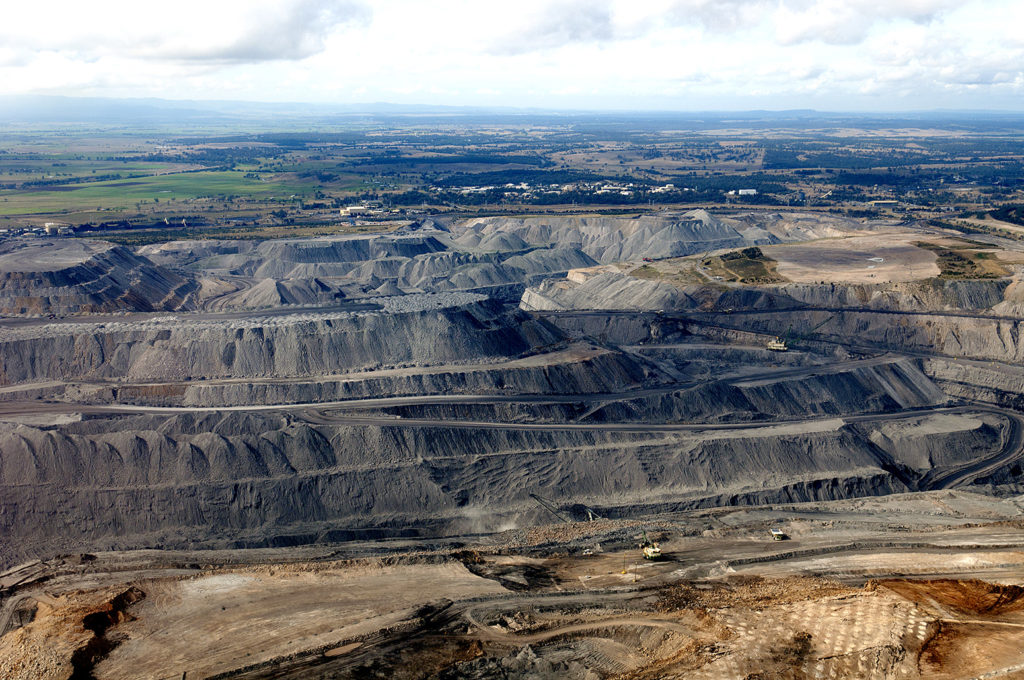
Image - Open coal cut mine, Hunter Valley, Australia. Credit: Jeremy Buckingham (CC BY 2.0). (note)
official figuresbrought a lump of coalmost recent reportdoubled downsaidpublic supportnew mineDescribed asimplied

“Australia is facing an inevitable transition, with 75% of coal-fired power stations in Australia operating beyond their design life. These eventual closures will create major structural adjustment challenges concentrated in specific regions and communities, including the Hunter, Latrobe Valley, central Queensland and Collie River Valley. We need a plan to support these workers and communities.”

Article information

Election grid designed by Tom Prater for Carbon Brief

While emphasising their push for cheap and reliable power, the Coalition dodges one of the most contentious issues in Australian energy politics: coal.As it stands, coal provides a of the nation’s power – in 2017 – and Australia’s wealth of mines makes it the second largest of the fossil fuel after Indonesia. However, coal plants mean politicians need to make serious decisions about whether or not they intend to recommit to this highly polluting fuel.According to recent , the government expects its coal mining to increase in the coming years and ministers have made clear their support for the industry. In 2017, in his role as treasurer, Morrison even into parliament to hammer home his party’s plan to “keep the lights on” across Australia.In the wake of the Intergovernmental Panel on Climate Change’s , which suggested drastic emissions cuts would be required to avoid the worst impacts of global warming, ministers on this support. Michael McCormack, the leader of the National Party and deputy prime minister, Australia should “absolutely” continue to make use of its coal reserves, which he said were “very, very important” for the country.Wavering for coal in Australia has been exemplified by the proposed by the Indian energy company Adani for Queensland. a “flashpoint” for the upcoming election, the Adani coal mine has divided the local community and the nation over competing demands to take action on climate change and bring jobs to a region with high unemployment.Both Labor and the Greens – who have called for an immediate ban on new coal mines, including the Adani project – place great emphasis on the need for a “just transition” to ensure those working with fossil fuels are not left behind.While Labor has not committed to the kind of coal phaseout by the IPCC report, its climate change plan does acknowledge the decline in coal’s fortunes and the need to invest in a transition towards a more renewable future:Update 13/5: The election grid has been updated to include additional commitments appearing on the webpages of the two Coalition parties.

🗂️ back to the index