Guest post: How to avoid ‘unfair and risky’ climate change scenarios
Dr Joeri Rogelj is a lecturer in climate change and the environment at the Grantham Institute at Imperial College London and a senior research scholar at the International Institute for Applied Systems Analysis. He was a coordinating lead author on chapter two of the Intergovernmental Panel on Climate Change (IPCC) special report on 1.5C and is a lead author for Working Group One on the IPCC’s forthcoming sixth assessment report.Scenarios used in climate policy often suggest very risky strategies for tackling warming that are at odds with the letter of the Paris Agreement.These scenarios attempt to map out the different ways that human development and societal choices could affect each other and the natural world, while keeping warming within agreed limits.Yet they tend to put a strong burden on future generations and vulnerable populations by delaying action, allowing near-term warming in excess of those limits and then relying on negative emissions techniques later, to undo their initial shortfall in emissions reductions.In a new study published in the journal Nature, we present a new way of designing climate change mitigation scenarios that removes this implicit intergenerational bias and closely mirrors the intentions of the Paris Agreement.§ Scenario scuffles
considered reasonablepotentially impossibleachieve the Paris Agreementnot radical enougha bunch of confusing linesstories of what happened in the futureour new studySSP-RCP scenario matrix frameworkspecific level of warmingclimate “forcing” by 2100amount of cumulative CO2 emissions§ Obviously wrong
Integrated Assessment Models emissions technologiesmore modest deploymenta wider range of technologiesa very risky strategythe actual textinterpretation§ New logic
scenario logicour new studycarbon budgets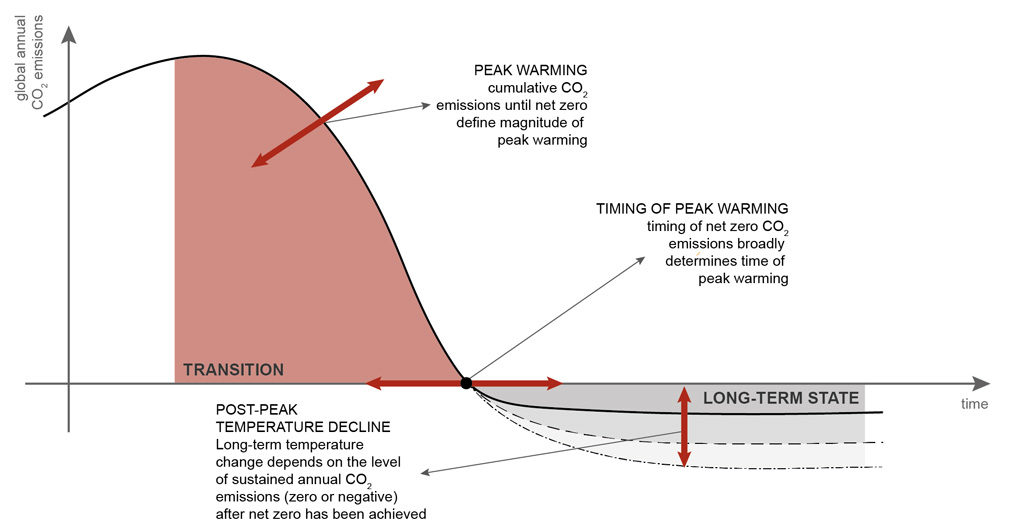
§ Design artefact
unavoidably relying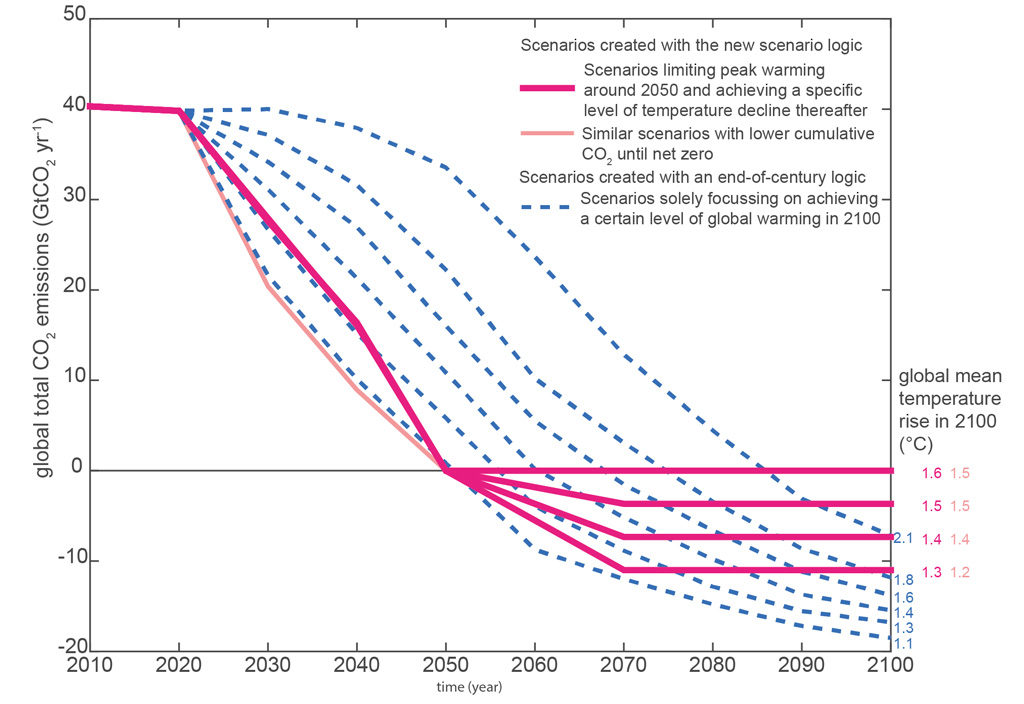
§ Targeted trade-offs
emissions in other sectors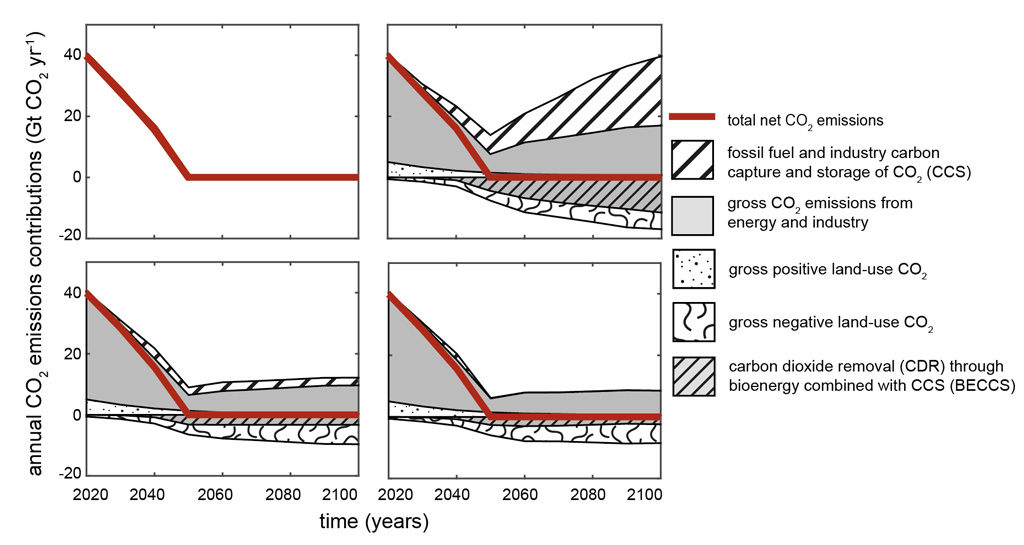
§ Upfront cost
perfect foresightexponentially increasingMESSAGE-GLOBIOM modelthis explainer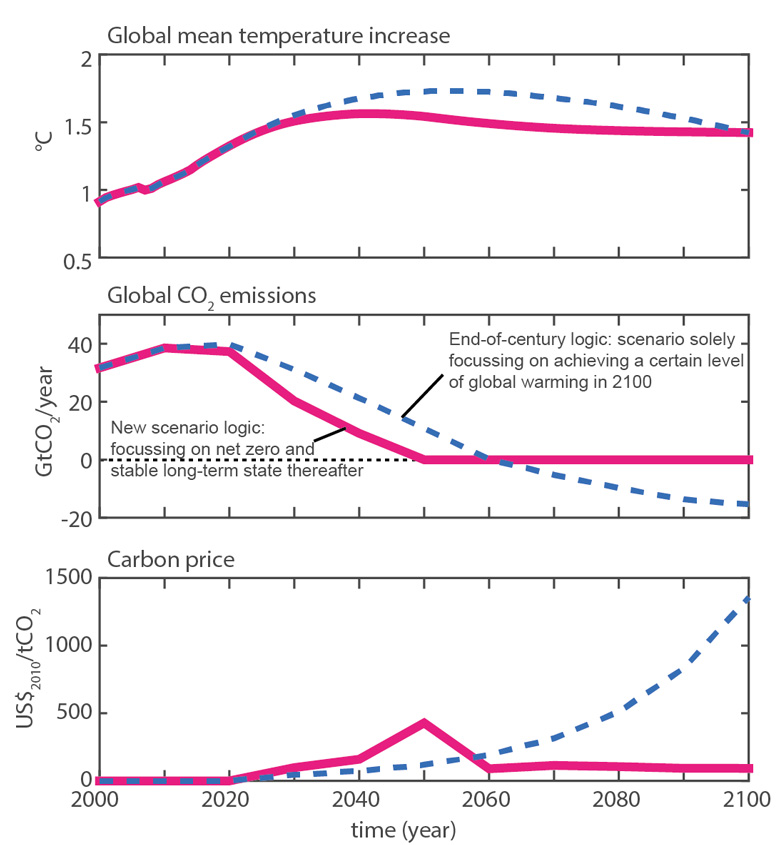
§ Intuitively useful
Article information
Rogelj J, Huppmann D, Krey V, Riahi K, Clarke L, Gidden M, Nicholls Z, & Meinshausen M (2019). A new scenario logic for the Paris Agreement long-term temperature goal. Nature DOI:10.1038/s41586-019-1541-4