The Carbon Brief Profile: Canada

Josh Gabbatiss

In the latest article in a series on how some of the world’s key emitters are responding to climate change, Carbon Brief considers Canada’s relationship with its extensive oil deposits and its controversial carbon pricing system.[contentbox id=”29536″]Canada is the world’s 10th largest emitter of greenhouse gases. While it has an extensive network of hydroelectric dams and nuclear plants providing the majority of its power, it has been slow to adopt other forms of low-carbon energy and cut its transport emissions.In fact, successive governments on both sides of the political divide have consistently failed to meet the nation’s climate targets, despite their country warming up at twice the rate of the rest of the world.The exploitation of Alberta’s oil sands fields has proved highly contentious among environmental and Indigenous groups, as has government support for pipelines to transport their products across the nation. Oil and gas production is Canada’s largest emitting sector.Meanwhile, Canadians have become more conscious of the threat posed by climate change against a backdrop of severe flooding and fires.All of these issues are being pushed to the forefront in the run up to the general election, which is being held in late October.(Update 22/10/2019: After four years with a majority, Justin Trudeau’s Liberals look set to form a minority government following a narrow victory over the Conservatives. After the results came in, Trudeau told supporters that Canadians had “voted in favour of a progressive agenda and strong action on climate change”. It is likely the New Democratic Party will help the Liberals form a government, and in his victory speech the left-leaning party’s leader, Jagmeet Singh, pledged “real and urgent action” on climate change. The Canadian Green Party also had its best result to date, regaining both of its seats in British Columbia, and another in New Brunswick.)(Update 21/09/2021: Trudeau has held onto power, although once again fallen short of a majority government, after calling a snap election in the hope of capitalising on his handling of the Covid-19 pandemic. His Conservative rivals had offered an updated climate plan that included a carbon tax, despite years of opposition to such a measure, but also rejected Canada’s latest Paris Agreement pledge, announced by Trudeau in April.)
 
Infographic by Tom Prater for Carbon Brief 

§ Politics

ranks tenthLiberalsConservativesNew Democratic PartyGreen Party of CanadaBloc Québécoisa lot ofas well asrollbackscuts to climate science fundinggovernment scientistsgreen NGOsCOP21drawing praisepan-Canadianwas agreedcarbon pricing system
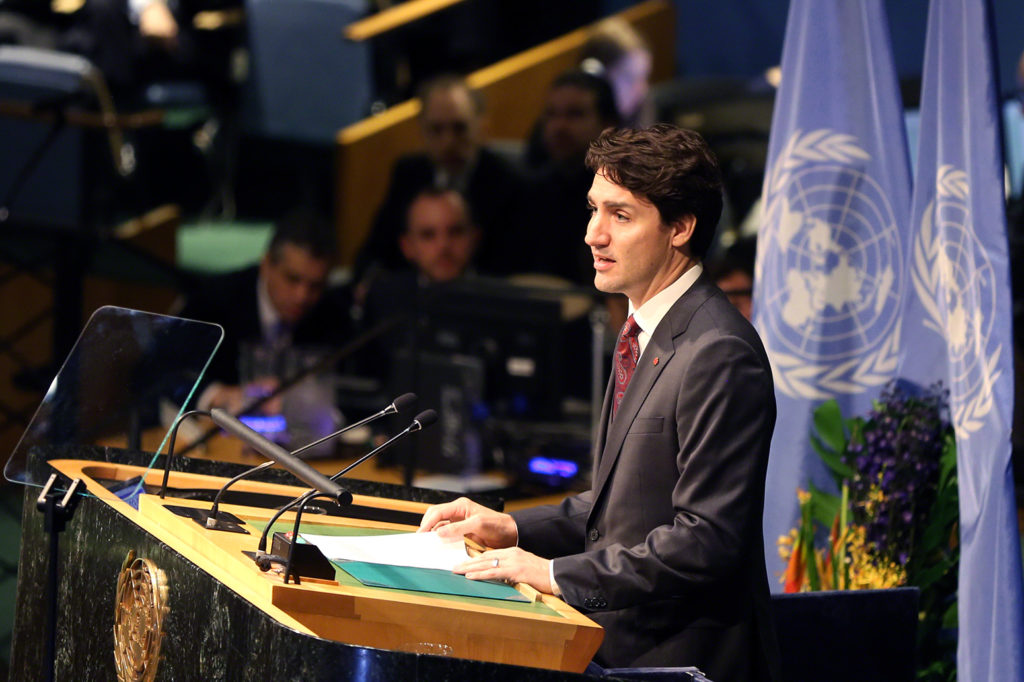
Image - Justin Trudeau, Prime Minister of Canada, speaking at the Signature Ceremony for the Paris Agreement on Climate Change, 22 April 2016, UN Headquarters, New York. Credit: IISD/ENB | Francis Dejon (note)
significant boost2030 climate goalshave deemedmounting criticismfossil fuel industryhas respondedhave targetedPolling suggestsone surveywas described astold a news conferencepledgingas well asalso sayshave faced criticism
Canada is a large, sparsely populated country with around 37 million people living across nearly 10m square km.It has an enormous wealth of natural resources and faces competing pressures to both exploit these resources for financial gain and to protect its areas of pristine environment. Its economy globally in terms of gross domestic product (GDP).The two major parties in Canada’s parliamentary democracy are the centre-left and the centre-right . Other significant forces in the Canadian system are the social democratic (NDP), the and the Quebec nationalist .There are also important political distinctions between different regions of Canada, with Quebec and British Columbia (BC) tending to place greater store by environmental policies, while fossil fuel-producing provinces, such as Alberta, sometimes push back against measures to cut emissions.This is important, as Canadian policy is dictated at a provincial level, including many environmental policies and decisions about energy infrastructure.The Liberals, under prime minister Justin Trudeau, have now been in power for four years, following a decade under Stephen Harper’s Conservatives. The Harper government was known for its strong support of Canada’s fossil fuel industry, its of environmental legislation, and clashes with both and .When Trudeau triumphed against Harper in 2015, his Liberal party publicly committed to addressing climate change and reinventing Canada as an international leader in climate action.That year, Canada took a large delegation to in Paris, with Trudeau for his role in proceedings and his nation’s push for the 1.5C stretch goal included in the final Paris Agreement. The following year, a “” climate change framework , including a commitment to bringing in a federal .This flagship “carbon tax” policy has since faced a strong backlash from several right-leaning provincial governments, who have appealed the federal decision in court.Trudeau also gave a to Canada’s international climate funding compared to the previous administration.However, despite these headline actions, Canada is not currently on track to meet its , which experts to be insufficient to meet the target required under the Paris Agreement in any case.At the same time, Trudeau has faced for what many view as his contradictory attempts to bolster his environmental credentials while also supporting the Canadian . This is particularly evident in the discussion of oil sands and pipelines construction.The result is a situation where the prime minister is targeted from both sides, both by those who feel he has done too little to cut emissions,and those who think he has done too much.Trudeau to his critics by stating that “Canadians know you can protect the environment and grow the economy at the same time”. However, both the NDP and the Green Party, which often compete with the Liberals for the same voters, the Liberals’ environmental record in their campaigning. climate change is one of the most important issues for Canadians, with finding 77% of respondents agreeing that the world is “facing a climate emergency”.The recent wave of climate protests have highlighted some of these issues. Trudeau joined a climate strike march in Montreal in September and even met with teenage activist Greta Thunberg, but “protesting his own government’s record of failure” by Conservative leader Andrew Scheer. As for Thunberg, she the prime minister was “not doing enough”, a sentiment Trudeau said he “agree[d] with entirely”.Amidst these doubts about their environmental credentials, the Liberals have gone into the election to commit to reaching net-zero greenhouse gas emissions by 2050 and plant 2bn trees.The Conservatives, meanwhile, are appealing to their base by promising to repeal the carbon tax, a proposed clean fuel standard. The party it would set emissions targets for big emitters, as well as a fund for green technology for those companies to pay into if they exceeded their targets.Both the NDP and the Greens want to increase the ambition of Canada’s emission target, which is currently 30% below 2005 levels by 2030, to 50% and 60%, respectively. Both of these parties, along with the Liberals, for failing to fully explain how they would implement such changes. 

§ Paris pledge

dataPIKLULUCFemissions of the UKaccounting forroughly halfKyoto protocolhad referredfalling far behindnationally determined contributionNDCParis Agreementfirst sethas alsomay useCarbon Brief analysistheir 2018 report concluded

“Canada has missed two separate emission reduction targets (the 1992 Rio target and the 2005 Kyoto target) and is likely to miss the 2020 Copenhagen target as well. In fact, emissions in 2020 are expected to be nearly 20% above the target.”

has saidown government’s reportingbeen describedCATParis Agreementrevised submissionboth of which can makea sourceUmbrella group
Embedded component (note)
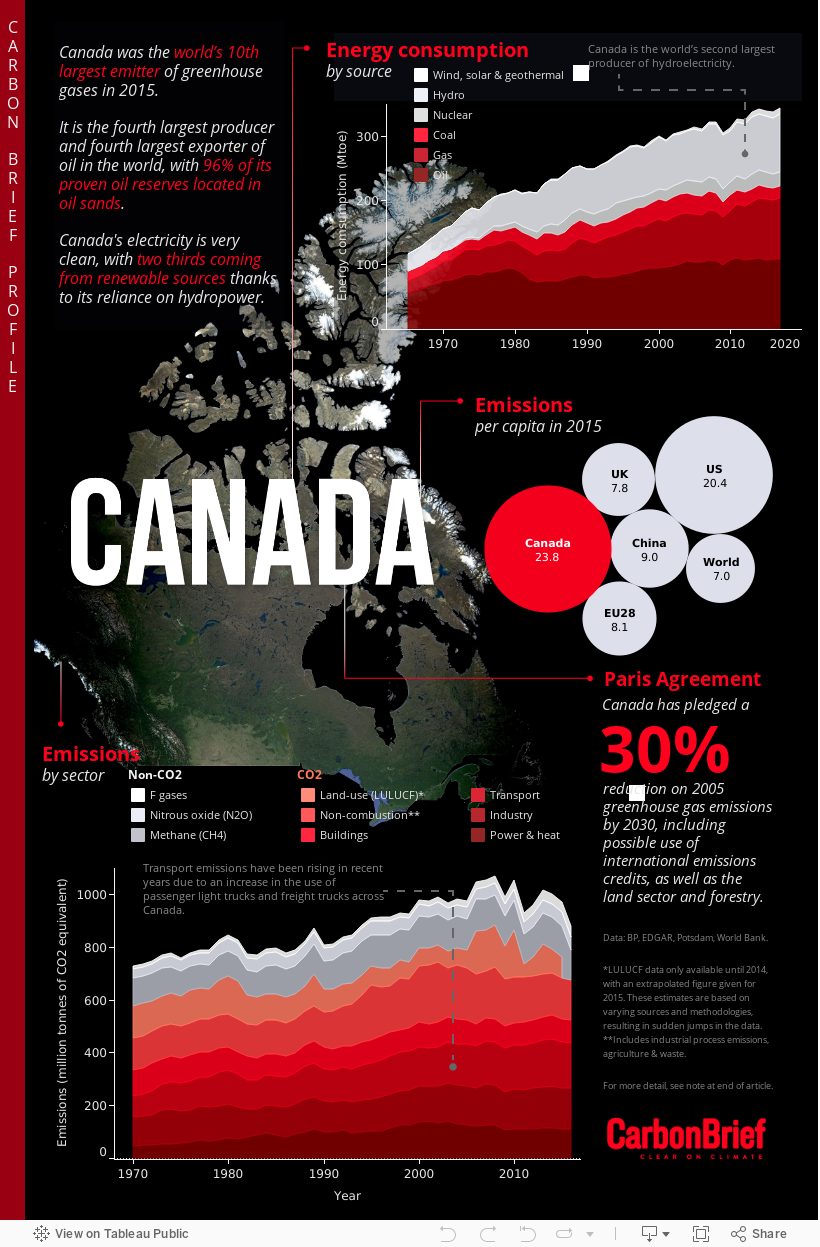
Canada’s greenhouse gas emissions were 849m tonnes of CO2 equivalent (MtCO2e) in 2015, according to compiled by the Potsdam Institute for Climate Impact Research (). This figure includes emissions from land use, land-use change and forestry ().This means Canada accounted for roughly 1.7% of global emissions that year and was the 10th highest emitting country – ahead of Mexico and just behind Germany. This is roughly twice the total .However, Canada’s per capita emissions exceed several of the other top emitters. In 2015 they were 23.8tCO2e, around the same as Australia and the US, but far higher than the UK or the EU average, which stood at 7.8 and 8.1tCO2e, respectively.Transportation and production emissions from the oil and gas sector are the two largest sources of greenhouse gases in Canada, together of the country’s emissions.Canada has had a chequered relationship with international climate politics. Former Conservative prime minister Stephen Harper was highly critical of the – the international treaty that committed developed states to cutting greenhouse gas emissions in 1992.Before becoming prime minister he to it as “a socialist scheme to suck money out of wealth-producing nations” and mentioned his intention to “block the job-killing, economy-destroying Kyoto accord”. The Conservatives officially withdrew Canada from the protocol in 2011, after in complying with its targets.Canada states in its “” () to the that it would aim for an economy-wide target to reduce emissions to 30% below 2005 levels by 2030, a target by the Harper government. It indicated that it international credits to meet its target. Canada ratified the Paris Agreement in 2016. in 2015 suggested this target would leave Canada still emitting more in 2030 than it was in 1990.The nation does not have a good record on such international commitments. After Canada’s auditor generals investigated its climate progress, :While Trudeau on the campaign trail the country is “on track” to meet its 2030 target, his shows even under a best-case scenario total emissions will only be 19% below 2005 levels in 2030.Canada’s pledge has as “insufficient” by Climate Action Tracker (), an independent analysis of climate pledges produced by three research organisations. This means it is not compatible with achieving the global target of holding warming well-below 2C, let along the stretch target from the of 1.5C.CAT notes that in previous assessments it has further downgraded Canada’s NDC rating to “highly insufficient”. This is due to a lack of clarity from Canada about how much it would rely on its forestry sector to act as a sink and absorb emissions.Canada has now clarified the projected extent of the LULUCF contribution towards its goals, in a to the UNFCCC. It estimates the forestry sector will contribute between 7 and 46MtCO2e in emissions reductions towards the 2030 target.However, the new approach adopted by Canada will “exclude the impacts of natural disturbances and focus on anthropogenic emissions and removals”. This accounting method means forest fires and insect infestations, Canadian forests , rather than a sink, of carbon, are not included.Canada sits within the “” during international climate talks at the United Nations Framework Convention on Climate Change (UNFCCC), alongside other developed nations including Australia, Japan and the US. 

§ Climate policies and laws

Pan-Canadian Framework on Clean Growth and Climateclean fuel standarddiscussions in AlbertaClimate Action Networkhas said
After taking power the Liberals produced their , an overarching strategy for reducing emissions that included a raft of new measures.This led not only to national carbon pricing and a coal phaseout (see below), but also plans for a covering all fossil fuels, efficiency measures for both buildings and transportation and regulations to cut methane emissions from the oil and gas sector.The government’s efforts to push through its agenda have been hampered by what CAT calls “strong headwinds” from provincial governments, often in oil-producing regions.This has been particularly apparent in the case of the carbon pricing law, but there have also been about rolling back caps on oil sands emissions and creating a “war room” to combat the oil industry’s opponents.However, according to NGO umbrella group the , a wider issue is the lack of short-term targets that will help Canada to meet its longer term emissions goals.Besides setting and legislating more ambitious greenhouse gas targets, they say there is a need for targets that cover “politically-relevant short-term periods, such as interim 2025 targets, or create carbon budgets to define needed progress between 2020 and 2030”.Trudeau that in order to achieve his proposed net-zero goal, his government would legislate five-year targets to ensure adequate progress towards 2050. 

§ Oil sands and pipelines

third largestenthusiastic to exploiteven as
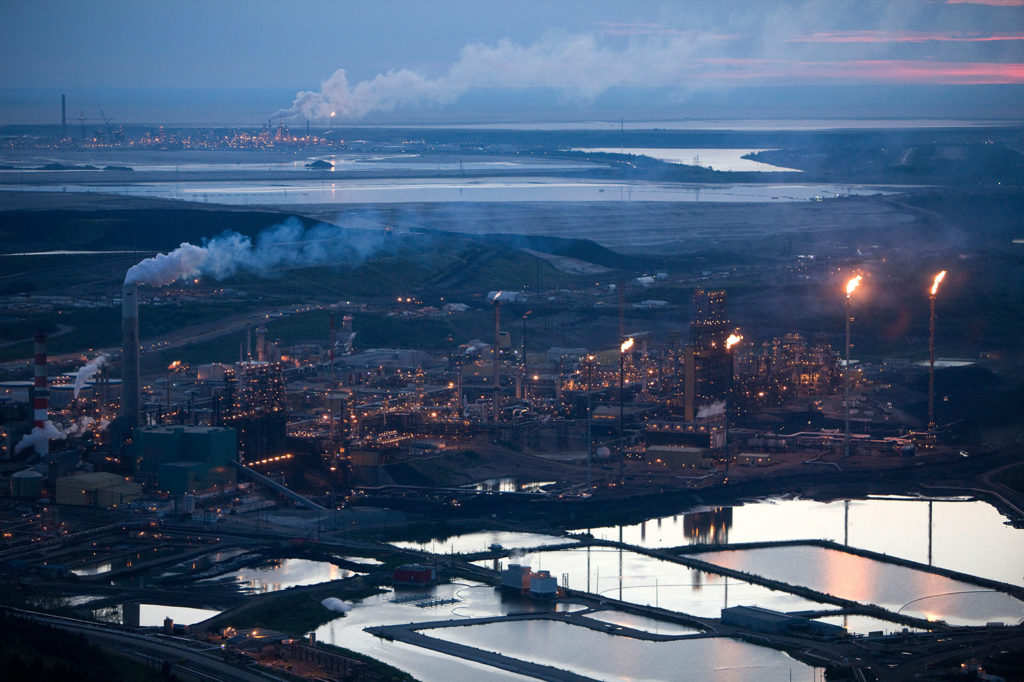
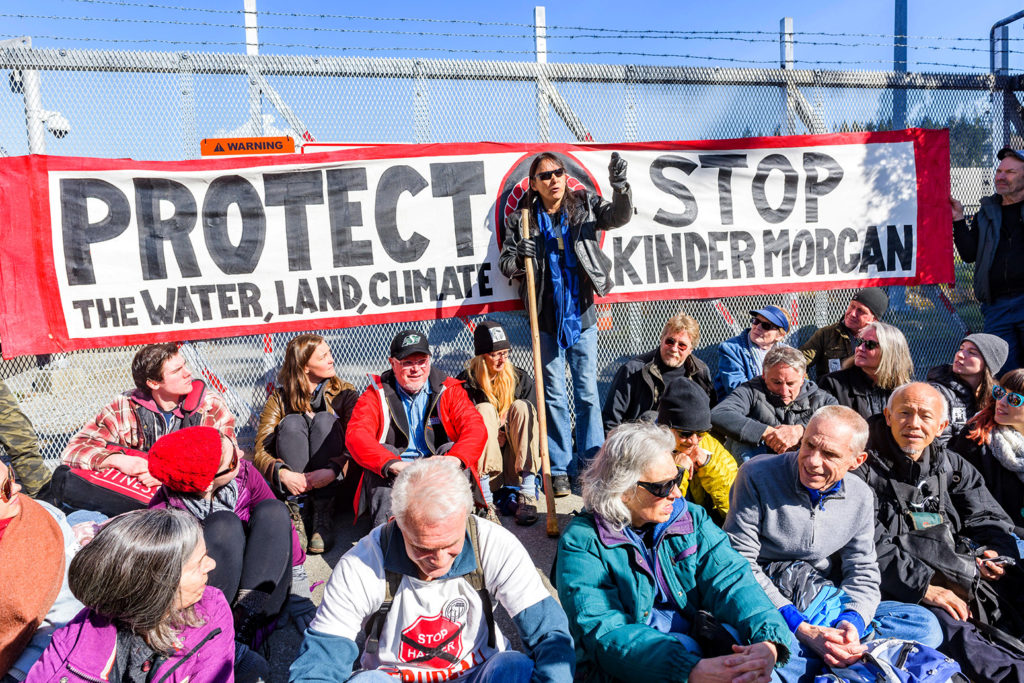
Image - Syncrude and Suncor oil sands mine sites near Fort McMurray, Alberta, Canada. Credit: Cavan / Alamy Stock Photo. - Syncrude and Suncor oil sands mine sites near Fort McMurray, Alberta, Canada. Credit: Cavan / Alamy Stock Photo. BPRET4 (note)
fourth largest oil producerresponsible forexclude LULUCFproduce moreNatural Resources Canadastateswere the subjectassigned oil sandsfourth largest exporterKeystone XLpurchasedannouncedthe day afterhave speculatedBothcalling on the governmentis clearthere are concerns
Image - Protesters block entrance to Kinder Morgan Trans Mountain Pipeline, Burnaby, British Columbia, 17 March 2018. Credit: Michael Wheatley / Alamy Stock Photo. - Protesters block entrance to Kinder Morgan Trans Mountain Pipeline, Burnaby, British Columbia, 17 March 2018. Credit: Michael Wheatley / Alamy Stock Photo. MBDPR1 (note)
According toCanadian Association of Petroleum Producersrepeated legal challenges2015 studyProf Kirsten Zickfeldsummarised her concerns

“If we build new fossil fuel infrastructure now, which will lock us into carbon emissions for decades, it will make it very difficult, if not impossible, to keep warming below 1.5C”.

been a shiftparticularly followinghave beenanother project
Within the loose sandstone of Alberta, billions of barrels worth of oil are locked away in the form of oil – or tar – sands. It is the world’s reserve of oil, behind Saudi Arabia and Venezuela.This viscous oil produces bitumen and its extraction has been a contentious talking point in Canada, with an industry this rich resource environmentalists say it will commit the country to a future of dirty fossil fuels.Overall, Canada is the in the world, with 96% of its proven reserves located in oil sands.With its high upstream emissions resulting from energy-intensive mining activities, the oil and gas industry is the highest emitting Canadian sector.It was 195MtCO2e in 2017 – around the same as Malaysia’s total – according to government emissions figures. (Unlike the PIK data quoted above, these figures .)Not only do oil sands greenhouse gases than conventional crude oil, their extraction often involves the destruction of forests and peatlands. However, , a government department, emissions per barrel of oil sands product have fallen 28% since 2000.Oil sands of a trade dispute between Canada and the EU over a mandatory requirement for the bloc to label their products “highly polluting”. Ultimately, in 2014 the EU backed down and the same rating as conventional petrol or diesel.Canada is also the of oil, sending 96% of its exports to the US. It is the transport of this product abroad that has been a particular sticking point.In recent years, the construction of new pipelines to take oil from Alberta’s controversial oil sands deposits have drawn the ire of both environmental and Indigenous groups. Pipelines, such as and Energy East, have faced repeated challenges and struggled to get off the ground.This conflict came to a head in August 2018 when the Liberal government the Alberta-to-BC Trans Mountain pipeline for CAD$4.5bn, after its survival looked under threat.Trudeau a fresh approval of the pipeline expansion in June, declaring a “national climate emergency”.With climate change a key talking point at the upcoming federal election, commentators this decision in particular may harm Trudeau’s chances of reelection. of the rival left-leaning parties have made strong statements against pipelines, with the Greens to “cancel the buyout” of the Trans Mountain pipeline.Central to this debate is the importance of Canada’s fossil fuel economy versus its environmental obligations. The government it sees oil sands production “remain[ing] an important part of the Canadian economy” in the coming years, but such operations could undermine gains made through other climate policies. lobby group the , Canada “is one of the few countries in the Organization for Economic Co-operation and Development (OECD) with growing oil production”. It notes that if managed properly, the industry will bring “more jobs and investment”.Meanwhile, pipelines have faced concerning their impact on both Indigenous groups and emissions. One found 30% of known oil reserves must remain untouched to meet the Paris target of well-below 2C of warming, with Canadian oil sands particularly “unburnable”.On the launch of one such legal motion at the start of 2019, climate scientist and Intergovernmental Panel on Climate Change (IPCC) author from Simon Fraser University at a press conference:From an economic standpoint, there is still plenty of global demand for oil. However, there has by major companies to lower cost, more efficient sources than Canadian oil sands, the oil market crash in 2014. In recent years, energy giants with investments in oil sands, such as Shell and ConocoPhillips, selling their stakes to Canadian companies.Besides pipelines, the government has also supported the development of a liquified shale gas export industry in BC by approving in the face of environmental protests, the Woodfibre LNG terminal near Vancouver. 

§ Carbon tax

federal carbon taxclimate strategysomeCBC NewsGreenhouse Gas Pollution Pricing Actbecame subject
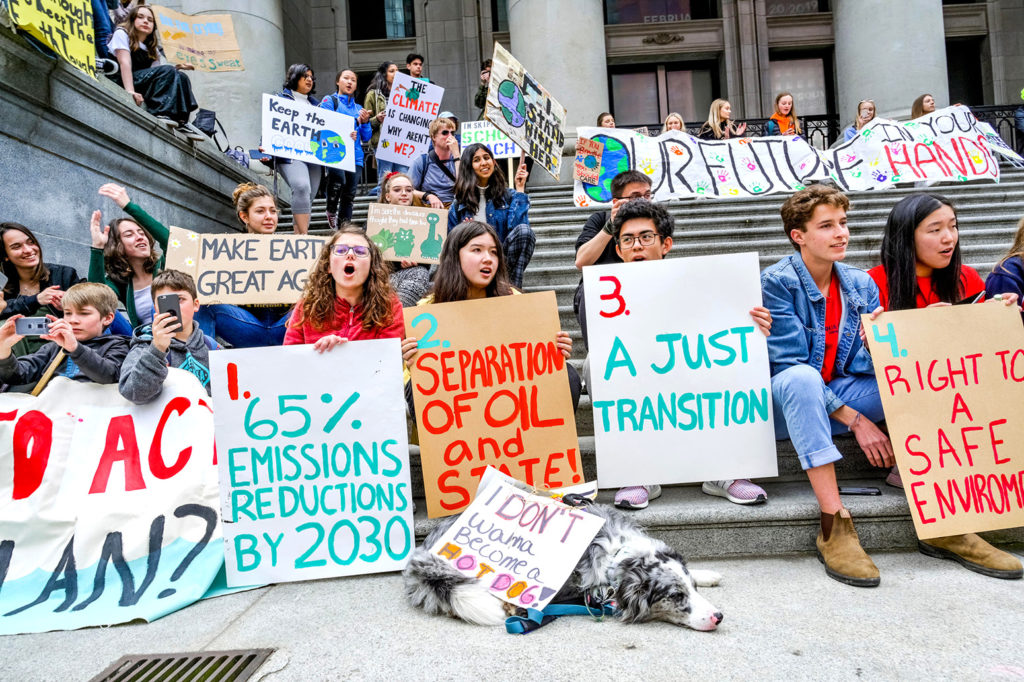
Image - Students skip school and protest lack of action on climate change, Vancouver, 3 May 2019. Credit: Michael Wheatley / Alamy Stock Photo. - Students skip school and protest lack of action on climate change, Vancouver, 3 May 2019. Credit: Michael Wheatley / Alamy Stock Photo. T7F6B3 (note)
intended to beapplies to industryAnalysiscash grabdescribed it ascarbon tax of its ownpledging tounsuccessfully challengedhas statedOne analysisan innovatorfirst revenue-neutral carbon taxgrew 12.4%Independent analysis
The in Canada was launched as a centrepiece of the current Liberal government’s .Attempts to repeal the tax have since made it a highly politicised topic that have predicted will be “the ballot question in the 2019 federal election”.The Conservatives have said they will scrap the system entirely, while the Greens and NDP have proposed modifications to the existing scheme.The same polls that have shown Canadians are more concerned than ever before about climate change have also shown that most would be unwilling to pay even a modest sum (“as much as even a monthly Netflix subscription,” as put it) in extra carbon tax.The issue came to the fore in 2016, when the government proposed a national price on carbon, intended to start with a CAD$20 per tonne of CO2 fee in 2019 that would then increase by CAD$10 per year to CAD$50 a tonne by 2022. Each province was told it could develop its own programme for implementing carbon pricing or accept a federal carbon tax.A deadline of September 2017 was set, beyond which the government developed its as the federal standard.By the time of the deadline, every province had met the conditions the government had set except Saskatchewan, Manitoba, Ontario and New Brunswick, which to the federal “backstop” as of April 2019. It is also set to kick in in Alberta next year, as well as the territories of Nunavut and Yukon at their request.The additional tax applies to any business using fossil fuels and gets passed onto consumers.In principle, the pricing system is intended to discourage the use of fossil fuels by, for example, encouraging people to choose low-emissions vehicles. However, the tax is “revenue neutral” in that taxpayers receive back the money they pay via reductions in their tax bill or rebates.The tax also , with different industries setting emissions targets depending on the average amount produced by that sector. Companies that remain below 80 or 90% of the average for their industry pay no tax and earn credits, while those going above that pay tax on those extra emissions. by the government’s environment department projected carbon pricing could cut emissions by 80 to 90MtCO2 in 2022, equivalent to around a 13% reduction in the country’s current total.Despite being revenue neutral, right-leaning politicians, particularly in oil-producing regions, have routinely portrayed the tax as a “”. Ontario premier Doug Ford “the worst tax ever”.Alberta, which previously had a , is now being forced into the federal system after premier Jason Kenney won an election “liberate Albertans from that tax”. Ontario and Saskatchewan have both the tax in court.Carbon taxes can affect people differently depending on factors including their income and their vehicle use. In practice, the government that while 70% of Canadians will receive more in rebates than they pay in carbon tax, the remaining 30% will pay more than they stand to gain. found instating the federal “backstop” instead of Alberta’s previous system would “roughly double” the number of Albertan households seeing rebates exceed the amount spent on carbon taxes (bringing it to 80% of households).Meanwhile, BC was in Canadian carbon pricing, bringing in “North America’s ” back in 2008. Between 2007 and 2014, the province’s real GDP , which is stronger than the Canadian average. estimated the tax reduced BC’s emissions by up to 15% from what they would otherwise have been.  

§ Transport

was responsiblegovernment attributes to2018 submissionhas adopted
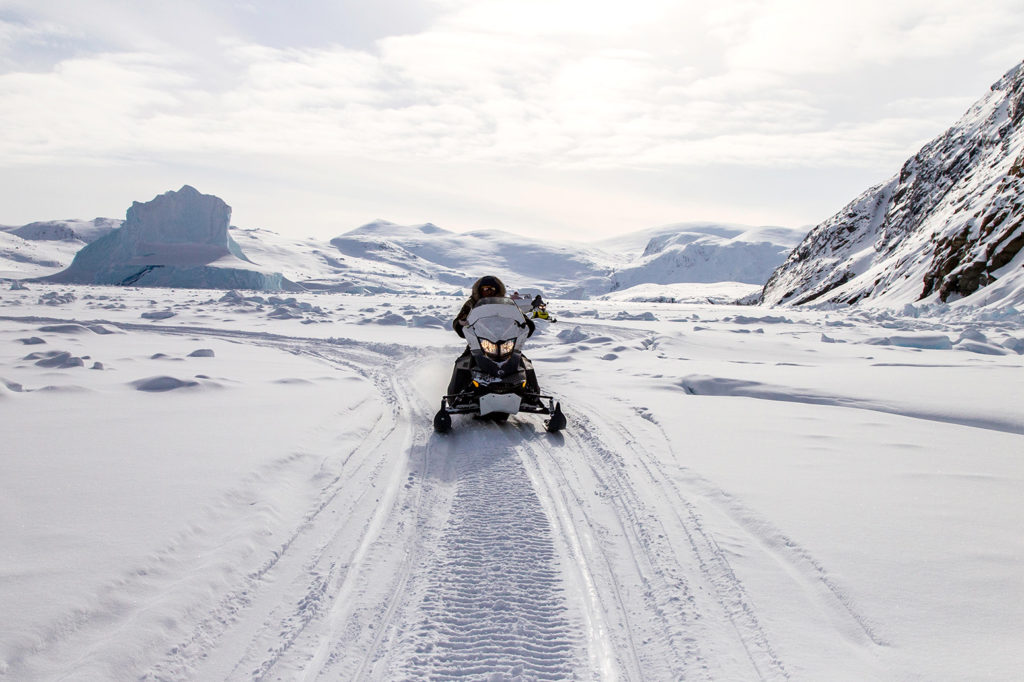
Image - Ski-doo rider traverses a fjord on Baffin Island, Nunavut, Canada. Credit: Russell Millner / Alamy Stock Photo. - Ski-doo rider traverses a fjord on Baffin Island, Nunavut, Canada. Credit: Russell Millner / Alamy Stock Photo. MG3J49 (note)
made uptakes the form ofclean fuel standardsource of debatehas concluded
Transport is second only to oil and gas as the highest emitting sector in Canada. It for 174MtCO2e in 2017.Emissions from the sector are also on the rise, increasing by 19% between 2000 and 2017. This is due primarily to an increase in pickups, vans and freight trucks on the road, a trend the “many factors including increasing trade and globalisation, and online shopping”.In its to the United Nations Framework Convention on Climate Change (UNFCCC) reporting on climate action, Canada attributes its high transport emissions to the “large distance between metropolitan areas and low population density”.In a bid to tackle this sector, the government targets for zero-emissions vehicles to make up 10% of sales by 2025, then 30% by 2030 and 100% by 2040.Electric vehicle sales 2.2% of the total in 2018. Almost 44,000 electric vehicles were sold that year, more than double the level in 2017, with the highest uptake in Quebec, Ontario and British Columbia.In the most recent federal budget, the government allocated CAD$300m to support the purchase of zero-emissions vehicles. This support rebates worth up to $5,000 off the cost of electric vehicles and $2,500 off plug-in hybrids.The government’s proposed has been a in Canada, owing to concerns about its impact on fuel prices for vehicles.The initiative would set limits on carbon emissions from the burning of all fossil fuels, and one suggested outcome would be more ethanol and biofuels being added to fuels. A government analysis costs of implementing the standard “would likely be passed” onto consumers.  

§ Hydro

stretches backCanada wastwo thirds
Embedded component (note)
BP Statistical Review of World Energy 2019Highchartsvirtually allnearly 9%
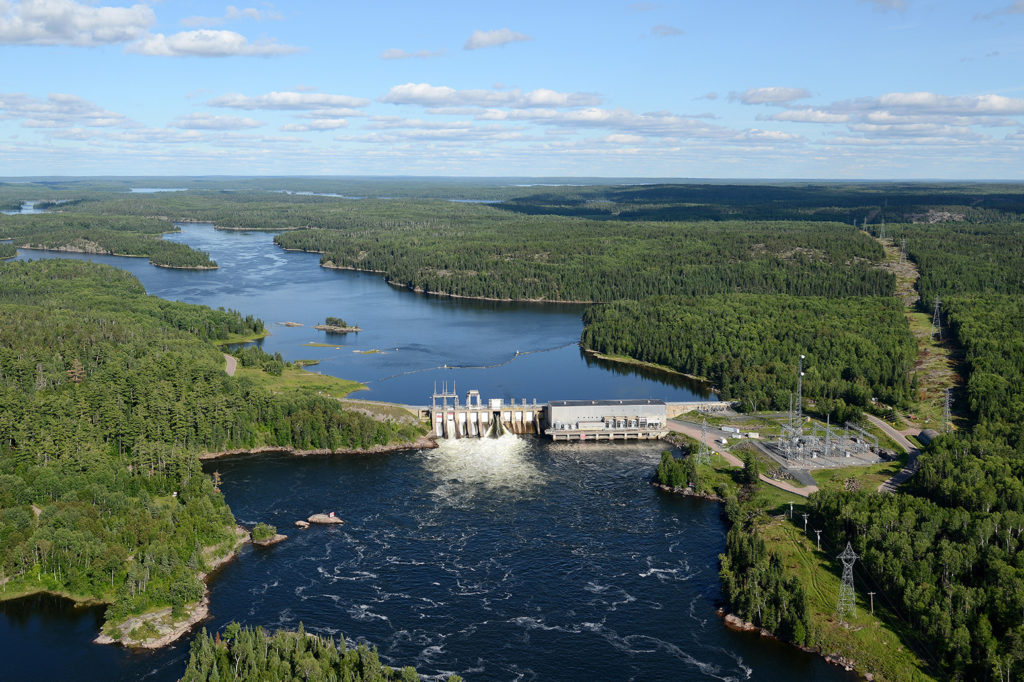
Image - White Dog Falls hydroelectricity power station, Ontario. Credit: All Canada Photos / Alamy Stock Photo. - White Dog Falls hydro power station, Ontario. Credit: All Canada Photos / Alamy Stock Photo. RWX864 (note)
market snapshotIndigenous peoplecosts involvedwas expectedCBC News
The history of hydro in Canada to 1881. The network of rivers across the country help make it by far the most important source of Canadian electricity.As of 2018, second only to China in global hydropower production. Largely as a result of its 81,386 megawatts (MW) of installed hydro capacity, of the nation’s electricity generation is renewable.Electricity generation in Canada by fuel, 1985-2018 (Terawatt hours). Source: . Chart by Carbon Brief using .Some Canadian provinces and territories already obtain of their electricity from hydro. The top region for hydroelectricity is Manitoba, with around 97% of its supplies from that source, closely followed by Quebec on 95%.In fact, Canada produces so much renewable electricity that it exports a lot of it to northern US states. There are 34 active major international transmission lines connecting Canada to its southern neighbour and of all Canadian electricity is exported to the US.There are currently four major hydropower projects under construction across four provinces, namely BC (with an expected installed capacity of 1,100MW), Labrador (824MW), Manitoba (695MW) and Quebec (245MW). Several more are in the planning and development stages.A by the Canadian energy regulator concluded that the nation’s hydroelectric generation “is expected to continue increasing”.However, the projects under construction have often provoked a backlash, with concerns raised by groups in the regions affected about their impact on , their environmental effects and the .The 824MW Muskrat Falls project on the Lower Churchill River in Labrador to begin operating in 2019, but is currently two years behind schedule and “billions over budget,” according to . 

§ Low-carbon energy

A reportCanadian Council on Renewable Electricityset a targetup from 82%drawn criticismClimate Transparencyaccounting forCanadian Wind Energy Associationplans are underwaymaking upextensive biomass resourcessecond largest exporterDrax site in Yorkshiremakes uprecently approvedproviding 14.6%sixth biggestsecond largestCANDUhas emphasisedroadmap
Canada’s large landmass and diverse geography means it has substantial potential to develop other forms of renewable energy. by the states that Canada has “vast undeveloped hydropower, wind, solar and marine energy resources in all regions of the country, making it possible to greatly increase clean power generation to support the rapid electrification of the economy”.The federal government has of 90% electricity from non-emitting sources by 2030 as part of its wider climate framework, in 2017. While just 5% of the total is made up of the total generation currently comes from non-hydro renewables such as wind, these sectors are growing fast.Canada’s performance on renewables has from the NGO group , which calls for a 100% renewable target, and says support for new projects must come from a provincial level.Wind is the most second important renewable power source in the country, 4.4% of electricity generation.Trade organisation the (CanWEA) has highlighted the potential for offshore wind both in the Great Lakes and off Canada’s expansive coastline. While no offshore wind farms have been built to date, to construct the nation’s first off the coast of BC.Biomass is the second biggest non-hydro renewable source in Canada after wind, 1.8% of power generation.The nation’s size and active forestry and agricultural sectors mean it has access to , not only for electricity generation but also for heating in homes and industrial processes.The most important biomass used in Canada is industrial wood waste. Canada is also the of wood pellets worldwide, fuelling power stations such as the .Solar just 0.5% of Canada’s electricity generation, but has been growing steadily over the past decade. A 400MW project was in Alberta, which looks set to be the biggest facility of its kind in the country.Canada also obtains a sizeable chunk of its power from nuclear power, with stations in Ontario and New Brunswick of its electricity.As of 2017, Canada was the producer of nuclear power, generating 4% of the global total. It is also the producer and exporter of uranium, responsible for 22% of global production in 2017.Canada has also developed its own unique nuclear reactor technology, known as . Besides operating these units domestically, the nation has also sold them to several countries.Natural resources minister Kim Rudd the need to “place nuclear energy at the center of global efforts to fight climate change,” and the Liberals have produced a “” for developing small modular reactors as old reactors go out of service. 

§ Coal

it is responsiblePowering Past Coal AllianceCOP23announcedenergy supplyClimate Scorecardcoal-fired electricity generating unitssaysranks at number 13
While only a tenth of Canada’s electricity comes from coal, for around three quarters of emissions from the power sector.Along with the UK, Canada launched the “” at the UN climate talks in Bonn.At the end of 2018 the government regulations to phase out unabated (not fitted with carbon capture and storage technology) coal-fired electricity by 2030.This built on previous regulations introduced in 2012 and actions by provinces to phase out their own coal use. These activities contributed to Canada’s coal-based falling 13% between 2012 and 2017.According to non-profit , as of 2017 there were 36 operating at 16 facilities in five provinces. These facilities had a combined generating capacity of around 10,000MW, and 20 of them are expected to shut down before 2030.Many of Canada’s coal-fired plants are expected to be replaced by new gas plants or coal-to-gas conversions, according to CAT, which also such developments “run the risk of becoming stranded assets given that gas has a limited role to play as a bridging fuel”.Canada also in terms of world coal production, producing 0.8% of the global total. The majority of this coal comes from mines in Alberta and BC.While the government has committed to cutting out coal for electricity generation, Canada will continue to use it for metallurgical processes such as steel manufacture. 

§ Impacts and adaptation

brought into focusaffected Quebecstruck Fort McMurray

Canadians are already seeing the costs of climate change, with floods, fires, & droughts affecting families across the country. It’s time for us to step up and take action – for our economy, our environment, and our kids. pic.twitter.com/pr88uqkt5Y

— Justin Trudeau (@JustinTrudeau) April 25, 2019
Canada’s Changing Climate Reportattribution studiesone studyAnother studyparticularly pronounced
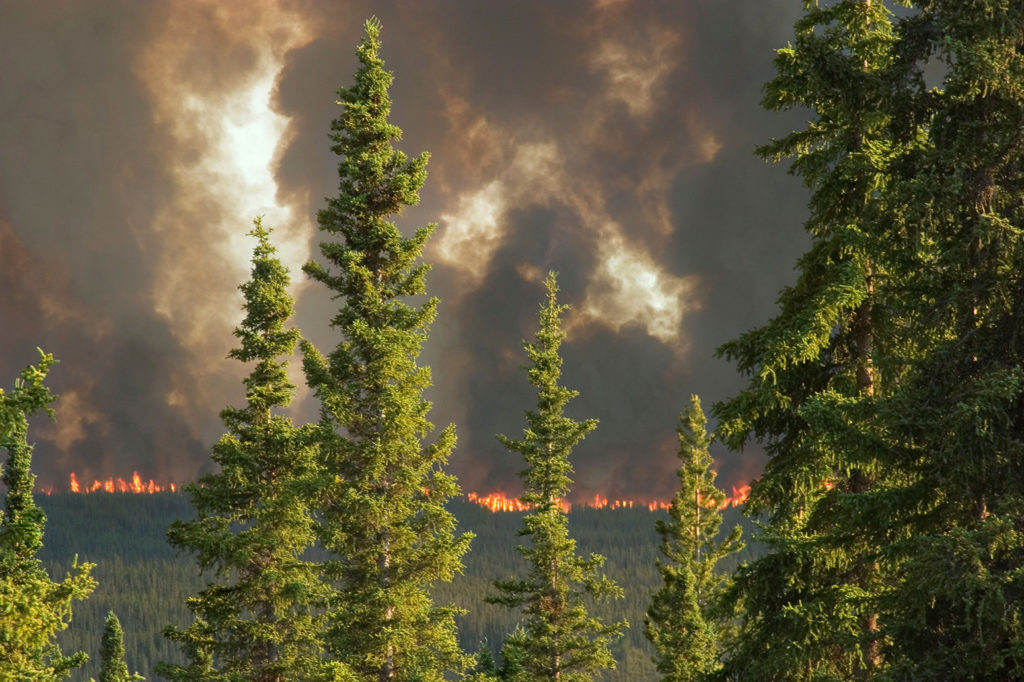
Image - Forest fire in Yukon Territory, Canada. Credit: Design Pics Inc / Alamy Stock Photo. - Forest fire in Yukon Territory, Canada. Credit: Design Pics Inc / Alamy Stock Photo. BCJP67 (note)
other impactshas highlightedalso concernsa reporttold the press

Article information

Our country profile series

The Carbon Brief Profile: South Korea
The Carbon Brief Profile: Iran
The Carbon Brief Profile: Australia
The Carbon Brief Profile: Indonesia
The Carbon Brief Profile: India
The Carbon Brief Profile: South Africa
The Carbon Brief Profile: Japan
The Carbon Brief Profile: Turkey
The Carbon Brief Profile: Brazil

The consequences of climate change has been in Canada by extreme weather events taking place both around the world and more locally.Large scale flooding has in recent years, while wildfires that in Alberta in 2016 were some of the largest and costliest ever.At the time, Trudeau and other politicians were tentative about linking the fires to climate change, but when more floods struck this spring the prime minister stated that “Canadians are already seeing the costs of climate change”.The government’s lays out a stark image of the challenges facing the nation as a result of climate change. Included in the report were 14 “” exploring the links between specific events and the changing climate.When 1.2m hectares burned in BC’s extreme wildfire season of 2017, found that anthropogenic climate change had increased the area burned by a factor of up to 11. found extreme fire risk events at the time of the Fort McMurray fire were up to six times more likely than in a situation with no anthropogenic climate change.Global warming is in Canada. Since 1948, when national records became available, the average annual land temperature in Canada has increased by 1.7C. This is even more pronounced towards the north of the country, where the increase is 2.3C.Besides extreme events, that will affect Canada laid out in the government report include less snow and ice cover, higher sea levels and drifting chunks of “potentially hazardous” ice into Canadian waters.The government some areas that will need to be addressed in order to adapt to the threat posed by climate change.These include tougher building standards for areas where more snow is projected to fall, restoring wetlands to reduce flooding and changes to protect people’s health during heat events. There are about melting permafrost affecting “the integrity of infrastructure such as buildings and airstrips”.Despite the government’s overarching strategy, the Pan-Canadian Framework, containing elements of adaptation, by Canada’s environment commissioner Julie Gelfand in 2017 concluded federal departments were not taking enough action to prepare for climate change.At the time, Gelfand “the federal government is not prepared to deal with the impacts of climate change that we are all feeling right now”.

🗂️ back to the index