Guest post: Will plants help make the planet wetter or drier in a changing climate?
Dr Justin Mankin is a climate scientist, assistant professor in the department of geography at Dartmouth College in New Hampshire, and principal investigator of the Dartmouth Climate Modelling & Impacts Group; Prof Richard Seager and Prof Jason Smerdon are both research professors at the Lamont-Doherty Earth Observatory (LDEO) of Columbia University in New York; Dr Ben Cook is a climate scientist at the NASA Goddard Institute for Space Studies and the LDEO; and Dr Park Williams is an associate research professor at the LDEO.The way that plants and trees respond to a warming climate and increasing levels of atmospheric CO2 has a significant impact on how they use water.But will this leave more or less freshwater available for societies to use? That millions of people suffer from life-threatening water stresses in the current climate tells us that the answer to this question really matters.Our new study, published in Nature Geoscience, attempts to shed light on this complicated picture.We find that in mid-latitude regions, such as North America, Europe and Central Asia, plants will consume more water in future, resulting in less water in soils and rivers – even where climate models say rainfall will also increase.§ Wetting and drying
devastating drought from 2011-15 $2.7bn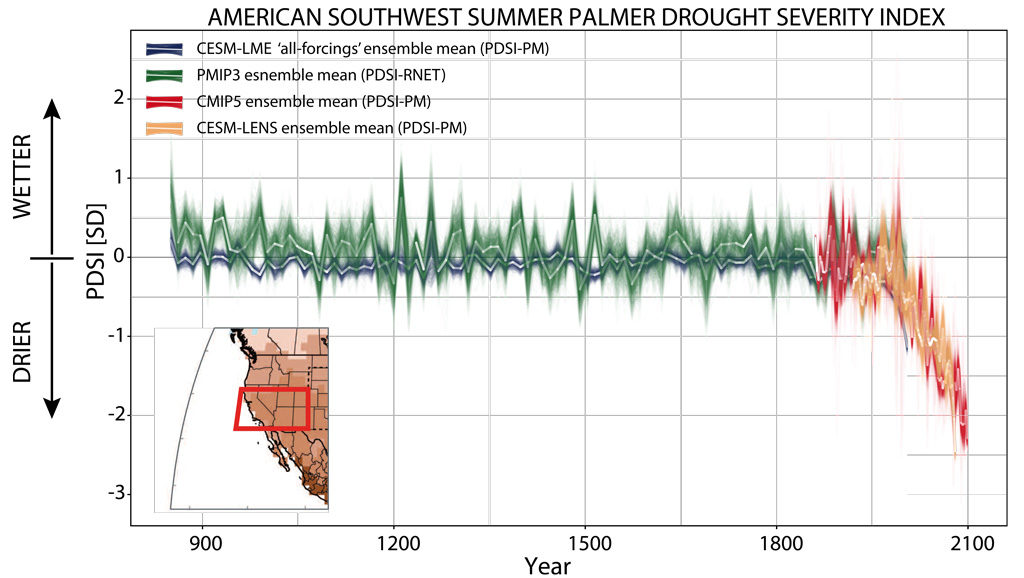
§ Warming and CO2 complicate the picture
canopy resistance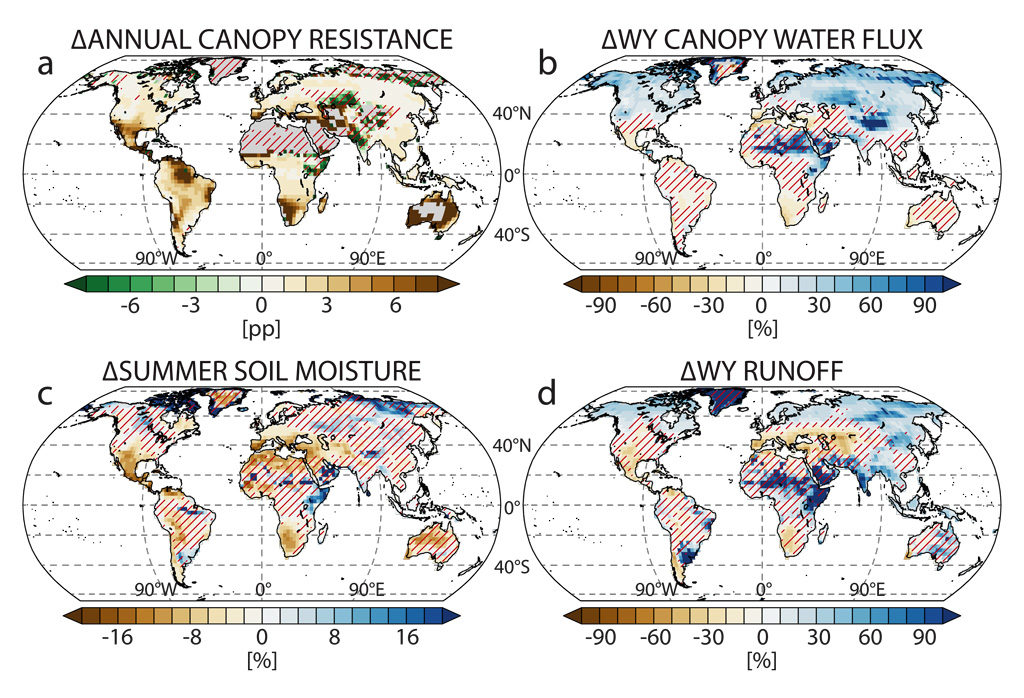
§ Understanding the model projections
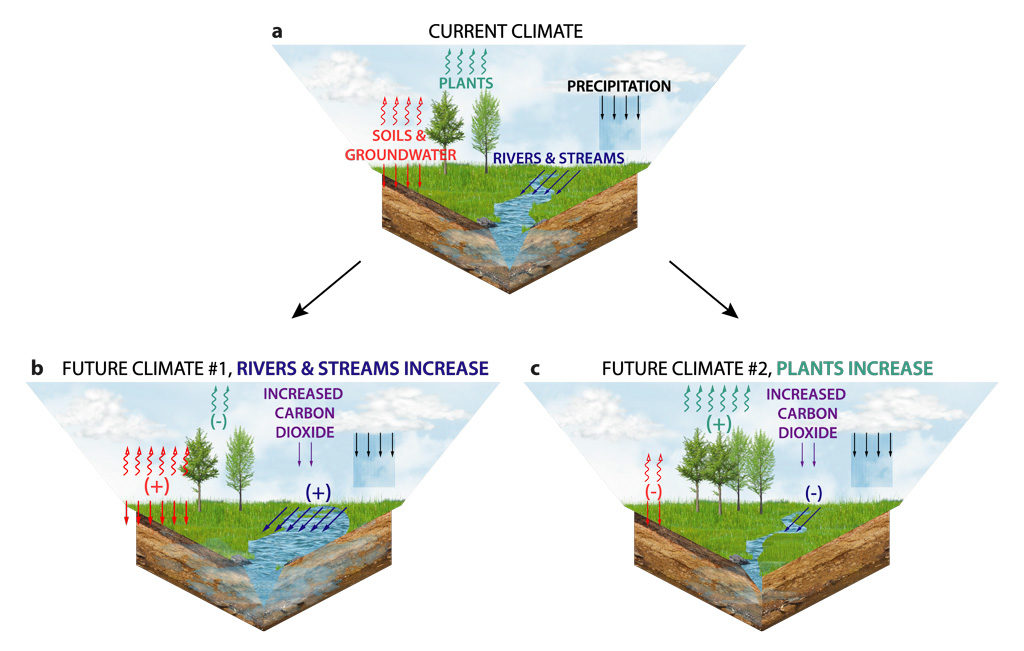
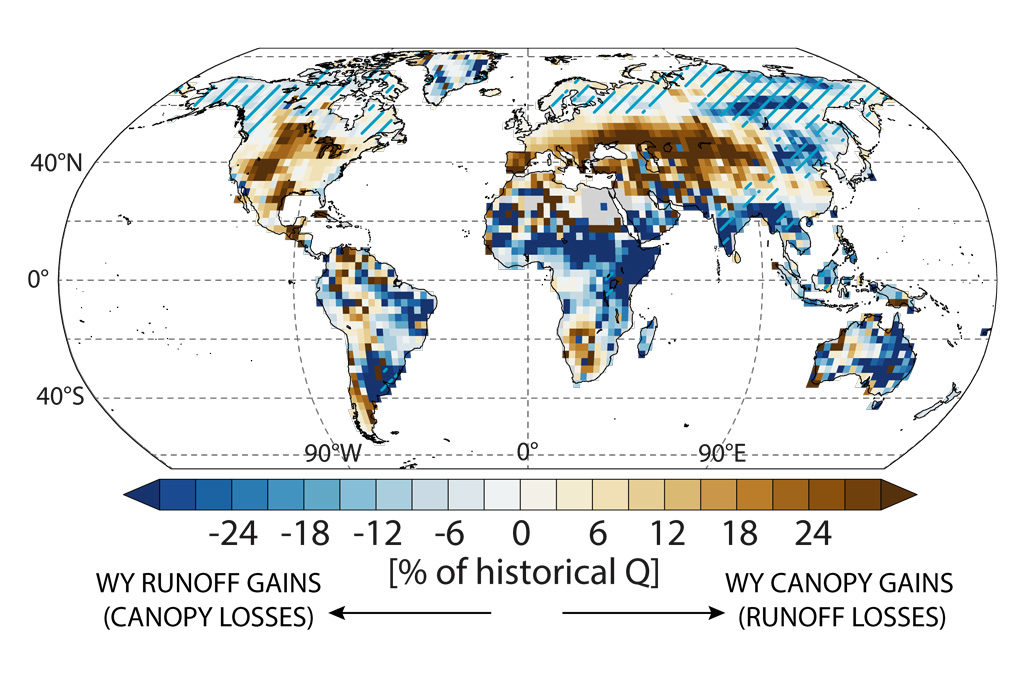
§ Challenges and opportunities
Important worksoil-plant-atmosphere interactionsArticle information
Mankin, J. S. et al. (2019) Mid-latitude freshwater availability reduced by projected vegetation responses to climate change, Nature Geoscience, doi:s41561-019-0480-x